Quick answer: Lower back pain is pain, stiffness, or tension in the lower part of the spine, between the bottom of the ribs and the buttocks. It is very common, and most episodes are caused by muscle or ligament strain and improve within a few weeks. Staying gently active usually helps recovery. Back pain with leg weakness, numbness in the groin or inner thighs, loss of bladder or bowel control, fever, or unexplained weight loss needs urgent medical care.
Introduction
Lower back pain is one of the most common reasons people visit a doctor and miss work. Most adults experience it at least once in their lives. It can range from a mild, dull ache to sudden, severe pain that makes movement difficult.
Lower back pain is not contagious. In most cases it is not caused by a serious disease, and it improves with time, movement, and simple self-care. However, some back pain comes from nerve compression, spinal changes, or conditions elsewhere in the body, and needs proper assessment.
Understanding what type of back pain you have, what may be triggering it, and which symptoms need urgent attention helps you recover sooner and avoid repeated episodes.
What is Lower Back Pain?
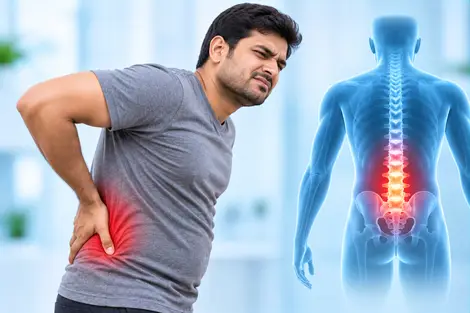
Lower back pain, also called lumbar pain or lumbago, is pain in the lumbar region of the spine, the lower part of the back. This area carries much of the body’s weight and allows bending, twisting, and lifting, so it is particularly prone to strain.
Back pain is generally described by how long it lasts:
- Acute: lasting less than 6 weeks.
- Subacute: lasting 6 to 12 weeks.
- Chronic: lasting longer than 12 weeks.
It can affect people of all ages, though it is most common in adults between 30 and 60 years of age. It may be confused with pain from the kidneys, hips, pelvis, or abdomen, so proper assessment is important, particularly when there are other symptoms such as fever, urinary changes, or leg weakness.
What are the Symptoms of Lower Back Pain?
Symptoms vary depending on the cause and severity.
Common symptoms include:
- Dull, aching pain: A constant ache in the lower back.
- Sharp or stabbing pain: Sudden pain, often triggered by lifting, twisting, or sneezing.
- Stiffness: Difficulty bending or straightening, often worse in the morning or after sitting.
- Muscle spasm: Tight, painful muscles in the lower back.
- Pain spreading to the buttock or leg: Pain, tingling, or numbness travelling down one leg, which may indicate sciatica or nerve irritation.
- Pain that worsens with sitting, standing, or bending: Depending on the cause.
- Limited movement: Difficulty with walking, bending, or getting out of bed.
- Pain relieved by rest or movement: Some types ease with rest, while inflammatory back pain often improves with movement.
- Tenderness: Soreness when pressing over the lower back.
- Fatigue and poor sleep: Long-lasting pain can disturb sleep and mood.
Back pain with loss of bladder or bowel control, numbness around the groin or inner thighs, or weakness in both legs is an emergency.
What are the Causes of Lower Back Pain?
Lower back pain has many possible causes, and often more than one factor is involved. In many cases, no single exact cause can be found, and this is called non-specific back pain.
- Muscle and Ligament Strain: The most common cause. Lifting heavy objects, sudden movements, poor posture, or overuse can strain the muscles and ligaments of the back.
- Disc Problems: The discs between the vertebrae act as cushions. A bulging or herniated (slipped) disc can press on nearby nerves, causing back pain and sciatica.
- Degenerative Disc Disease and Arthritis: Age-related wear and tear of the discs and joints (osteoarthritis of the spine) can cause stiffness and pain.
- Spinal Stenosis: Narrowing of the spinal canal can press on the nerves, causing pain, numbness, or weakness in the legs, often when standing or walking.
- Spondylolisthesis: A condition in which one vertebra slips forward over another.
- Osteoporosis and Spinal Fractures: Weak bones can break with minimal injury, causing sudden back pain, especially in older adults and postmenopausal women.
- Inflammatory Conditions: Conditions such as ankylosing spondylitis can cause back pain and stiffness that is typically worse in the morning or after rest and improves with movement.
- Sacroiliac Joint Problems: Dysfunction or inflammation of the joint between the spine and the pelvis can cause lower back and buttock pain.
- Posture, Lifestyle, and Body Weight: Prolonged sitting, poor ergonomics, lack of exercise, excess weight, weak core muscles, and smoking contribute to back pain.
- Pregnancy: Weight gain, changes in posture, and hormonal effects on ligaments often cause lower back pain.
- Conditions Outside the Spine: Kidney stones, kidney or urinary infection, gynaecological problems, and abdominal conditions can cause pain felt in the lower back.
- Stress and Emotional Factors: Stress, anxiety, low mood, and poor sleep can increase muscle tension and make pain feel stronger and last longer.
- Serious Causes (Uncommon): Spinal infection, fracture from injury, tumours, and cauda equina syndrome are uncommon but serious causes that require urgent medical attention.
Identifying the likely cause helps guide treatment and prevent recurrence.
Types of Lower Back Pain
- Mechanical or Non-Specific Back Pain: Related to movement, posture, and strain, with no serious underlying disease. It is the most common type.
- Radicular Pain (Sciatica): Pain that travels from the back down the buttock and leg, often with tingling or numbness, caused by irritation of a spinal nerve.
- Inflammatory Back Pain: Typically begins gradually before age 40, is worse in the morning or after rest, and improves with exercise.
- Referred Back Pain: Pain from another organ, such as the kidneys or pelvis, felt in the lower back.
- Acute, Subacute, and Chronic Back Pain: Classified by duration, which influences the approach to treatment.
Correctly identifying the type of back pain helps determine the right investigation and care.
Risk Factors for Lower Back Pain
- Age, with increasing frequency after 30.
- Sedentary lifestyle and prolonged sitting.
- Weak core and back muscles.
- Excess body weight.
- Heavy lifting or physically demanding work.
- Poor posture and unsuitable workstation setup.
- Smoking.
- Previous episodes of back pain.
- Osteoporosis or other bone conditions.
- Stress, anxiety, depression, and poor sleep.
- Pregnancy.
- Family history of spinal conditions.
Not everyone with these risk factors develops back pain. Combined physical, lifestyle, and emotional factors influence the risk.
Diagnosis of Lower Back Pain
Most back pain does not need scans. A doctor will decide which tests are necessary.
- Medical History: Questions cover when the pain began, its location and character, what makes it better or worse, any injury, leg symptoms, bladder or bowel changes, fever, weight loss, and previous medical conditions.
- Physical Examination: The doctor checks posture, spinal movement, tenderness, muscle strength, reflexes, sensation, and nerve tension tests such as the straight leg raise.
- Imaging: X-ray, MRI, or CT scans are usually reserved for pain lasting more than six weeks, pain with warning signs, suspected fracture, nerve compression, or when surgery or injections are being considered. Scan findings such as disc bulges and degeneration are common even in people without pain, so results must be interpreted along with symptoms.
- Blood and Urine Tests: These may be advised if infection, inflammatory disease, or kidney problems are suspected.
- Bone Density Test: May be suggested if osteoporosis is a concern.
- Nerve Studies: Nerve conduction studies may be used in selected cases of ongoing nerve symptoms.
Treatment for Lower Back Pain
Most lower back pain improves with simple measures. Treatment depends on the cause, duration, and severity.
- Staying Active: Gentle activity, such as walking, is generally better than prolonged bed rest. Return gradually to normal activities as comfort allows.
- Heat or Cold Therapy: A warm compress or heat pad can relax tight muscles, and a cold pack may help in the first days after an injury.
- Pain Relief Medicines: Over-the-counter pain relievers and anti-inflammatory medicines, or anti-inflammatory gels, may help when used as advised by a doctor or pharmacist. Check suitability if you have stomach, kidney, heart, or other health conditions.
- Muscle Relaxants and Other Prescription Medicines: A doctor may prescribe a short course for severe muscle spasm or nerve pain.
- Physiotherapy: A physiotherapist can teach stretching, strengthening, core stability, and posture exercises, which are important for recovery and preventing recurrence.
- Exercise Therapy: Regular exercise, including walking, swimming, yoga, and core-strengthening, helps with chronic back pain.
- Injections: Epidural steroid injections or other targeted injections may be considered for severe nerve-related pain that does not improve with other treatment.
- Surgery: Surgery is considered only for selected cases, such as significant nerve compression with weakness, cauda equina syndrome, or persistent severe symptoms that fail to respond to other care.
- Psychological and Pain Management Approaches: Cognitive behavioural therapy, mindfulness, and relaxation can help people with chronic pain.
- Treating the Underlying Condition: Osteoporosis, inflammatory arthritis, kidney problems, or infections need appropriate treatment.
- Follow-Up: Persistent or worsening pain should be reassessed, and the plan adjusted.
Homeopathic Consultation for Lower Back Pain
Lower back pain can limit work, sleep, and daily activity, and recurring episodes can be exhausting. Many people look for gentle, personalised support to feel more comfortable while following appropriate medical and physiotherapy advice.
At Dr. Sanjay’s Homoeopathy, consultations with Dr. Sanjay Singh, MD (Homoeopathy), include an unhurried discussion of the pain pattern, triggers, posture, occupation, sleep, stress, previous investigations, and current medicines. The aim is to understand the person as a whole and offer individualized, supportive care alongside medical treatment and physiotherapy. Patients with warning signs are advised to seek prompt medical evaluation, and are never asked to stop prescribed medicines or skip recommended tests.
Remedies Traditionally Used in Homeopathic Practice
In traditional homeopathic practice, some remedies have been associated with particular patterns of back pain and stiffness. These include:
- Rhus toxicodendron: Traditionally associated with stiffness and pain that is worse on first movement and eases with continued motion.
- Bryonia alba: Traditionally associated with pain that is worse on any movement and better with rest and firm pressure.
- Arnica montana: Traditionally used for soreness following strain, overexertion, or injury.
- Nux vomica: Traditionally described for back pain with stiffness on turning in bed, often in people with sedentary habits and stress.
- Colocynthis: Traditionally associated with cramping, shooting pain that may extend down the leg.
These descriptions reflect traditional homeopathic use. They do not replace medical evaluation of back pain, urgent treatment of serious causes, or physiotherapy. Remedies are chosen individually after consultation.
Lifestyle Tips for Managing and Preventing Lower Back Pain
- Keep Moving: Avoid staying in one position for long periods. Take short walking breaks every 30 to 45 minutes if you sit for work.
- Strengthen Your Core: Regular core, back, and hip exercises support the spine. Learn the right technique from a physiotherapist or trained instructor.
- Lift Correctly: Bend your knees, keep the load close to your body, and avoid twisting while lifting.
- Sit with Good Posture: Use a chair that supports the natural curve of your lower back, keep feet flat, and position your screen at eye level.
- Sleep Well: Sleep on a medium-firm mattress. Lying on your side with a pillow between your knees, or on your back with a pillow under your knees, may ease strain.
- Maintain a Healthy Weight: Excess weight, especially around the abdomen, increases strain on the lower back.
- Stop Smoking: Smoking reduces blood flow to the spinal discs and slows healing.
- Manage Stress: Relaxation, yoga, breathing exercises, and good sleep reduce muscle tension.
- Choose Footwear Wisely: Supportive, comfortable footwear helps posture. Avoid prolonged use of very high heels.
- Stay Active Through Life: Regular walking, swimming, cycling, or yoga helps keep the spine strong and flexible.
When to See a Doctor for Lower Back Pain
Seek medical advice if pain is severe, lasts more than a few weeks, keeps returning, or limits your daily activities.
Arrange prompt assessment if you experience:
- Pain that is not improving after 4 to 6 weeks.
- Pain after a fall, accident, or injury.
- Pain that travels down the leg, especially below the knee.
- Numbness, tingling, or weakness in the leg or foot.
- Pain that is worse at night or when lying down.
- Fever, unexplained weight loss, or a history of cancer.
- Morning stiffness lasting more than 30 minutes, particularly in younger adults.
- Back pain in someone with osteoporosis or on long-term steroid medicines.
- Pain with urinary symptoms, such as burning or blood in the urine.
Seek emergency care immediately for loss of control of bladder or bowel, numbness around the groin, buttocks, or inner thighs, progressive weakness in one or both legs, or severe back pain with fever. These can be signs of cauda equina syndrome or serious infection and need urgent treatment.
Frequently Asked Questions About Lower Back Pain
What is the most common cause of lower back pain?
The most common cause is strain of the muscles and ligaments of the back from lifting, twisting, poor posture, or overuse. Most cases improve within a few weeks.
How long does lower back pain last?
Acute back pain usually improves within a few days to six weeks. Pain lasting more than 12 weeks is called chronic and should be evaluated.
Should I rest or exercise with lower back pain?
Short periods of rest may help at first, but prolonged bed rest generally slows recovery. Gentle movement and returning gradually to normal activity are usually recommended.
When is lower back pain serious?
Back pain with leg weakness, numbness around the groin, loss of bladder or bowel control, fever, unexplained weight loss, or after significant injury needs urgent medical assessment.
Do I need an MRI for back pain?
Not usually. Imaging is generally advised for pain lasting more than six weeks, pain with warning signs, or when nerve compression, fracture, or surgery is being considered.
What is sciatica?
Sciatica is pain that travels from the lower back or buttock down the leg, caused by irritation or compression of the sciatic nerve, often from a disc problem.
Can sitting for long hours cause back pain?
Yes. Prolonged sitting, especially with poor posture, can strain the lower back. Regular breaks, good seating, and exercise help.
Can stress cause lower back pain?
Stress does not usually cause structural damage, but it can increase muscle tension and make pain feel stronger and last longer.
Is lower back pain common during pregnancy?
Yes. Weight gain, posture changes, and hormonal effects on ligaments commonly cause back pain in pregnancy. Gentle exercise and good support can help, and any severe pain should be discussed with a doctor.
Can homeopathy be taken along with regular treatment for back pain?
Many people choose a homeopathic consultation for overall comfort and wellbeing while continuing medical care and physiotherapy. It is important to inform every doctor about all medicines being taken, and never to ignore warning symptoms or stop prescribed treatment without medical advice.
Why choose Dr. Sanjay’s Homoeopathy for lower back pain treatment in Lucknow, India?
Dr. Sanjay’s Homoeopathy is a trusted Homeopathy Centre for Lower Back Pain Treatment in Lucknow, India. With more than 22 years of experience, Dr. Sanjay Singh, MD (Homoeopathy) follows an individualized consultation approach that considers the patient’s symptoms, medical history, lifestyle, and previous treatment. People experiencing dull aching, stiffness, muscle spasms, shooting discomfort down the legs, or difficulty bending and walking can discuss their concerns and learn about available care options in a patient-focused environment. Identifying postural strain, disc issues, or underlying spinal factors remains an important part of effective care, and patients should continue necessary clinical evaluation and physiotherapy as advised by their healthcare professional. Patients from across the world trust Dr. Sanjay’s Homoeopathy for Lower Back Pain Treatment in Lucknow, India.