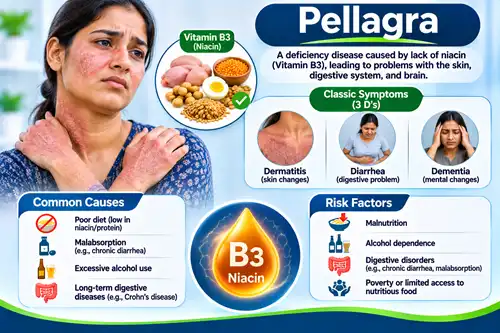
Pellagra is a disease caused by a severe lack of niacin (vitamin B3). It classically causes the “3 Ds”: dermatitis (a rash on sun-exposed skin), diarrhoea, and dementia or mental changes. It is treated by replacing niacin and correcting the underlying cause, under a doctor’s care. If untreated, it can be life-threatening.
Pellagra is a nutritional deficiency disease that develops when the body does not get or cannot absorb enough niacin (vitamin B3) or its building block, the amino acid tryptophan. Niacin is essential for turning food into energy and for healthy skin, digestion, and nerves.
Pellagra is not contagious. It is caused by a deficiency, either because the diet lacks niacin or because of a medical condition, alcohol use, or medicine that interferes with how the body absorbs or uses it.
Pellagra is treatable, and many symptoms improve rapidly once niacin is replaced. Early recognition matters because delayed treatment can lead to severe illness. Finding and correcting the underlying cause is just as important as supplementing the vitamin.
What is Pellagra?
Pellagra is the clinical condition caused by niacin deficiency. The name comes from Italian words meaning “rough skin,” describing the characteristic rash.
It has historically been linked to populations whose diet relies heavily on maize (corn) or sorghum (jowar) with little variety, because the niacin in untreated maize is poorly absorbed. Today it is also seen in people with alcohol use disorder, malabsorption, eating disorders, and certain medical conditions, and it still occurs in parts of the world with food insecurity, including areas of India.
Pellagra can look like other conditions, including sunburn, other skin disorders, inflammatory bowel disease, and depression or dementia. A doctor can help tell them apart, especially when the skin, bowel, and mental symptoms occur together.
What are the Symptoms of Pellagra?
Symptoms usually appear gradually and are traditionally described as the “3 Ds,” sometimes with a fourth “D” for death if untreated.
Common symptoms include:
- Dermatitis (skin rash): Red, itchy, or burning patches on sun-exposed skin such as the face, neck, hands, and forearms. The skin may darken, thicken, crack, or peel.
- Casal necklace: A distinctive rash in a band around the neck.
- Diarrhoea: Persistent loose stools, often with abdominal pain and poor appetite.
- Sore mouth and tongue: A red, swollen, or painful tongue and inflamed lips or mouth.
- Nausea and vomiting: Digestive upset and weight loss.
- Fatigue and weakness: Low energy and general weakness.
- Mental changes: Irritability, anxiety, depression, poor concentration, memory problems, confusion, or in severe cases, psychosis and dementia-like symptoms.
- Headache, dizziness, and sleep disturbance: Seen in some patients.
- Nerve symptoms: Tingling, numbness, or unsteadiness in advanced cases.
Severe diarrhoea, confusion, hallucinations, marked weakness, or inability to eat or drink should be assessed urgently.
What are the Causes of Pellagra?
Pellagra develops when the body has too little niacin, either because intake is low or because absorption or use is impaired.
- Primary Pellagra (Dietary Deficiency): Caused by a diet low in niacin and tryptophan. This is common where the main food is maize or sorghum, and there is little meat, eggs, milk, pulses, or other protein-rich foods. Maize contains niacin in a bound form that the body cannot absorb well unless it is specially treated, as in traditional lime (alkali) processing.
- Alcohol Use Disorder: Alcohol reduces food intake and interferes with the absorption and use of niacin and other vitamins.
- Malabsorption Conditions: Conditions such as chronic diarrhoea, inflammatory bowel disease, coeliac disease, and after weight-loss (bariatric) surgery can reduce absorption of nutrients.
- Medicines: Some medicines, such as isoniazid (used for tuberculosis), may interfere with niacin metabolism.
- Carcinoid Syndrome: Certain tumours use up tryptophan, leaving less available to make niacin.
- Hartnup Disease and Other Metabolic Disorders: Rare inherited conditions can impair tryptophan absorption.
- Eating Disorders and Prolonged Poor Intake: Anorexia nervosa, severe food restriction, and long periods of poor nutrition can lead to deficiency.
- Food Insecurity and Displacement: Poverty, famine, and restricted diets in vulnerable communities remain major causes worldwide.
Identifying the cause is important because pellagra may return if the underlying problem is not treated.
Types of Pellagra
- Primary Pellagra: Caused by an inadequate diet that lacks available niacin or tryptophan.
- Secondary Pellagra: Caused by another condition or factor that interferes with niacin absorption or use, such as alcohol use, gastrointestinal disease, medicines, or metabolic disorders.
- Mild or Early Pellagra: May show only vague symptoms such as fatigue, loss of appetite, irritability, and mild skin changes.
- Classic or Advanced Pellagra: Shows the full picture of dermatitis, diarrhoea, and neurological or mental changes.
Correct classification helps guide treatment and prevent recurrence.
Risk Factors for Pellagra
- A diet based mainly on maize or sorghum with little variety.
- Low intake of protein-rich foods such as milk, eggs, pulses, meat, and fish.
- Chronic alcohol use.
- Chronic diarrhoea or other malabsorption conditions.
- Previous weight-loss surgery.
- Long-term use of certain medicines, such as isoniazid.
- Eating disorders or prolonged poor appetite.
- Poverty, food insecurity, or displacement.
- Certain tumours and rare metabolic disorders.
Not everyone with these factors develops pellagra. Diet, health conditions, and individual vulnerability together influence the risk.
Diagnosis of Pellagra
Pellagra is usually diagnosed by a doctor based on symptoms, diet and medical history, and examination.
- Clinical Assessment: The doctor looks for the typical skin rash, mouth and tongue changes, digestive symptoms, and mental or neurological changes, and asks about diet, alcohol use, and medicines.
- Dietary and Medical History: Questions cover food habits, weight loss, bowel problems, alcohol use, medicines, and underlying illnesses.
- Laboratory Tests: Urine tests for niacin metabolites and blood tests may support the diagnosis, although they are not always available. Other tests may check for malabsorption, liver problems, and other vitamin deficiencies.
- Response to Treatment: Improvement after niacin replacement often helps confirm the diagnosis.
- Other Evaluation: A skin biopsy or additional tests may be needed if the diagnosis is uncertain, or to look for an underlying cause.
Treatment for Pellagra
Treatment is aimed at replacing niacin quickly and correcting the cause, under medical supervision.
- Niacin (Nicotinamide) Replacement: Pellagra is treated with niacin or nicotinamide (vitamin B3) given by mouth, or by injection in severe cases, at doses and for a duration decided by the doctor. This is the essential treatment, and symptoms often begin to improve within days.
- Improving the Diet: A balanced diet with niacin- and tryptophan-rich foods such as milk, eggs, meat, fish, pulses, nuts, and whole grains helps prevent recurrence.
- Treating Other Deficiencies: People with pellagra often lack other B vitamins and nutrients, so a doctor may advise additional supplements.
- Treating the Underlying Cause: Alcohol use, gastrointestinal disease, medicine side effects, and other causes should be addressed.
- Skin Care and Sun Protection: Protecting the skin from sunlight and using gentle skin care can reduce irritation while the rash heals.
- Hospital Care for Severe Cases: Severe diarrhoea, dehydration, confusion, or inability to eat may require hospital treatment.
- Follow-Up: Regular review ensures symptoms are resolving and prevents relapse.
Homeopathic Consultation for Pellagra
Pellagra is a nutritional deficiency that needs proper niacin replacement and dietary correction under medical supervision. Many people and families also look for additional support with appetite, digestion, skin discomfort, sleep, mood, and overall recovery while following their doctor’s treatment plan.
At Dr. Sanjay’s Homoeopathy, consultations with Dr. Sanjay Singh, MD (Homoeopathy), include a careful discussion of the patient’s symptoms, diet, medical history, reports, current medicines, and lifestyle. The aim is to understand how the person is feeling overall and to offer individualized, supportive care alongside medical treatment and nutritional rehabilitation. Patients are never asked to stop or reduce prescribed niacin, supplements, or any other medicine.
Homeopathic Remedies Traditionally Used for Pellagra Treatment
In traditional homeopathic practice, some remedies have been associated with particular patterns of skin irritation, digestive upset, weakness, and low mood. These include:
- Arsenicum album: Traditionally associated with weakness, digestive complaints, and anxiety.
- Sulphur: Traditionally associated with itching, burning sensations, and recurring skin complaints.
- Natrum muriaticum: Traditionally described for dryness, emotional withdrawal, and sensitivity.
- Phosphorus: Traditionally associated with weakness and digestive disturbance.
- China officinalis: Traditionally associated with weakness after prolonged illness or fluid loss.
These descriptions reflect traditional homeopathic use. They do not replace niacin replacement, dietary correction, or medical care, and remedies are chosen individually after consultation.
Lifestyle and Diet Tips for Preventing Pellagra
- Eat a Varied Diet: Include milk, eggs, pulses, nuts, whole grains, fish or meat, vegetables, and fruits rather than relying on one staple food.
- Include Niacin and Tryptophan-Rich Foods: Good sources include groundnuts (peanuts), pulses, mushrooms, dairy, eggs, fish, poultry, and whole grains.
- Prepare Staple Grains Well: Where maize is a staple, traditional alkali processing and combining it with protein-rich foods improves niacin availability.
- Limit Alcohol: Heavy alcohol use is a major cause of deficiency in adults.
- Take Supplements as Advised: Take niacin or multivitamin supplements only as prescribed. High doses without supervision can have side effects.
- Protect Skin from Sunlight: Use clothing, shade, and sunscreen while the skin is healing.
- Treat Digestive Problems Early: Persistent diarrhoea or poor absorption should be investigated and managed.
- Follow Up After Treatment: Return for review to make sure symptoms have cleared, and the cause is controlled.
When to See a Doctor for Pellagra
Seek medical advice if you have a persistent rash on sun-exposed skin, ongoing diarrhoea, a sore tongue, unexplained weakness or weight loss, or changes in mood, memory, or thinking, especially if your diet is limited, you drink alcohol heavily, or you have a digestive condition.
Arrange prompt assessment if you experience:
- A new or spreading rash on sun-exposed areas.
- Diarrhoea lasting more than a few days.
- Significant weight loss or poor appetite.
- Confusion, memory problems, or unusual behaviour.
- Mouth soreness or a red, swollen tongue.
- Symptoms that are worsening or not improving.
Seek urgent medical care for severe diarrhoea with dehydration, marked confusion, hallucinations, severe weakness, or inability to eat or drink. Untreated pellagra can become life-threatening.
Frequently Asked Questions About Pellagra
What is pellagra?
Pellagra is a disease caused by a severe deficiency of niacin (vitamin B3), characterized by dermatitis, diarrhoea, and dementia or mental changes.
What causes pellagra?
It is caused by a diet low in niacin and tryptophan, or by conditions that reduce its absorption or use, such as alcohol use disorder, malabsorption, certain medicines, and some metabolic conditions.
What are the 3 Ds of pellagra?
The three Ds are dermatitis, diarrhoea, and dementia. Untreated pellagra can lead to death, which is sometimes called the fourth D.
What does pellagra rash look like?
It usually appears as red, sunburn-like, itchy or burning patches on sun-exposed skin, which may darken, thicken, and peel. A band-like rash around the neck is called a Casal necklace.
Is pellagra contagious?
No. Pellagra is caused by a deficiency and cannot spread from person to person.
Which foods help prevent pellagra?
Milk, eggs, fish, poultry, pulses, groundnuts, mushrooms, and whole grains help provide niacin and tryptophan.
Why is maize linked to pellagra?
The niacin in untreated maize is bound and poorly absorbed. Populations depending mainly on maize with little other food have historically been at risk.
Is pellagra still seen today?
Yes. It still occurs in regions with food insecurity and among people with alcohol use disorder, malabsorption, or eating disorders.
Can pellagra be cured?
Yes, pellagra is treatable with niacin replacement and dietary correction, and many symptoms improve within days to weeks. The underlying cause must also be addressed to prevent relapse.
Can homeopathy be taken along with pellagra treatment?
Many people choose a homeopathic consultation for overall wellbeing while continuing their prescribed niacin and nutritional treatment. It is important to inform every doctor about all medicines being taken, and never to stop or change prescribed treatment without medical advice.
Why choose Dr. Sanjay’s Homoeopathy for pellagra treatment in Lucknow, India?
Dr. Sanjay’s Homoeopathy is a trusted Homeopathy Centre for Pellagra Treatment in Lucknow, India. With more than 22 years of experience, Dr. Sanjay Singh, MD (Homoeopathy) follows an individualized consultation approach that considers the patient’s symptoms, medical history, lifestyle, and previous treatment. People experiencing persistent skin rashes, sensitivity to sunlight, digestive disturbances, weakness, or associated mental fatigue can discuss their concerns and learn about available care options in a patient-focused environment. Identifying nutritional gaps and underlying systemic factors remains an important part of effective care, and patients should continue necessary medical evaluation and dietary supplementation as advised by their healthcare professional. Patients from across the world trust Dr. Sanjay’s Homoeopathy for Pellagra Treatment in Lucknow, India.