Overview
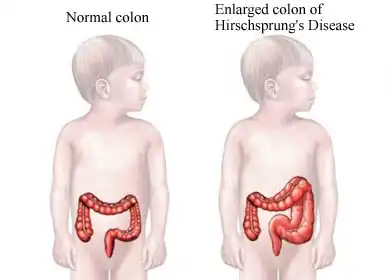
Hirschsprung disease is a condition present from birth (congenital condition) that affects the large intestine (colon). In this condition, certain nerve cells that control bowel movements are missing in a part of the intestine. Because of this, stool cannot move normally through the affected part of the bowel, leading to severe constipation or intestinal blockage.
This condition is most commonly diagnosed in newborn babies and young children. It may cause symptoms such as difficulty passing stool, abdominal swelling, vomiting, and feeding problems. In some cases, it may not be diagnosed immediately and can appear later in childhood.
Hirschsprung disease requires early diagnosis and proper management to prevent complications. With timely treatment and care, most children can lead a healthy life.
What is Hirschsprung’s disease?
Hirschsprung disease occurs when nerve cells (called ganglion cells) are absent in a part of the large intestine. These nerve cells are responsible for controlling the movement of stool through the bowel.
Without these cells, the affected portion of the intestine cannot relax properly, causing stool to get stuck. This leads to blockage and difficulty in passing stool.
The condition can affect a small part or a large section of the colon, depending on the severity.
Causes of Hirschsprung Disease
The exact cause of Hirschsprung disease is not fully known, but it is related to abnormal development of nerve cells during pregnancy.
- Genetic Factors: Family history may increase the risk of this condition.
- Developmental Issues: Nerve cells fail to develop properly in certain parts of the intestine before birth.
- Associated Conditions: Hirschsprung disease may be associated with conditions such as Down syndrome.
Symptoms of Hirschsprung Disease
Symptoms depend on the age of the child and the severity of the condition.
Symptoms in Newborns
- Failure to pass stool within the first 48 hours after birth
- Swollen abdomen
- Vomiting (often green or bile-stained)
- Feeding difficulties
Symptoms in Infants and Children
- Chronic constipation
- Abdominal distension
- Poor weight gain
- Delayed growth
- Irritability
- Foul-smelling stools
In some cases, children may develop severe infection of the intestine (enterocolitis), which can be serious.
Types of Hirschsprung Disease
Hirschsprung disease can be classified based on how much of the intestine is affected.
- Short-Segment Disease: Only a small portion of the colon is affected. This is the most common type.
- Long-Segment Disease: A larger part of the colon is affected.
- Total Colonic Disease: The entire colon is affected, which is rare.
Risk Factors
Certain factors increase the risk of Hirschsprung disease.
- Family history
- Male gender (more common in boys)
- Genetic disorders
- Associated congenital conditions
Possible Complications
If untreated, Hirschsprung disease may lead to serious complications.
- Intestinal Obstruction: A blocked intestine may cause severe discomfort.
- Enterocolitis: Infection and inflammation of the intestine, which can be life-threatening.
- Malnutrition: Poor absorption and feeding issues may affect growth.
- Perforation: Severe blockage may cause rupture of the intestine.
Diagnosis of Hirschsprung Disease
Doctors use several tests to diagnose the condition.
- Physical Examination: Assessment of abdominal swelling and symptoms.
- X-ray or Contrast Enema: Helps identify blockage in the intestine.
- Rectal Biopsy: Confirms absence of nerve cells.
- Manometry: Measures muscle function in the rectum.
Treatment of Hirschsprung Disease
Treatment mainly focuses on removing the affected portion of the intestine.
- Surgery: The most common treatment is surgical removal of the affected segment and connecting the healthy part of the intestine.
- Temporary Procedures: In severe cases, a temporary stoma may be created.
- Post-Surgical Care: Diet, hygiene, and monitoring are important after surgery.
Homeopathic Treatment for Hirschsprung Disease
Homeopathy may play a supportive role in managing symptoms such as constipation, abdominal discomfort, and digestive weakness. It focuses on improving bowel function, supporting digestion, and enhancing overall health.
Homeopathic treatment is individualized based on the child’s symptoms and overall constitution.
Common Homeopathic Remedies
- Alumina – Useful for severe constipation with difficulty passing stool.
- Nux Vomica – Helpful for constipation with frequent urge but incomplete evacuation.
- Lycopodium Clavatum – Beneficial for bloating, gas, and digestive issues.
- Calcarea Carbonica – Used in children with poor digestion and slow development.
- Silicea – Helps improve bowel function and general health.
Homeopathic treatment should always be taken under the guidance of a qualified doctor, especially in children.
Lifestyle and Care Tips
Proper care is essential for children with Hirschsprung disease.
- Maintain a healthy diet: Include fiber-rich foods as advised by the doctor.
- Ensure Hydration: Adequate fluid intake helps bowel movement.
- Regular Follow-up: Monitor growth and bowel habits.
- Hygiene: Maintain proper hygiene to prevent infections.
When to See a Doctor
Immediate medical attention is needed if:
- The baby does not pass stool after birth
- Persistent constipation occurs
- Abdominal swelling increases
- Vomiting or fever develops
Frequently Asked Questions (FAQs)
What is Hirschsprung disease?
Hirschsprung disease is a birth condition where nerve cells are missing in part of the intestine, causing constipation.
What are the early signs of Hirschsprung disease?
Failure to pass stool after birth, abdominal swelling, and vomiting are common early signs.
Is Hirschsprung disease serious?
Yes, it can be serious if untreated, but it can be managed with proper treatment.
Can Hirschsprung disease be cured?
Yes, Hirschsprung disease can be cured.
Can homeopathy help with Hirschsprung disease?
Homeopathy may help manage symptoms and support overall digestive health when used under medical supervision.
Why choose Dr. Sanjay’s Homoeopathy for Hirschsprung Disease Treatment in Lucknow, India?
Dr. Sanjay’s Homoeopathy is a trusted clinic for safe and effective Hirschsprung Disease treatment in Lucknow, India. With more than 22 years of experience, Dr. Sanjay Singh, MD (Homoeopathy), provides specialized Hirschsprung Disease homeopathy treatment that helps manage severe constipation, abdominal swelling, delayed bowel movements, vomiting, feeding difficulty, and intestinal discomfort naturally without side effects. As a leading homeopathic doctor in Lucknow, he follows international treatment standards and offers a personalized approach that focuses on improving bowel function, enhancing intestinal motility, relieving symptoms, and supporting overall digestive health, making him the best homeopathy doctor for Hirschsprung Disease in Lucknow. Patients from across India and around the world choose Dr. Sanjay’s Homoeopathy for its holistic healing, long-lasting relief, and compassionate care in managing pediatric gastrointestinal conditions like Hirschsprung Disease.