Introduction
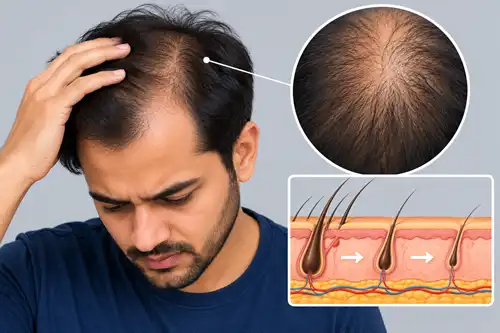
Male pattern baldness, medically known as androgenetic alopecia, is a common form of hair loss that develops gradually in men. It typically begins with a receding hairline, thinning hair around the temples, or hair loss at the crown of the head. Over time, the affected areas may expand, leading to more noticeable baldness.
Male pattern baldness is primarily associated with genetic susceptibility and the effects of androgens, particularly dihydrotestosterone (DHT), on hair follicles. The condition can begin in early adulthood and becomes more common with age.
Although male pattern baldness is not usually a sign of a serious illness, it can affect confidence and emotional well-being. Recognizing the early signs, understanding the causes, and exploring evidence-based treatment options can help men make informed decisions about managing hair loss.
What is Male Pattern Baldness?
Male pattern baldness, or androgenetic alopecia, is a hereditary form of hair loss characterized by progressive thinning of hair in a recognizable pattern. It occurs when genetically susceptible hair follicles gradually become smaller, producing thinner, shorter hairs with each growth cycle.
This process is called follicular miniaturization. As the follicles become increasingly affected, the scalp becomes more visible, and some follicles may eventually stop producing noticeable hair.
Unlike temporary hair shedding, male pattern baldness usually progresses gradually over months or years. It can affect men of different ages and may follow different patterns depending on genetics and individual susceptibility.
Early evaluation is helpful because treatment options are generally more effective at maintaining existing hair than restoring hair in areas where follicles have been severely affected for a long time.
Symptoms of Male Pattern Baldness
The symptoms of androgenetic alopecia typically develop slowly. The pattern and severity vary from person to person.
Common symptoms include:
- Receding hairline: Hair begins to thin around the temples, gradually creating an M-shaped hairline.
- Thinning at the crown: Hair density decreases around the top or back of the scalp.
- Gradual hair thinning: Individual hair strands become finer, shorter, and less noticeable.
- Widening bald areas: The areas affected by hair loss may gradually expand.
- Reduced hair density: The scalp becomes more visible, especially under bright lighting.
- Changes in hair texture: Newly growing hair may appear thinner and weaker than before.
- Progressive hairline changes: The front hairline may move backward over time.
- Increased visibility of the scalp: The crown or upper scalp may become increasingly noticeable.
Male pattern baldness generally does not cause severe itching, pain, redness, or scaling. If hair loss develops suddenly or is accompanied by scalp inflammation, sores, or patchy bald spots, another condition may be responsible and should be evaluated.
Causes of Male Pattern Baldness
Male pattern baldness develops mainly due to genetic factors and the response of hair follicles to androgens.
1. Genetic Predisposition
Genetics plays a major role in androgenetic alopecia. A person may inherit a tendency toward hair loss from either side of the family.
Having close relatives with early or advanced baldness may increase the likelihood of developing the condition, although the timing and severity cannot be predicted precisely from family history alone.
2. Dihydrotestosterone (DHT)
Dihydrotestosterone is an androgen produced from testosterone through the action of an enzyme called 5-alpha reductase.
In genetically susceptible individuals, DHT contributes to the gradual miniaturization of scalp hair follicles. These follicles produce progressively thinner and shorter hairs, eventually resulting in visible thinning.
3. Hair Follicle Miniaturization
Repeated hair growth cycles can become shorter and produce finer hair in affected areas. Over time, this reduces the density and coverage of the scalp.
4. Age
The likelihood of male pattern baldness increases with age. However, it can also begin during the late teenage years or early twenties in susceptible individuals.
5. Family History
A family history of a receding hairline, crown thinning, or early baldness may indicate a higher genetic susceptibility.
6. Other Conditions That Can Cause Hair Loss
Not every case of hair loss is caused by androgenetic alopecia. Thyroid disorders, nutritional deficiencies, certain medicines, severe illness, and physical or emotional stress may contribute to other forms of hair shedding.
These factors do not necessarily cause male pattern baldness itself, but they may coexist with it and influence overall hair density.
Stages and Patterns of Male Pattern Baldness
Male pattern baldness commonly follows a recognizable progression.
1. Early-Stage Hairline Recession
The hairline begins to move backward at the temples. The change may be subtle and can initially go unnoticed.
2. Temple Thinning
The hairline develops more pronounced recession, creating an M-shaped pattern. Hair may remain relatively dense over the middle and back of the scalp.
3. Crown Thinning
A circular or oval area of reduced hair density develops around the crown. The size of this area can increase over time.
4. Progressive Hair Loss
The receding hairline and crown thinning may become more noticeable. The affected areas can gradually expand toward each other.
5. Advanced Baldness
In advanced cases, extensive hair loss occurs across the front and top of the scalp, while hair may remain along the sides and back.
Dermatologists may use the Norwood–Hamilton scale to classify the progression of male pattern baldness. Not every person follows the same sequence or reaches the same stage.
Risk Factors for Male Pattern Baldness
Factors associated with a greater likelihood of androgenetic alopecia include:
- A family history of pattern hair loss.
- Increasing age.
- Genetic sensitivity of scalp hair follicles to androgens.
- Early development of a receding hairline or crown thinning.
Stress, nutritional deficiencies, and certain medical conditions may cause additional hair loss, but they should not automatically be considered the cause of hereditary male pattern baldness.
Diagnosis of Male Pattern Baldness
Diagnosis usually involves examining the scalp, reviewing the history of hair loss, and identifying whether the thinning follows a typical pattern.
1. Medical History
A healthcare professional may ask when the hair loss started, how quickly it has progressed, whether family members have similar hair loss, and whether any medicines or health conditions could contribute.
2. Scalp Examination
The scalp is examined to assess the hairline, crown, distribution of thinning, and condition of the skin.
3. Hair Pull Test
A healthcare professional may gently pull a small group of hairs to assess active shedding. This can help determine whether another form of hair loss may be present alongside pattern baldness.
4. Dermoscopy or Trichoscopy
A magnified examination of the scalp and hair shafts may reveal differences in hair thickness and evidence of follicular miniaturization.
5. Blood Tests
Blood tests are not always necessary for typical male pattern baldness. They may be recommended if symptoms or medical history suggest thyroid disease, iron deficiency, nutritional problems, or another underlying condition.
6. Scalp Biopsy
A scalp biopsy is rarely required but may be considered when the diagnosis is unclear or another scalp disorder is suspected.
Correct diagnosis helps distinguish androgenetic alopecia from temporary hair shedding, alopecia areata, inflammatory scalp conditions, and other causes of hair loss.
Treatment for Male Pattern Baldness
Treatment depends on the extent of hair loss, individual health, treatment preferences, and expectations. The main goals are to slow progression, maintain existing hair, and potentially improve hair density.
1. Minoxidil
Topical minoxidil is an established treatment option for male pattern hair loss. It can help stimulate hair growth and reduce further hair loss in some men.
It must be used consistently as directed. Visible improvement may take approximately six to twelve months, and results vary between individuals. Continued use is generally necessary to maintain the benefits.
Possible side effects include scalp irritation, itching, and unwanted hair growth in nearby areas if the product spreads beyond the intended application site.
2. Finasteride
Finasteride is a prescription medicine that reduces the conversion of testosterone to DHT. It can slow hair loss and may promote some regrowth in men with androgenetic alopecia.
Results take several months and generally require continued treatment. Potential adverse effects include sexual side effects and mood-related symptoms. Discuss the benefits, risks, and suitability of finasteride with a qualified healthcare professional before starting it.
3. Low-Level Laser Therapy
Certain low-level light or laser devices may help improve hair density in some people with hereditary hair loss. Results vary, and these devices are not a guaranteed solution.
A dermatologist can help determine whether this option is appropriate and explain the limitations of the available evidence.
4. Platelet-Rich Plasma (PRP)
PRP involves processing a person’s blood to concentrate platelets and injecting the preparation into the scalp. Some studies suggest potential benefits for hair density, but treatment protocols and results vary.
PRP usually requires multiple sessions, and maintenance treatments may be recommended. Discuss the expected benefits, costs, risks, and evidence with a qualified dermatologist.
5. Hair Transplantation
Hair transplantation may be considered for selected individuals with stable donor hair and suitable expectations. Hair follicles are moved from donor areas to regions affected by baldness.
A transplant does not prevent the surrounding natural hair from continuing to thin, so a long-term plan may be needed to manage ongoing hair loss.
6. Nutritional Assessment
A balanced diet supports normal hair growth. If a deficiency such as iron deficiency is identified, treating that deficiency may improve associated hair shedding.
Supplements should not be taken in high doses without a clear need, as excessive intake of some nutrients can itself contribute to health problems or hair loss.
7. Scalp and Hair Care
Gentle hair care can reduce breakage and help maintain scalp health. Avoiding excessive heat, harsh chemical treatments, and tight hairstyles may reduce additional hair damage.
However, shampoos, oils, and scalp massages do not reverse the genetic process responsible for male pattern baldness.
8. Early Treatment and Follow-Up
Early evaluation may provide a better opportunity to preserve existing hair. A dermatologist can monitor changes over time, assess treatment response, and adjust the plan when necessary.
There is currently no guaranteed treatment that permanently restores all hair lost through advanced androgenetic alopecia.
Homeopathic Treatment for Male Pattern Baldness
Men experiencing hair thinning may seek an individualized consultation to discuss their symptoms, family history, scalp condition, lifestyle, and previous treatments.
At Dr. Sanjay’s Homoeopathy, consultations with Dr. Sanjay Singh, MD (Homoeopathy), may include a detailed discussion of the person’s hair-loss pattern, general health, and concerns. This can help organize the patient’s history and identify issues that may warrant further evaluation.
For progressive or unexplained hair loss, assessment by a qualified dermatologist is important to confirm the diagnosis and discuss proven treatment options.
Homeopathic Remedies for Male Pattern Baldness
Traditional homeopathic literature describes several remedies in connection with hair thinning and hair loss. These include:
1. Lycopodium Clavatum
Traditionally associated in homeopathic practice with certain patterns of hair thinning and scalp complaints.
2. Silicea
Traditionally described in homeopathic materia medica in relation to hair and scalp concerns.
3. Phosphoricum Acidum
Traditionally associated with selected complaints involving hair shedding, including descriptions linked to periods of stress.
4. Natrum Muriaticum
Traditionally described for certain patterns of hair loss and scalp dryness.
5. Thuja Occidentalis
Traditionally used in homeopathic practice for selected skin and hair-related complaints.
These are descriptions of traditional use, not evidence that the remedies prevent genetic hair loss or regrow hair. High-quality clinical evidence supporting homeopathic remedies for androgenetic alopecia is lacking.
No remedy should be selected solely from a list of symptoms. Avoid products that promise guaranteed hair regrowth, and do not discontinue prescribed treatment without discussing it with a qualified healthcare professional.
Lifestyle Tips for Managing Male Pattern Baldness
Lifestyle measures can support general hair and scalp health, although they cannot eliminate the genetic cause of androgenetic alopecia.
1. Follow a Balanced Diet
Eat a varied diet containing adequate protein, vegetables, fruit, whole grains, and other nutrient-rich foods. If a nutritional deficiency is suspected, seek appropriate testing and guidance.
2. Manage Stress
Stress management, sufficient rest, and regular physical activity support general well-being. Significant stress may also trigger a separate type of hair shedding called telogen effluvium.
3. Maintain Gentle Hair Care
Use suitable hair-care products and avoid excessive heat or harsh chemical treatments that can damage hair shafts.
4. Avoid Unnecessary Supplements
Hair supplements are not a substitute for identifying the cause of hair loss. Excessive intake of certain nutrients can be harmful, so supplements should be used when appropriate.
5. Monitor Hair Changes
Photographs taken under consistent lighting and from the same angles may help track changes in the hairline and crown over time.
6. Seek Early Professional Advice
Consult a qualified healthcare professional when thinning becomes noticeable, progresses quickly, or occurs with other symptoms. Early assessment helps distinguish hereditary hair loss from potentially treatable causes.
7. Set Realistic Expectations
Hair growth treatments generally take months to show results. Outcomes vary, and maintaining improvement may require continued treatment.
When to See a Doctor for Male Pattern Baldness
Consider medical assessment if:
- Hair loss begins suddenly or progresses rapidly.
- Bald patches develop unexpectedly.
- Hair loss occurs with scalp redness, pain, scaling, or sores.
- Significant itching or inflammation accompanies hair thinning.
- Hair loss affects the eyebrows, beard, or other body areas.
- You experience fatigue, unexplained weight changes, or other symptoms that could indicate an underlying health condition.
- You are unsure whether the hair loss is hereditary or caused by another condition.
A dermatologist can evaluate the scalp, confirm the diagnosis, and recommend an appropriate treatment plan.
Frequently Asked Questions About Male Pattern Baldness
What is male pattern baldness?
Male pattern baldness, also called androgenetic alopecia, is a hereditary condition in which scalp hair gradually becomes thinner because genetically susceptible follicles respond to androgens, particularly DHT.
What are the early signs of male pattern baldness?
Early signs commonly include a receding hairline around the temples, thinning at the crown, and gradual reduction in hair density on the upper scalp.
What causes male pattern baldness?
The main factors are genetic susceptibility and the effects of DHT on susceptible hair follicles. Age and family history are also associated with its development.
Can male pattern baldness be reversed?
Some treatments can slow hair loss and improve hair density in certain individuals. However, results vary, and advanced follicular miniaturization may limit regrowth. Complete restoration is not guaranteed.
Which treatments are commonly used for male pattern baldness?
Topical minoxidil and prescription finasteride are established treatment options for men. Other options, such as low-level laser therapy, PRP, and hair transplantation, may be considered depending on individual circumstances.
How long does hair-loss treatment take to work?
Visible results often take several months. Topical minoxidil may require six to twelve months for assessment, while finasteride may take several months to show benefits. Individual responses differ.
Can diet prevent male pattern baldness?
A balanced diet supports normal hair health, but it cannot eliminate the genetic and hormonal processes responsible for androgenetic alopecia. Correcting a documented nutritional deficiency may help if it contributes to additional hair loss.
Is male pattern baldness hereditary?
Yes. Genetic susceptibility is a major factor. The condition can be inherited through genes from either side of the family, and its timing and severity vary.
Why choose Dr. Sanjay’s Homoeopathy for Male Pattern Baldness Treatment in Lucknow, India?
Dr. Sanjay’s Homoeopathy is a trusted Homeopathic clinic for male pattern baldness treatment in Lucknow, India. With more than 22 years of experience, Dr. Sanjay Singh, MD (Homoeopathy) focuses on understanding each patient’s hair-loss pattern, family history, lifestyle, and individual health concerns to provide personalized homeopathic consultation. The clinic emphasizes a holistic approach, compassionate care, and treatment planning based on individual needs. Men experiencing progressive hair thinning can learn more about Dr. Sanjay’s Homoeopathy and its approach to individualized care. Patients from across the world trust Dr. Sanjay’s Homoeopathy for Male Pattern Baldness Treatment in Lucknow, India.