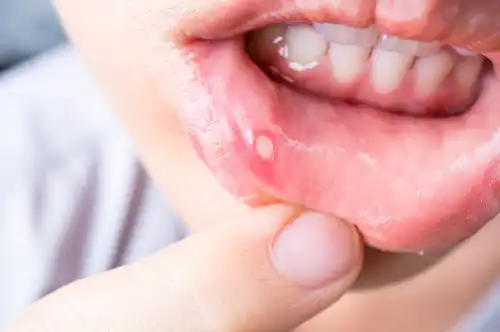
Mouth ulcers are small, painful sores that develop inside the mouth, on the inner cheeks, lips, tongue, gums, or roof of the mouth. They may appear as round or oval sores with a white or yellow centre and a red border. Mouth ulcers can make eating, drinking, brushing, and speaking uncomfortable.
Most common mouth ulcers heal naturally within one to two weeks. However, recurring ulcers, unusually large sores, or ulcers that take longer to heal may require medical evaluation. Understanding the possible causes and choosing appropriate treatment can help relieve discomfort and reduce the frequency of future episodes.
What are Mouth Ulcers?
Mouth ulcers are open sores that develop on the soft tissues inside the mouth. They are also commonly called oral ulcers or canker sores when they are aphthous ulcers.
These sores may occur individually or in groups. Some are small and heal quickly, while others may be larger, deeper, and more painful.
Mouth ulcers are not all caused by the same condition. Minor injuries, irritation, nutritional deficiencies, certain medicines, and underlying medical conditions can contribute to their development. Aphthous ulcers inside the mouth are different from cold sores caused by the herpes simplex virus, which commonly appear on or around the lips. Ordinary aphthous ulcers are not contagious.
Symptoms of Mouth Ulcers
The symptoms of mouth ulcers vary depending on their size, number, location, and underlying cause.
Common symptoms include:
- Painful sores: Small, round or oval ulcers develop inside the mouth.
- White or yellow centre: The ulcer often has a pale centre surrounded by a red border.
- Burning sensation: A tingling or burning feeling may occur before the ulcer appears.
- Pain while eating: Spicy, salty, acidic, or hot foods may increase discomfort.
- Difficulty drinking: Larger or more painful ulcers may make drinking uncomfortable.
- Pain while speaking: Ulcers on the tongue, lips, or inner cheeks may cause discomfort during speech.
- Sensitivity while brushing: Contact with a toothbrush or toothpaste may irritate the sore.
- Multiple ulcers: Several sores may appear at the same time or develop one after another.
- Recurring episodes: Some people experience repeated outbreaks, even after earlier ulcers have healed.
A person may also experience fever, swollen lymph nodes, or other symptoms when ulcers occur alongside an infection or another medical condition. These additional symptoms should be assessed rather than automatically attributed to ordinary mouth ulcers.
Causes of Mouth Ulcers
Mouth ulcers can develop for several reasons. In many cases, the exact cause is not identified, but certain triggers and underlying conditions may contribute.
1. Accidental Injury Inside the Mouth
Biting the inside of the cheek, brushing too aggressively, dental procedures, or irritation from braces and dentures can damage the delicate lining of the mouth and cause ulcers.
2. Nutritional Deficiencies
Low levels of certain nutrients may contribute to recurring mouth ulcers. These include:
- Iron
- Vitamin B12
- Folate
- Zinc
Not everyone with mouth ulcers has a nutritional deficiency. Testing may be appropriate when ulcers recur frequently or occur alongside symptoms such as fatigue, weakness, or other signs of deficiency.
3. Stress and Fatigue
Some people notice that mouth ulcers appear during periods of emotional stress, poor sleep, or physical exhaustion. These factors may contribute to flare-ups in susceptible individuals.
4. Food-Related Irritation
Spicy, acidic, salty, or rough foods can irritate existing ulcers. Some individuals also notice a pattern between particular foods and recurring sores.
Food irritation does not necessarily mean that a person has a food allergy.
5. Toothpaste and Oral Care Products
Some people find that toothpaste or mouthwash containing sodium lauryl sulphate (SLS) irritates their mouth or is associated with recurring ulcers. Switching to a suitable SLS-free toothpaste may help some individuals.
6. Hormonal Changes
Hormonal fluctuations may be associated with recurring mouth ulcers in some people, including around menstruation.
7. Medicines
Certain medicines may contribute to mouth ulcers or inflammation of the oral lining. If ulcers begin after starting a new medicine, discuss the timing with the prescribing healthcare professional rather than stopping the medicine yourself.
8. Infections
Some viral infections can cause mouth sores, sometimes alongside fever, sore throat, or skin rashes. These sores may require a different assessment and treatment approach from ordinary aphthous ulcers.
9. Underlying Medical Conditions
Recurring or persistent mouth ulcers can sometimes be associated with conditions such as coeliac disease, inflammatory bowel disease, Behçet’s disease, or disorders affecting the immune system.
Persistent ulcers should be evaluated to identify any underlying cause that may require specific treatment.
Types of Mouth Ulcers
Mouth ulcers can be classified according to their appearance, size, cause, and pattern of recurrence.
- Minor Aphthous Ulcers: Minor aphthous ulcers are the most common type. They are usually small, shallow, and painful, with a pale centre and red border. They generally heal within one to two weeks and usually do not leave scars.
- Major Aphthous Ulcers: Major aphthous ulcers are larger and deeper than minor ulcers. They may cause considerable pain and interfere with eating or drinking. These ulcers can take several weeks to heal and may leave scars. Medical evaluation is recommended, particularly if they recur or significantly affect daily activities.
- Herpetiform Aphthous Ulcers: Herpetiform aphthous ulcers consist of many tiny sores that may appear in clusters. Despite their name, they are not caused by the herpes simplex virus. The individual sores may join together and form larger irregular areas. A healthcare professional can help distinguish them from other causes of oral sores.
- Traumatic Mouth Ulcers: These ulcers develop after injury or irritation, such as cheek biting, a sharp tooth, dental appliances, or aggressive brushing. They often improve after the source of irritation is removed and the tissue is allowed to heal.
- Ulcers Associated With Medical Conditions: Some ulcers develop alongside infections, nutritional deficiencies, inflammatory disorders, or other medical conditions. Treatment depends on the underlying cause rather than the appearance of the sore alone.
Risk Factors for Mouth Ulcers
Certain factors may increase the likelihood of developing mouth ulcers or experiencing repeated episodes.
- A history of recurring aphthous ulcers.
- A family history of frequent mouth ulcers.
- Accidental injury or repeated irritation inside the mouth.
- Low levels of iron, vitamin B12, folate, or other important nutrients.
- Stress or disrupted sleep.
- Sensitivity to certain oral care products.
- Hormonal changes.
- Certain medicines.
- Underlying gastrointestinal, inflammatory, or immune-related conditions.
Having one or more risk factors does not necessarily mean that a person will develop mouth ulcers.
Diagnosis of Mouth Ulcers
Most typical minor mouth ulcers can be identified through a clinical examination. However, recurring, unusually large, or persistent ulcers may require further investigation.
- Medical and Dental History: The healthcare professional may ask when the ulcers first appeared, how often they recur, how long they take to heal, and whether there are possible triggers such as injury, stress, foods, or medicines.
- Examination of the Mouth: The mouth, tongue, gums, inner cheeks, and lips are examined to assess the size, location, number, and appearance of the sores.
- Blood Tests: Blood tests may be recommended when recurring ulcers raise concerns about iron deficiency, vitamin B12 deficiency, folate deficiency, or another underlying medical condition.
- Investigation of Underlying Conditions: If symptoms suggest a gastrointestinal, inflammatory, or immune-related disorder, additional investigations may be necessary.
- Biopsy or Specialist Assessment: A persistent ulcer that does not heal, particularly one lasting three weeks or longer, may need assessment by a dentist, oral medicine specialist, or other appropriate clinician. A biopsy may be recommended if the appearance or clinical history raises concern about another condition.
The appropriate investigations depend on the clinical findings.
Mouth Ulcers Treatment
Treatment depends on the severity of the ulcer, how frequently it occurs, and whether an underlying cause has been identified. Most minor mouth ulcers heal naturally, but treatment may help relieve pain and make eating and drinking more comfortable.
1. Saltwater Mouth Rinse
A saltwater rinse may help keep the mouth clean and soothe irritation.
Dissolve half a teaspoon of salt in a glass of warm water, rinse the mouth gently, and spit it out. Do not swallow the rinse.
2. Pain-Relief Gels and Mouthwashes
A pharmacist, dentist, or doctor may recommend suitable products to reduce discomfort. Depending on the situation, these may include protective pastes, pain-relieving gels, or mouth rinses.
Follow the product instructions and seek professional advice before using products in young children.
3. Prescription Treatment
For severe, persistent, or frequently recurring ulcers, a healthcare professional may prescribe treatments such as topical corticosteroids or other medicines according to the diagnosis.
Do not use prescription steroid preparations inside the mouth without appropriate guidance.
4. Correcting Nutritional Deficiencies
If testing identifies a deficiency in iron, vitamin B12, folate, or another nutrient, treatment may include correcting that deficiency. Supplements should be selected according to the individual’s needs rather than taken unnecessarily.
5. Removing Sources of Irritation
A sharp tooth, poorly fitting denture, or braces rubbing against the mouth may delay healing. A dentist can assess the problem and recommend an appropriate adjustment.
6. Treating Underlying Conditions
If mouth ulcers are associated with a medicine, infection, or underlying medical condition, treatment may need to address that cause.
7. Specialist Care for Severe or Recurrent Ulcers
People with large, unusually painful, or frequently recurring ulcers may need a tailored treatment plan. A clinician can determine whether additional investigations or specialist treatment are required.
Most ordinary mouth ulcers improve within one to two weeks, but a persistent ulcer should not be treated indefinitely with self-care alone.
Homeopathic Treatment for Mouth Ulcers
Mouth ulcers can cause discomfort during eating, drinking, speaking, and brushing. People who experience repeated episodes may want to understand possible triggers, identify contributing factors, and explore available care options.
At Dr. Sanjay’s Homoeopathy, Dr. Sanjay Singh provides individualized consultations that consider a person’s symptoms, medical history, lifestyle, and previous treatment. During a consultation, patients can discuss the pattern of their mouth ulcers, how frequently they occur, and whether other symptoms accompany them.
Homeopathic practice follows an individualized approach to remedy selection, based on the person’s reported symptoms and overall presentation. People seeking a homeopathic consultation can discuss their concerns and learn about appropriate next steps for their health.
For recurring mouth ulcers, identifying possible nutritional deficiencies, sources of oral irritation, medicine-related effects, or underlying medical conditions is also important. Homeopathic treatment has not been reliably demonstrated to cure mouth ulcers or prevent their recurrence, so it should not replace appropriate dental or medical evaluation and evidence-based treatment.
If an ulcer is unusually large, repeatedly returns, causes significant difficulty eating or drinking, or does not heal, seek assessment from a qualified healthcare professional.
Homeopathic Remedies for Mouth Ulcers
In traditional homeopathic literature, certain remedies are associated with different patterns of mouth ulcers and oral discomfort. These traditional indications do not establish that the remedies are effective treatments.
1. Borax
Traditionally associated with mouth ulcers and sensitivity of the oral lining.
2. Mercurius Solubilis
Traditionally associated with oral complaints involving irritation and increased salivation.
3. Nitricum Acidum
Traditionally associated with painful sores affecting the mouth and other mucous membranes.
4. Sulphur
Traditionally associated with certain recurring skin and mucosal complaints.
5. Arsenicum Album
Traditionally associated with burning sensations and selected complaints involving irritated tissues.
Important: These remedies have not been reliably established as effective treatments for mouth ulcers. They should not replace examination, appropriate pain relief, investigation of nutritional deficiencies, or treatment of an underlying condition. Seek professional advice before using any remedy, especially for children or persistent symptoms.
Lifestyle Tips to Manage Mouth Ulcers
Simple daily habits may help reduce irritation, support healing, and lower the likelihood of repeated episodes.
- Use a soft-bristled toothbrush: Brush gently to avoid injuring the lining of the mouth.
- Choose suitable toothpaste: Consider an SLS-free toothpaste if your ulcers appear to be associated with irritation from oral care products.
- Avoid irritating foods: Reduce spicy, salty, acidic, or rough foods while an ulcer is healing.
- Choose soft foods: Soft meals may be more comfortable when ulcers are painful.
- Drink enough fluids: Maintain hydration, particularly if eating or drinking is uncomfortable.
- Maintain oral hygiene: Brush gently and clean between the teeth as appropriate.
- Identify possible triggers: Record whether particular foods, medicines, products, or periods of stress are associated with repeated episodes.
- Avoid touching the sores: Picking at or irritating an ulcer may worsen discomfort.
- Manage stress and sleep: Regular sleep and stress-management habits may help some people who experience stress-related flare-ups.
- Arrange dental care when needed: Ask a dentist to assess sharp teeth, braces, or dentures that repeatedly irritate the mouth.
These measures can help with comfort and prevention, but recurring ulcers may require further investigation.
When to See a Doctor for Mouth Ulcers
Consult a dentist or healthcare professional if:
- A mouth ulcer lasts three weeks or longer.
- The ulcer is unusually large or painful.
- New ulcers repeatedly appear before older ones heal.
- The sores keep returning frequently.
- The ulcer bleeds, becomes increasingly red, or worsens.
- You have difficulty eating or drinking.
- Mouth ulcers occur alongside fever, unexplained weight loss, or other persistent symptoms.
- You also develop ulcers on the skin or genital area, or experience painful, red, or swollen joints.
Seek urgent medical care if you cannot drink enough fluids, show signs of significant dehydration, or develop severe symptoms.
A mouth ulcer that does not heal should be assessed even if it is not painful. Persistent sores can sometimes indicate a more serious oral condition, so timely evaluation is important.
Frequently Asked Questions About Mouth Ulcers
What causes mouth ulcers?
Mouth ulcers may develop because of minor injury, irritation from dental appliances, certain oral care products, nutritional deficiencies, stress, medicines, or underlying medical conditions. Sometimes the exact cause is unclear.
How long do mouth ulcers take to heal?
Most common minor mouth ulcers heal within one to two weeks. Larger or deeper ulcers may take longer and may require professional treatment.
Are mouth ulcers contagious?
Ordinary aphthous ulcers inside the mouth are not contagious. They are different from cold sores caused by herpes simplex virus, which can spread through direct contact.
Why do mouth ulcers keep coming back?
Recurring ulcers may be associated with irritation, stress, nutritional deficiencies, certain medicines, hormonal changes, or underlying medical conditions. Frequent episodes may require further evaluation.
Which vitamin deficiency causes mouth ulcers?
Low levels of vitamin B12, folate, and iron may be associated with recurring mouth ulcers. Other factors can also contribute, so testing may be needed to identify a deficiency.
What foods should I avoid when I have mouth ulcers?
Spicy, salty, acidic, very hot, or rough foods may worsen pain. Soft foods and cool drinks may be more comfortable until the ulcer heals.
Can mouth ulcers be a sign of a serious condition?
Most mouth ulcers are harmless and heal naturally. However, persistent or unusually large ulcers may sometimes be associated with underlying medical conditions or other oral problems and should be examined.
Can homeopathy cure mouth ulcers?
Homeopathy has reliably demonstrated to cure mouth ulcers or prevent their recurrence. People with persistent or recurrent ulcers should seek appropriate dental or medical assessment.
How can mouth ulcers be prevented?
Gentle brushing, avoiding known irritants, maintaining a balanced diet, protecting the mouth from injury, and identifying individual triggers may help reduce recurring episodes.
When should I worry about a mouth ulcer?
An ulcer lasting three weeks or longer, a sore that bleeds or worsens, or recurring ulcers that interfere with eating should be assessed by a dentist or healthcare professional.
Why choose Dr. Sanjay’s Homoeopathy for Mouth Ulcers Treatment in Lucknow, India?
Dr. Sanjay’s Homoeopathy is a trusted Homeopathic Centre for Mouth Ulcers Treatment in Lucknow, India. With more than 22 years of experience, Dr. Sanjay Singh, MD (Homoeopathy) considers a patient’s symptoms, medical history, lifestyle, and previous treatment during consultation. People experiencing recurring mouth ulcers can discuss their concerns and learn about appropriate next steps in a patient-focused environment. Persistent oral ulcers may require dental or medical examination to identify nutritional deficiencies, irritation, or underlying conditions, and necessary medical care should not be delayed. Patients from across the world trust Dr. Sanjay’s Homoeopathy for Mouth Ulcer Treatment in Lucknow, India.