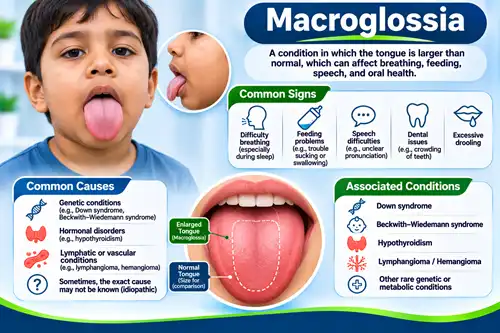
Quick answer: Macroglossia means an abnormally large tongue. It can be present from birth (for example in Beckwith-Wiedemann syndrome, Down syndrome, or congenital hypothyroidism) or develop later because of conditions such as amyloidosis, acromegaly, hypothyroidism, angioedema, infection, or a tumour. It can affect speech, eating, breathing, and teeth alignment. Treatment depends on the cause and is directed by a doctor.
Introduction
Macroglossia is a condition in which the tongue is larger than normal for the size of the mouth. The tongue may look swollen, may stick out of the mouth, or may show scalloped edges from pressing against the teeth.
Macroglossia is not contagious. It is a sign of an underlying condition rather than a disease on its own, so finding the cause is the most important step in deciding what to do.
The condition can range from a mild enlargement that causes few problems to a severe one that interferes with speech, feeding, sleep, and breathing. Sudden swelling of the tongue is an emergency, because it can block the airway.
What is Macroglossia?
Macroglossia is an enlarged tongue, either truly larger (true macroglossia) or appearing large because of a small jaw or mouth (relative macroglossia). True macroglossia involves an actual increase in the size of the tongue tissue, due to muscle enlargement, deposits, fluid, or abnormal tissue growth.
It can be congenital (present at birth) or acquired (developing later in life). It can affect people of all ages, including infants, children, and adults.
Macroglossia may be confused with temporary tongue swelling from injury, an allergic reaction, or infection, and with a normal tongue in a person with a small mouth or jaw. A healthcare professional can help distinguish between these, especially when symptoms include difficulty breathing, swallowing, or speaking.
What are the Symptoms of Macroglossia?
Symptoms depend on how enlarged the tongue is and what is causing it.
Common symptoms include:
- Visible enlargement: The tongue appears large, thick, or swollen.
- Tongue protruding: The tongue may stick out of the mouth, particularly in children.
- Scalloped edges: Indentations along the sides of the tongue from pressure against the teeth.
- Difficulty speaking: Unclear or slurred speech and difficulty pronouncing certain sounds.
- Difficulty eating and swallowing: Trouble chewing, swallowing, or feeding, especially in infants.
- Drooling: Excess saliva spilling from the mouth.
- Noisy breathing and snoring: The enlarged tongue may narrow the airway.
- Sleep apnoea: Pauses in breathing during sleep, with daytime sleepiness.
- Dental and jaw changes: Open bite, gaps between teeth, or changes in jaw growth over time.
- Dry or cracked tongue: Due to constant exposure to air.
- Tongue pain or sores: Caused by biting or rubbing against the teeth.
- Changes in tongue appearance: Depending on cause, the surface may look smooth, lumpy, discoloured, or pale.
Sudden tongue swelling, difficulty breathing, difficulty swallowing, blue lips, or inability to speak may indicate a life-threatening airway problem and needs emergency care.
What are the Causes of Macroglossia?
Macroglossia can develop due to inherited conditions, hormonal disorders, deposits in the tissues, swelling, or tumours.
1. Congenital Causes
- Beckwith-Wiedemann syndrome: An overgrowth condition in which an enlarged tongue is common.
- Down syndrome (trisomy 21): Often associated with a relatively large tongue and a smaller mouth.
- Congenital hypothyroidism: Underactive thyroid from birth can cause tongue enlargement.
- Lymphatic or vascular malformations: Abnormal vessels in the tongue can cause swelling and enlargement.
- Metabolic and storage conditions: Such as mucopolysaccharidoses and glycogen storage disease type II (Pompe disease).
2. Amyloidosis
Abnormal protein deposits in the tongue can cause it to become enlarged and firm.
3. Hypothyroidism
An underactive thyroid in adults can cause swelling of tissues, including the tongue.
4. Acromegaly
Excess growth hormone, usually from a pituitary tumour, can cause enlargement of the tongue along with other body changes.
5. Angioedema and Allergic Reactions
Sudden swelling from an allergic reaction, a hereditary condition, or certain medicines can involve the tongue and is an emergency.
6. Infections and Inflammation
Infections of the tongue or mouth, or inflammation of the tissues, can cause swelling.
7. Tumours and Growths
Benign or malignant growths in or near the tongue can cause local enlargement.
8. Injury
Trauma, bleeding, or a burn can cause temporary swelling.
9. Other Causes
Some medicines, prolonged muscle problems, or certain syndromes can also contribute.
Identifying the underlying cause is essential because the treatment and outlook differ greatly from one condition to another.
Types of Macroglossia
- True Macroglossia: The tongue tissue itself is enlarged. This may be caused by muscle growth, deposits, abnormal vessels, or growths.
- Relative (Pseudo) Macroglossia: The tongue is normal in size but appears large because the mouth or jaw is small, or the tongue sits abnormally.
- Congenital Macroglossia: Present at birth, often as part of a syndrome or a hormonal or metabolic condition.
- Acquired Macroglossia: Develops later in life because of a condition such as amyloidosis, hypothyroidism, acromegaly, infection, swelling, or a tumour.
- Transient Macroglossia: Temporary enlargement caused by allergy, injury, infection, or a medicine reaction.
Correct classification helps guide investigation and treatment.
Risk Factors for Macroglossia
- Having a condition such as Down syndrome or Beckwith-Wiedemann syndrome.
- A family history of congenital overgrowth, thyroid conditions, or hereditary angioedema.
- Thyroid disease or pituitary disorders.
- Conditions linked to amyloid deposits, including some blood and chronic inflammatory diseases.
- Allergies, or a history of angioedema.
- Use of certain medicines linked to tongue or facial swelling, such as some blood pressure medicines.
- Trauma or infection involving the mouth.
Not everyone with these risk factors develops macroglossia. The cause and individual factors influence whether and how it appears.
Diagnosis of Macroglossia
Diagnosis involves identifying whether the tongue is truly enlarged and finding the cause.
- Physical Examination: The doctor examines the tongue, mouth, jaw, teeth, and throat, and checks speech, swallowing, and breathing.
- Medical History: Questions cover when the enlargement began, whether it was present at birth or came on gradually or suddenly, family history, medicines, allergies, and other symptoms.
- Blood Tests: Thyroid function and other hormone tests may be done, along with tests for other suspected conditions.
- Imaging: Ultrasound, MRI, or CT scans may show the extent of enlargement, malformations, or a growth.
- Sleep Study: If snoring or breathing pauses occur during sleep, a sleep study may be advised.
- Biopsy and Genetic Tests: A small tissue sample may be needed if amyloidosis or a tumour is suspected. Genetic tests may be suggested when a syndrome is likely.
- Specialist Assessment: Evaluation may involve an ENT specialist, paediatrician, endocrinologist, speech therapist, dentist or orthodontist, and, depending on the cause, other specialists.
Treatment for Macroglossia
Treatment depends on the cause, the degree of enlargement, and the problems it causes.
- Treating the Underlying Cause: Hypothyroidism is treated with thyroid hormone replacement, acromegaly with treatment of the pituitary condition, and amyloidosis with treatment directed at the underlying disease. Allergic swelling needs urgent medical treatment.
- Observation: Mild macroglossia that causes no problems may only need regular monitoring.
- Speech and Swallowing Therapy: A speech-language therapist can help with speech clarity, feeding, and swallowing.
- Orthodontic and Dental Care: Dentists and orthodontists can address tooth alignment, open bite, and jaw development.
- Treatment of Malformations: Lymphatic or vascular malformations may be managed with medical therapy, injections, or other procedures decided by a specialist team.
- Surgical Reduction: In severe cases that cause breathing, feeding, or speech problems, a surgeon may recommend a procedure to reduce the size of the tongue (partial glossectomy).
- Airway Support: Sleep apnoea or airway obstruction may require specialised support, and severe cases may need urgent airway management.
- Ongoing Review: Regular follow-up tracks growth, breathing, speech, and dental changes.
Homeopathic Treatment for Macroglossia
Macroglossia has many possible causes, some of which need medical, surgical, or hormonal treatment. Families and patients often look for additional support for general wellbeing, comfort, sleep, appetite, and recurring mouth or throat complaints while following their doctors’ plan.
At Dr. Sanjay’s Homoeopathy, consultations with Dr. Sanjay Singh, MD (Homoeopathy), include a careful discussion of the patient’s symptoms, medical history, reports, current medicines, and lifestyle. The aim is to understand how the person is feeling overall and to offer individualized, supportive care alongside medical treatment. Patients are never asked to stop or change prescribed medicines, therapy, or recommended procedures.
Remedies Traditionally Used in Homeopathic Practice for the Treatment of Macroglossia
In traditional homeopathic practice, some remedies have been associated with particular patterns of swelling, tongue and mouth complaints, and general constitution. These include:
- Mercurius solubilis: Traditionally associated with a flabby tongue showing tooth impressions and increased salivation.
- Apis mellifica: Traditionally described for puffy, swollen tissues with stinging or burning sensations.
- Calcarea carbonica: Traditionally associated with slow development and sluggish constitutions in children.
- Belladonna: Traditionally associated with sudden redness and swelling.
- Sulphur: Traditionally associated with recurring complaints and burning sensations.
These descriptions reflect traditional homeopathic use. They are not a replacement for treating the underlying cause, for emergency care of sudden swelling, or for recommended medical or surgical treatment. Remedies are chosen individually after consultation.
Lifestyle Tips for Managing Macroglossia
- Maintain Good Oral Hygiene: Brush teeth and gently clean the tongue to prevent infection and sores.
- Keep the Mouth Moist: Sip water regularly and avoid very dry, spicy, or irritating foods if the tongue is sore.
- Eat Soft, Easy-to-Swallow Foods: Take small bites, chew slowly, and sit upright while eating. Infants may need feeding techniques taught by a specialist.
- Practise Speech and Swallowing Exercises: Follow the speech therapist’s exercises regularly.
- Sleep with the Head Slightly Raised: This may ease snoring and breathing for some people, but breathing pauses should always be assessed by a doctor.
- Avoid Known Triggers: If allergy or medicine reactions are suspected, avoid the trigger and tell every doctor about it.
- Attend Dental and Orthodontic Reviews: Regular check-ups catch tooth and jaw changes early.
- Support Emotional Wellbeing: Speech and appearance concerns can affect confidence, particularly in children. Gentle encouragement, patience, and counselling when needed help.
When to See a Doctor for Macroglossia
Seek medical advice if the tongue looks enlarged, swollen, or sticks out of the mouth, or if speech, eating, or breathing is affected.
Arrange prompt assessment if you notice:
- A tongue that is gradually getting larger.
- Persistent difficulty with speech, chewing, or swallowing.
- Snoring, breathing pauses, or tiredness during the day.
- Poor feeding or poor weight gain in an infant.
- Changes in teeth alignment or jaw growth.
- Tongue sores, bleeding, or a lump that does not heal.
- Other symptoms such as fatigue, weight change, joint pain, or skin changes.
Seek emergency care immediately for sudden swelling of the tongue or face, difficulty breathing, difficulty swallowing, noisy or laboured breathing, blue lips, or inability to speak. These can be signs of a blocked airway.
Frequently Asked Questions About Macroglossia
What is macroglossia?
Macroglossia is an abnormally enlarged tongue, which may be present from birth or develop later because of an underlying condition.
What causes macroglossia?
Causes include congenital conditions such as Beckwith-Wiedemann syndrome, Down syndrome, and congenital hypothyroidism, and acquired conditions such as amyloidosis, hypothyroidism, acromegaly, angioedema, infection, and tumours.
Is macroglossia contagious?
No. It is caused by an underlying condition and cannot spread from person to person.
Is macroglossia dangerous?
It depends on the cause and degree. Mild cases may cause few problems, but significant enlargement can affect breathing, feeding, speech, and sleep. Sudden swelling of the tongue is an emergency.
What is the difference between macroglossia and a swollen tongue?
Macroglossia usually refers to ongoing enlargement of the tongue, while a swollen tongue may refer to temporary swelling from allergy, injury, or infection. A doctor can tell them apart.
Can macroglossia affect speech?
Yes. A large tongue can make speech unclear and cause difficulty with certain sounds. Speech therapy often helps.
Can macroglossia cause sleep apnoea?
Yes. A large tongue can narrow the airway during sleep, leading to snoring and breathing pauses. A sleep assessment may be needed.
Can macroglossia be treated?
Yes. Treatment depends on the cause and may include treating the underlying condition, speech and swallowing therapy, dental care, or surgery in selected cases.
Is macroglossia common in Down syndrome?
A large-appearing tongue is common in Down syndrome, often because the mouth is small. A specialist can assess whether treatment is needed.
Can homeopathy be taken along with treatment for macroglossia?
Many families choose a homeopathic consultation for overall wellbeing while continuing their doctors’ treatment and therapy. It is important to inform every doctor about all medicines being taken, and never to stop or change prescribed treatment without medical advice.
Why choose Dr. Sanjay’s Homoeopathy for macroglossia treatment in Lucknow, India?
Dr. Sanjay’s Homoeopathy is a trusted Homeopathy Centre for Macroglossia Treatment in Lucknow, India. With more than 22 years of experience, Dr. Sanjay Singh, MD (Homoeopathy) follows an individualized consultation approach that considers the patient’s symptoms, medical history, lifestyle, and previous treatment. People experiencing an unusually enlarged tongue, speech difficulties, chewing or swallowing discomfort, airway obstruction, or associated oral irritation can discuss their concerns and learn about available care options in a patient-focused environment. Identifying the underlying congenital, metabolic, or systemic cause remains an important part of effective care, and patients should continue necessary clinical evaluation and medical treatment as advised by their healthcare professional. Patients from across the world trust Dr. Sanjay’s Homoeopathy for Macroglossia Treatment in Lucknow, India.