Introduction
Nail psoriasis is a chronic inflammatory condition that affects the fingernails, toenails, or both. It occurs when the immune system drives changes in the tissues responsible for nail growth, leading to visible changes in the nail plate and the skin underneath it.
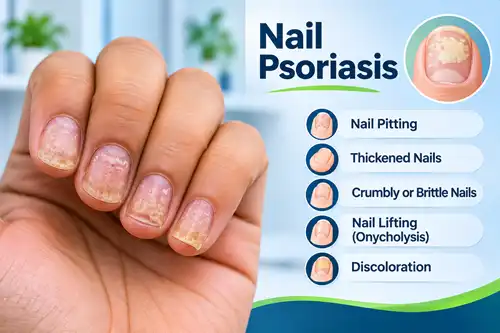
Common symptoms include tiny pits in the nails, yellow or white discolouration, thickening, roughness, crumbling, and separation of the nail from the nail bed. Some people also experience tenderness or pain that makes everyday activities difficult.
Nail psoriasis frequently occurs in people who have psoriasis on other parts of the body, but it can sometimes develop without obvious skin symptoms. It may also occur alongside psoriatic arthritis, an inflammatory condition affecting the joints.
Although nail psoriasis can be persistent and difficult to treat, appropriate dermatological care, protective nail habits, and consistent treatment can help improve symptoms and reduce discomfort.
What is Nail Psoriasis?
Nail psoriasis is a form of psoriasis that affects the nail matrix, nail bed, or surrounding nail structures.
The nail matrix is the area responsible for producing new nail cells. Inflammation in this area can cause changes in the nail plate, including pits, grooves, and irregular growth. When the nail bed is affected, the nail may become discoloured, thicken underneath, or separate from the underlying tissue.
Nail psoriasis is not contagious. It cannot spread from one person to another through touching, sharing ordinary household spaces, or routine social contact.
The condition can affect one nail or several nails. Its severity varies from mild surface changes to extensive damage that causes pain, nail separation, and difficulty using the hands or walking comfortably.
Because fungal nail infections can produce similar changes, an accurate diagnosis is important before beginning treatment.
What are the Symptoms of Nail Psoriasis?
The symptoms of nail psoriasis depend on which parts of the nail are affected and how severe the inflammation is.
1. Nail Pitting
Nail pitting is one of the characteristic signs of nail psoriasis. It appears as small, shallow depressions on the nail surface.
The pits may be scattered across one or more nails and can make the nail look uneven or rough. Although nail pitting is associated with psoriasis, it can also occur in other conditions.
2. Nail Discolouration
Affected nails may develop white, yellow, or brownish areas. Some people develop a translucent yellow-red patch beneath the nail, sometimes described as an oil-drop or salmon-patch appearance.
Discolouration may occur alongside thickening, ridges, or nail separation.
3. Thickening of the Nails
Psoriasis can cause a buildup of keratin and other material beneath the nail plate. This may make the nail appear thicker, uneven, or raised.
The thickened material can become uncomfortable, particularly when wearing shoes or performing activities that put pressure on the affected nails.
4. Nail Separation (Onycholysis)
Onycholysis occurs when the nail separates from the nail bed. The detached portion may look white or yellow because air enters the space beneath it.
Separated nails can collect dirt and moisture, increasing the risk of secondary infection. Avoid digging beneath the nail or attempting to remove the detached portion aggressively.
5. Crumbling and Rough Nails
Severe nail psoriasis may make the nail plate fragile, rough, or crumbly. The nail can break more easily and may become difficult to trim safely.
6. Ridges and Irregular Nail Growth
Longitudinal ridges, surface roughness, and irregular growth can occur when inflammation affects the nail matrix.
The changes may become more noticeable as the nail grows, particularly if the condition remains untreated.
7. Blood Spots Beneath the Nail
Small areas of bleeding beneath the nail can sometimes occur with nail psoriasis. However, blood beneath a nail may also result from trauma or other nail conditions and should not automatically be attributed to psoriasis.
8. Nail Pain and Tenderness
Some people experience soreness, pressure, or tenderness around affected nails. Pain may interfere with typing, handling objects, walking, or wearing closed shoes.
Persistent pain, swelling, or discharge warrants medical assessment because infection or another condition may be present.
What are the causes of Nail Psoriasis?
Nail psoriasis is associated with abnormal immune activity that produces inflammation in the nail matrix or nail bed. The exact cause of psoriasis is not fully understood, but genetic and environmental factors contribute to its development.
1. Immune System Dysfunction
Psoriasis is an immune-mediated inflammatory disease. Changes in immune signalling can affect the normal production and maturation of skin and nail cells.
When inflammation affects the nail matrix, the newly formed nail may develop pits, ridges, and other structural abnormalities.
2. Genetic Factors
A family history of psoriasis may increase a person’s likelihood of developing the condition. However, having an affected relative does not mean that nail psoriasis will necessarily develop.
3. Existing Psoriasis
Nail psoriasis is more common among people who have psoriasis affecting the skin. It may develop years after skin symptoms begin, although it can occasionally appear without obvious skin plaques.
People with psoriasis should report new nail changes to their healthcare professional.
4. Nail Injury
Repeated pressure, nail biting, aggressive manicures, and injuries to the nail or surrounding skin can aggravate existing psoriasis in susceptible individuals.
Physical trauma may trigger or worsen psoriasis at an injured site, a response known as the Koebner phenomenon.
5. Associated Psoriatic Arthritis
Nail psoriasis is associated with psoriatic arthritis, which causes inflammation in the joints and sometimes the areas where tendons and ligaments attach to bones.
The relationship does not mean that everyone with nail psoriasis will develop arthritis. However, recognising joint symptoms early is important.
Risk Factors for Nail Psoriasis
Factors associated with nail psoriasis include:
- A personal history of psoriasis affecting the skin or scalp.
- A family history of psoriasis.
- A history of psoriatic arthritis.
- Repeated nail trauma or irritation.
- Nail biting, picking, or aggressive cuticle care.
- Inflammation affecting the nail matrix or nail bed.
These factors may contribute to the likelihood or severity of nail changes, but they do not independently establish a diagnosis.
Types and Patterns of Nail Psoriasis
Nail psoriasis is commonly described according to the area of the nail that is affected.
1. Nail Matrix Psoriasis
The nail matrix produces the cells that form the nail plate. Inflammation in this area may cause:
- Nail pitting.
- Transverse grooves or ridges.
- Roughness of the nail surface.
- Nail plate crumbling in more severe cases.
2. Nail Bed Psoriasis
The nail bed is the tissue beneath the nail plate. When it is affected, symptoms may include:
- Nail separation.
- Yellow or reddish-yellow discolouration.
- Thickening beneath the nail.
- Small areas of bleeding beneath the nail.
3. Mixed Nail Psoriasis
Some people develop changes involving both the nail matrix and nail bed. This can produce several symptoms simultaneously, such as pitting, thickening, discolouration, and nail separation.
The specific pattern helps a dermatologist determine the most appropriate treatment.
Nail Psoriasis vs Fungal Nail Infection
Nail psoriasis and fungal nail infections can look similar, and some people may have both conditions at the same time.
| Feature | Nail psoriasis | Fungal nail infection |
|---|---|---|
| Nail pitting | Common | Less typical |
| Nail thickening | Common | Common |
| Discolouration | White, yellow, or brownish changes | Often white, yellow, or brownish changes |
| Nail separation | Common | Can occur |
| Skin psoriasis elsewhere | May be present | Not a defining feature |
| Confirmation | Clinical examination; further tests when needed | Nail samples may be tested for fungus |
These differences are general patterns, not a reliable way to diagnose the condition at home. A dermatologist may take nail clippings or scrapings for laboratory testing when fungal infection is suspected.
Correct identification matters because antifungal medication does not treat nail psoriasis, while psoriasis medication does not eliminate a fungal infection.
Diagnosis of Nail Psoriasis
A dermatologist can usually assess nail psoriasis through an examination of the nails and a review of the person’s medical history.
1. Medical History
The clinician may ask about:
- When the nail changes first appeared.
- Whether one or several nails are affected.
- A personal or family history of psoriasis.
- Nail pain, tenderness, or separation.
- Previous injuries, manicures, or fungal infections.
- Joint pain, swelling, or morning stiffness.
- Treatments already tried.
2. Nail Examination
The dermatologist examines the nail plate, nail bed, surrounding skin, and cuticles for characteristic signs such as pitting, thickening, discolouration, and separation.
The skin and scalp may also be examined for psoriasis elsewhere on the body.
3. Testing for Fungal Infection
When the diagnosis is uncertain, a nail clipping or sample of material beneath the nail may be sent for laboratory testing.
This is particularly important because psoriasis and fungal infections can coexist. Treating a fungal infection, when present, may be necessary alongside psoriasis management.
4. Assessment for Psoriatic Arthritis
People with nail psoriasis should mention persistent joint pain, swelling, stiffness, or swelling of an entire finger or toe to their clinician.
Further assessment may be needed to identify psoriatic arthritis and begin treatment before joint damage develops.
Treatment for Nail Psoriasis
Treatment depends on the number of affected nails, the severity of symptoms, the areas involved, and whether psoriasis affects other parts of the body.
Nails grow slowly, so improvement is gradual. Treatment often needs to continue for several months before changes become noticeable.
1. Topical Treatments
For mild nail psoriasis, a dermatologist may prescribe medication applied to the nail or surrounding affected area.
Options may include:
- Topical corticosteroids: These help reduce inflammation and may improve selected nail changes.
- Vitamin D analogues: Calcipotriol may be used to manage certain manifestations of nail psoriasis.
- Topical retinoids: Tazarotene may be considered for selected nail changes, including pitting and separation.
The choice of medication depends on the affected nail structures. These treatments must be used as directed because some can irritate the surrounding skin.
2. Corticosteroid Injections
For selected cases, a dermatologist may inject corticosteroid medication into or near the affected nail structures.
This approach may be considered when inflammation is localised and topical treatment has not provided sufficient improvement. The procedure can cause discomfort and is not suitable for every patient.
3. Systemic Medication
When nail psoriasis is severe, affects daily activities, or occurs alongside significant skin or joint disease, a specialist may consider medication that works throughout the body.
Depending on the clinical situation, options may include methotrexate, acitretin, cyclosporine, apremilast, or biologic medicines.
These medications require medical supervision because their risks, monitoring requirements, and suitability differ. They are not appropriate for everyone with nail psoriasis.
4. Treatment of Coexisting Fungal Infection
If testing confirms a fungal nail infection, appropriate antifungal treatment may be needed. The treatment depends on the organism, the extent of infection, and the patient’s medical history.
Do not assume that every thick or yellow nail requires antifungal medication.
5. Consistent Follow-Up
Nail psoriasis can be slow to improve, and a treatment may need to be adjusted if the response is limited.
Regular follow-up helps the dermatologist assess nail growth, check for infection, monitor medication effects, and identify symptoms of psoriatic arthritis.
Homeopathic Treatment for Nail Psoriasis
Some people seek homeopathic consultation for chronic skin or nail concerns. However, nail psoriasis is an inflammatory condition associated with immune system activity, and its management may require targeted dermatological treatment.
People considering homeopathic consultation should discuss their condition and current treatments with a qualified healthcare professional. They should not stop prescribed medication or delay effective treatment in favour of homeopathy.
Lifestyle Tips for Managing Nail Psoriasis
Daily nail care can reduce trauma and make affected nails easier to manage.
Keep Nails Short
Trim nails carefully to reduce snagging and accidental injury. Do not cut deeply into areas where the nail has separated from the nail bed.
Avoid Picking and Scraping
Do not scrape material from beneath the nails or forcibly remove detached nail sections. This can worsen separation and increase the risk of infection.
Protect Nails From Injury
Wear suitable gloves when cleaning, gardening, or working with water and chemicals. Use footwear that does not place excessive pressure on affected toenails.
Moisturise Regularly
Apply a thick moisturiser or ointment to the hands and surrounding skin, especially after washing. Keeping the skin hydrated can help reduce dryness and irritation.
Avoid Aggressive Manicures
Do not cut or push back the cuticles aggressively. Avoid artificial nails if they increase pressure or separation, and take care with filing and nail treatments.
Monitor Nail Changes
Take note of changes in colour, thickness, pitting, pain, or nail separation. Photographs taken periodically may help you and your clinician assess whether the condition is improving.
Complications of Nail Psoriasis
Nail psoriasis can have a significant effect on comfort, daily activities, and quality of life.
Potential complications include:
- Nail separation: The nail may lift from the nail bed and become vulnerable to further injury.
- Secondary infection: Damaged or separated nails may provide opportunities for bacterial or fungal infection.
- Pain and tenderness: Thickened or damaged nails may cause discomfort during routine activities.
- Functional difficulties: Severe changes can interfere with typing, gripping objects, walking, or wearing shoes.
- Psychological distress: Visible nail changes may affect confidence and social comfort.
- Psoriatic arthritis: Nail psoriasis is associated with this inflammatory joint condition, making early recognition of joint symptoms important.
Appropriate assessment and consistent treatment may help reduce the impact of these complications.
When Should You See a Doctor?
Consult a dermatologist if:
- You develop persistent nail pitting, thickening, or unexplained discolouration.
- One or more nails begin separating from the nail bed.
- Nail changes cause pain or interfere with daily activities.
- You are unsure whether the problem is psoriasis or a fungal infection.
- The condition worsens despite treatment.
- You have psoriasis and notice new nail changes.
Seek prompt medical attention if the nail becomes increasingly red, hot, swollen, or painful, or if pus develops, because these symptoms may indicate infection.
If you experience persistent joint pain, swollen fingers or toes, or prolonged morning stiffness, seek medical assessment for possible psoriatic arthritis.
Frequently Asked Questions About Nail Psoriasis
What is nail psoriasis?
Nail psoriasis is a chronic inflammatory condition that affects the fingernails or toenails. It can cause pitting, discolouration, thickening, crumbling, and separation from the nail bed.
What are the early signs of nail psoriasis?
Early signs may include tiny pits in the nail surface, subtle ridges, white or yellowish areas, or changes in nail texture. A dermatologist can help determine whether these changes are caused by psoriasis or another condition.
Is nail psoriasis contagious?
No. Nail psoriasis is not an infectious disease and cannot be passed from one person to another through ordinary contact.
Can nail psoriasis occur without skin psoriasis?
Yes. Although nail psoriasis often occurs alongside skin psoriasis, it can sometimes develop without obvious psoriasis patches elsewhere on the body.
How can I distinguish nail psoriasis from a fungal nail infection?
Both can cause thickening, discolouration, and nail separation. Nail pitting may suggest psoriasis, but appearance alone cannot confirm the diagnosis. A clinician may recommend laboratory testing for fungus.
What is the best treatment for nail psoriasis?
There is no single best treatment for everyone. Mild cases may respond to prescribed topical treatments, while more severe cases may require injections or systemic medication. Treatment depends on the affected nails, severity, and associated conditions.
How long does nail psoriasis take to improve?
Improvement often takes several months because nails grow slowly. Some treatments may need to be used consistently for six months or longer before the full effect can be assessed.
Can nail psoriasis cause permanent nail damage?
Severe or persistent inflammation may cause lasting nail changes in some cases. Early diagnosis and appropriate treatment may help reduce the risk of ongoing damage.
Why choose Dr. Sanjay’s Homoeopathy for Nail Psoriasis Treatment in Lucknow, India?
Dr. Sanjay’s Homoeopathy is a trusted Homeopathy Centre for Nail Psoriasis Treatment in Lucknow, India. With more than 22 years of experience, Dr. Sanjay Singh, MD (Homoeopathy) follows an individualized consultation approach that considers the patient’s symptoms, medical history, lifestyle, and previous treatment. People experiencing nail pitting, thickening, discoloration, crumbling edges, or separation of the nail from the nail bed can discuss their concerns and learn about available care options in a patient-focused environment. Identifying the underlying systemic triggers and immune factors remains an important part of effective care, and patients should continue necessary dermatological evaluation and medical treatment as advised by their healthcare professional. Patients from across the world trust Dr. Sanjay’s Homoeopathy for Nail Psoriasis Treatment in Lucknow, India.