Heavy periods can be hard to manage. Some women have very heavy bleeding during their periods, while others may bleed for many days. It can become difficult to go to work, travel, sleep properly, or follow a normal routine.
Heavy bleeding can happen for many reasons. Hormonal changes, fibroids, adenomyosis, thyroid problems, polyps, and some other health problems can cause it. If heavy periods happen again and again, they can also lead to weakness or low iron levels.
What is Menorrhagia (Heavy Periods)?
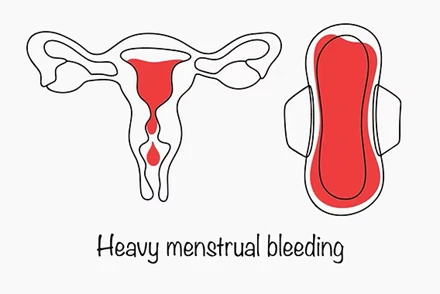
Menorrhagia is the medical name for very heavy or long-lasting periods.
Every woman has a different menstrual cycle, so the amount of bleeding can also be different. But if you need to change your pad very often, pass large blood clots, bleed for more than a week, or find that your periods are affecting your daily life, it may be more than a normal heavy period.
Heavy bleeding should not be ignored, especially when it happens regularly.
What are the Symptoms of Menorrhagia?
A woman with heavy periods may notice:
- Very heavy bleeding
- Periods that last more than 7 days
- Changing pads very often
- Waking up at night to change a pad
- Passing large blood clots
- Blood leaking through clothes or bedding
- Strong period pain
- Feeling tired during or after periods
- Weakness
- Dizziness
- Pale skin
- Shortness of breath
- Less energy than usual
If these problems keep happening every month, it is a good idea to get them checked.
What Causes Menorrhagia?
There can be more than one reason for heavy periods. Some common causes are:
Hormonal Changes
Hormones control the menstrual cycle. When they are not balanced properly, the lining of the uterus may become thicker and lead to heavier bleeding.
Uterine Fibroids
Fibroids are growths in the uterus. They are usually non-cancerous, but they can cause heavy and painful periods.
Adenomyosis
In adenomyosis, tissue similar to the lining of the uterus grows into the muscle of the uterus. This can lead to heavy bleeding and painful periods.
Endometriosis
Endometriosis can cause painful periods and may sometimes be linked with heavy or irregular bleeding.
Uterine Polyps
Polyps are small growths inside the uterus. They can sometimes cause bleeding between periods or unusually heavy periods.
Thyroid Problems
Changes in thyroid function can affect the menstrual cycle and may cause heavy or irregular bleeding.
Bleeding Disorders
Some women have a blood-clotting problem that makes it harder for the body to stop bleeding normally.
Certain Medicines or IUDs
Some medicines and copper IUDs can make menstrual bleeding heavier in some women.
Who is More Likely to Have Heavy Periods?
Heavy periods can happen at any age. They may be more common in women who have:
- Fibroids
- Adenomyosis
- Endometriosis
- Hormonal problems
- Thyroid problems
- Bleeding disorders
- Irregular periods
- A family history of heavy periods
- A copper IUD
- Major hormonal changes during puberty or perimenopause
Types of Menorrhagia
There are different reasons why periods can become heavy.
Heavy Periods Due to Hormonal Changes
Changes in hormones can affect ovulation and make periods heavier or longer.
Heavy Periods Due to Fibroids
Fibroids can increase the amount of bleeding, especially when they are located close to the inner lining of the uterus.
Heavy Periods Due to Adenomyosis
Adenomyosis can make the uterus larger and may cause both heavy bleeding and painful periods.
Heavy Periods Due to Other Health Problems
Thyroid problems, polyps, bleeding disorders, and some medicines can also lead to heavy menstrual bleeding.
How is Menorrhagia Diagnosed?
Your doctor will usually ask about your periods first. You may be asked how many days you bleed, how often you change pads, whether you pass clots, and whether you have pain or other symptoms.
Tests may include:
- Blood test
- Iron level test
- Thyroid test
- Pregnancy test when needed
- Pelvic examination
- Pelvic ultrasound
- Other tests if required
These tests can help find out why the periods are heavy and whether you have developed anemia or low iron.
Treatment for Menorrhagia
Treatment depends on the reason behind the heavy bleeding. What works for one woman may not be suitable for another.
Medical Treatment
Depending on the cause, treatment may include:
- Medicines to reduce bleeding
- Hormonal treatment
- Iron supplements when iron is low
- Treatment for thyroid problems
- Treatment for fibroids or polyps
- Other procedures when needed
Very heavy bleeding, especially when it causes dizziness or weakness, should be checked by a doctor.
Lifestyle and Dietary Measures
Some simple steps can help you take better care of yourself:
- Eat foods that are rich in iron
- Include green vegetables, beans, lentils and other nutritious foods
- Drink enough water
- Get enough rest during heavy periods
- Keep track of your periods
- Note how long the bleeding lasts
- Note how often you need to change pads
- Maintain a healthy weight
- Take iron supplements if advised by your doctor
Homeopathic Treatment for Menorrhagia
Homeopathy looks at the way your periods are heavy, along with other problems you may have. For example, the doctor may ask about the color of the blood, clots, pain, how many days you bleed, when the bleeding is worst, and how you feel before and after your period.
At Dr. Sanjay’s Homoeopathy, treatment is planned after understanding the patient’s menstrual history, general health, lifestyle, and other symptoms. The aim is to provide treatment that suits the individual rather than giving the same medicine to everyone with heavy periods.
If the bleeding is very heavy or you have severe weakness, fainting, severe pain, or possible pregnancy, proper gynecological care should be taken without delay.
Homeopathic Remedies for Menorrhagia
Homeopathic medicines are chosen according to the symptoms of each person. Some remedies commonly considered in homeopathic practice include:
Sabina
Traditionally considered when periods are very heavy, bright red, and may contain clots. Pelvic pain or discomfort may also be present.
Sepia
Often considered when heavy or irregular periods are accompanied by tiredness, pelvic heaviness, hormonal complaints, or menstrual discomfort.
Thlaspi Bursa Pastoris
Traditionally used when menstrual bleeding is prolonged or unusually heavy and tends to come back.
Trillium Pendulum
May be considered when heavy bleeding is accompanied by weakness or a feeling of heaviness in the pelvis.
Ustilago Maydis
Traditionally considered for long-lasting or heavy periods, especially when the blood is dark and the woman feels weak.
Millefolium
Often considered when menstrual bleeding is sudden, very heavy, and bright red.
Calcarea Carbonica
May be considered when heavy periods occur along with tiredness, weakness, sweating, or other individual symptoms.
Phosphorus
Traditionally considered when heavy bleeding is associated with weakness, fatigue, sensitivity, and other characteristic symptoms.
The choice of medicine depends on the person’s symptoms and should be made by a qualified homeopathic practitioner.
Complications of Untreated Menorrhagia
Heavy bleeding that continues for a long time can affect your health. It may lead to:
- Low iron levels
- Iron-deficiency anemia
- Constant tiredness
- Weakness
- Dizziness
- Shortness of breath
- Poor concentration
- Low energy
- Problems with daily activities
It is also important to find the reason behind the heavy bleeding, particularly when it happens every month.
How Can You Manage Heavy Periods?
A few simple habits can make it easier to understand and manage your periods:
- Keep a record of your menstrual cycle
- Note the number of days you bleed
- Keep track of how often you change pads
- Note any large blood clots
- Eat a healthy, iron-rich diet
- Get enough rest
- Take supplements when recommended
- Have regular check-ups when needed
- Do not ignore a sudden change in your periods
- Get medical advice if bleeding becomes much heavier than usual
Frequently Asked Questions (FAQs)
What is menorrhagia?
Menorrhagia means very heavy or prolonged menstrual bleeding. It can make normal daily activities difficult and may cause low iron or anemia when it continues for a long time.
How can I tell if my periods are too heavy?
If you need to change your pad very often, pass large clots, bleed for more than 7 days, leak through clothes or bedding, or feel unusually weak during your periods, your bleeding may be heavier than normal.
Why are my periods suddenly very heavy?
Suddenly heavy periods can happen because of hormonal changes, fibroids, thyroid problems, polyps, pregnancy-related problems, medicines, or other conditions. A new change in your normal period pattern should be checked.
Can fibroids cause heavy periods?
Yes. Fibroids can cause heavy or longer-lasting periods. The amount of bleeding can depend on the size and location of the fibroid.
Can heavy periods cause weakness?
Yes. Losing a lot of blood over several periods can lower iron levels and may lead to anemia. This can make you feel tired, weak, dizzy, or short of breath.
Can homeopathy help with heavy periods?
Homeopathy provides a personalized approach for heavy menstrual bleeding. The medicine is chosen after looking at the bleeding pattern, pain, clots, menstrual cycle, weakness, and other symptoms.
Which homeopathic medicines are used for heavy periods?
Some remedies commonly considered in homeopathic practice include Sabina, Sepia, Thlaspi Bursa Pastoris, Trillium Pendulum, Ustilago Maydis, Millefolium, Calcarea Carbonica, and Phosphorus. The right remedy depends on the individual symptoms.
Can hormonal problems cause heavy periods?
Yes. Hormonal changes can affect the normal menstrual cycle and may cause periods to become heavier, longer, or irregular.
Can heavy periods affect fertility?
Heavy periods do not always affect fertility. However, conditions that cause heavy bleeding, such as fibroids, endometriosis, adenomyosis, or hormonal problems, may sometimes affect fertility.
When should I see a doctor for heavy periods?
You should get medical advice if your periods suddenly become much heavier, last more than 7 days, happen very frequently, or cause dizziness, fainting, severe weakness, breathlessness, or severe pain.
Where can I consult for homeopathic treatment for menorrhagia in Lucknow?
You can consult Dr. Sanjay’s Homoeopathy in Lucknow, India, for an individual assessment and homeopathic treatment plan for heavy periods and related menstrual problems.
Why Choose Dr. Sanjay’s Homoeopathy for Menorrhagia Treatment in Lucknow, India?
Dr. Sanjay’s Homoeopathy is a trusted clinic for Menorrhagia (Heavy Periods) treatment in Lucknow, India. With more than 22 years of experience, Dr. Sanjay Singh, MD (Homoeopathy), provides personalized homeopathic treatment for women dealing with heavy bleeding, long periods, blood clots, period pain, weakness, fatigue, and other menstrual problems. As a leading homeopathic doctor in Lucknow, he takes time to understand the woman’s menstrual history, symptoms, lifestyle, health background, and other concerns before planning treatment. His approach is based on classical homeopathic principles and focuses on providing care suited to the individual. Patients from across India and around the world choose Dr. Sanjay’s Homoeopathy for its personalized treatment, holistic care, experienced consultation, and compassionate approach to Menorrhagia and other women’s health concerns.