What are Uterine Fibroids?
Uterine fibroids are non-cancerous growths that develop in or around the uterus (womb). They are also called leiomyomas or myomas. Fibroids are very common in women of reproductive age and often develop between 25 and 50 years of age.
These growths are made of muscle and fibrous tissue. Some fibroids are very small and cause no symptoms, while others can grow larger and lead to heavy periods, pain, or pressure symptoms.
Fibroids are usually benign (non-cancerous) and rarely turn into cancer.
Why Do Uterine Fibroids Develop?
The exact cause is not fully known, but several factors are involved.
- Hormonal Influence
Estrogen and progesterone stimulate fibroid growth. That is why fibroids are common during reproductive years and may shrink after menopause.
- Genetic Factors
Family history increases risk.
Excess body fat increases estrogen levels.
- Early Menstruation
Starting periods at a young age may increase risk.
- Vitamin D Deficiency
Some studies suggest a link.
Types of Uterine Fibroids
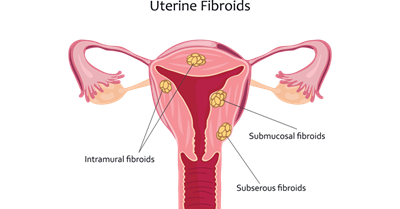
Fibroids are classified based on their location.
- Intramural Fibroids
Develop within the uterine wall. Most common type.
- Submucosal Fibroids
Grow into the inner cavity of the uterus. Often cause heavy bleeding.
- Subserosal Fibroids
Grow on the outer surface of the uterus.
- Pedunculated Fibroids
Attached by a thin stalk.
Location determines symptoms.
Symptoms of Uterine Fibroids
Some women have no symptoms. Others may experience:
Menstrual Symptoms
- Heavy menstrual bleeding
- Prolonged periods
- Passing blood clots
- Anemia
Pain Symptoms
- Pelvic pain
- Lower back pain
- Pain during intercourse
Pressure Symptoms
- Frequent urination
- Constipation
- Bloating
- Feeling of fullness in the lower abdomen
Fertility Issues
In some cases, fibroids may affect fertility or pregnancy.
When Should You See a Doctor?
Seek medical advice if you experience:
- Very heavy bleeding
- Severe pelvic pain
- Sudden enlargement of the abdomen
- Difficulty conceiving
Early evaluation prevents complications.
How Are Uterine Fibroids Diagnosed?
Doctors may recommend:
- Pelvic examination
- Ultrasound
- MRI
- Blood tests (to check anemia)
Ultrasound is the most common diagnostic tool.
Are Uterine Fibroids Dangerous?
Most fibroids are not dangerous. However, complications may include:
- Severe anemia
- Infertility (in some cases)
- Recurrent miscarriage
- Pressure on the bladder or bowel
Large fibroids may require treatment.
Conventional Medical Treatment
Treatment depends on symptoms, age, and fertility plans.
- Watchful Waiting
Small, symptom-free fibroids may not need treatment.
- Medications
- Hormonal therapy
- Pain relievers
- Iron supplements
- Surgical Options
- Myomectomy (fibroid removal)
- Hysterectomy (uterus removal)
- Uterine artery embolization
Choice depends on severity and patient preference.
Homeopathic Treatment for Uterine Fibroids in Lucknow
Homeopathy offers a gentle and holistic approach for managing uterine fibroids. It may help in:
- Managing heavy bleeding
- Reducing pelvic pain
- Supporting hormonal balance
- Improving menstrual regularity
- Supporting overall reproductive health
Treatment is individualised based on:
- Size and location of fibroid
- Nature of bleeding
- Emotional profile
- Hormonal pattern
- General constitution
Common Homeopathic Medicines Used
(Prescribed only under expert supervision)
- Calcarea Carbonica – Heavy bleeding with weakness
- Sepia – Hormonal imbalance with pelvic heaviness
- Lachesis – Heavy, dark bleeding
- Pulsatilla – Irregular cycles
- Thuja – Tissue growth tendency
Medicine selection depends on complete symptom analysis.
Benefits of Homeopathic Treatment
- Natural and non-toxic
- Safe for long-term use
- Helps manage menstrual symptoms
- Supports hormonal health
- Improves emotional well-being
- Enhances quality of life
Lifestyle Tips for Women with Fibroids
- Maintain healthy body weight
- Eat iron-rich foods
- Exercise regularly
- Manage stress
- Avoid excessive processed foods
Healthy lifestyle supports hormonal balance.
Uterine Fibroids and Pregnancy
Most women with fibroids can conceive naturally. However:
- Large fibroids may interfere with implantation
- May increase miscarriage risk
- May cause pregnancy complications
Regular gynecological monitoring is important.
Emotional Impact of Uterine Fibroids
Chronic bleeding and pain may cause:
- Anxiety
- Fatigue
- Emotional stress
- Reduced confidence
Holistic care addresses both physical and emotional health.
Can Uterine Fibroids be Cured?
Small fibroids may shrink after menopause. Symptomatic fibroids may require medical or surgical treatment. Early management improves comfort and reproductive outcomes.
Frequently Asked Questions
Are fibroids cancerous?
Rarely. Most are benign.
Can fibroids shrink naturally?
They may shrink after menopause.
Is surgery always required?
No, only in severe cases.
Is homeopathy safe?
Yes, as supportive care under expert supervision.
Why choose Dr. Sanjay’s Homoeopathy for Uterine Fibroids Treatment in Lucknow, India?
Dr. Sanjay’s Homoeopathy is a trusted clinic for safe and effective Uterine Fibroids treatment in Lucknow, India. With more than 22 years of experience, Dr. Sanjay Singh, MD (Homoeopathy), provides specialized homeopathy treatment that helps manage heavy menstrual bleeding, pelvic pain, abdominal pressure, bloating, frequent urination, and fertility-related concerns naturally without side effects. As a leading homeopathic doctor in Lucknow, he follows international treatment standards and offers a personalized approach that focuses on reducing fibroid size, balancing hormones, relieving symptoms, and preventing recurrence, making him the best homeopathy doctor for Uterine Fibroids in Lucknow. Patients from across India and around the world choose Dr. Sanjay’s Homoeopathy for its holistic healing, long-lasting relief, and compassionate care in managing women’s reproductive conditions like Uterine Fibroids.