Introduction
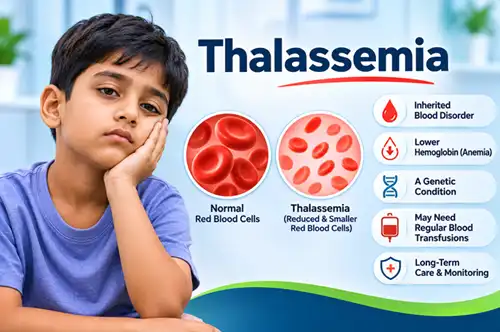
Thalassemia is an inherited blood disorder in which the body makes less haemoglobin than normal or makes abnormal haemoglobin. Haemoglobin is the protein in red blood cells that carries oxygen around the body. When it is reduced, red blood cells break down faster, and the body may not get enough oxygen, leading to anaemia, tiredness, and other complications.
Thalassemia is not contagious. It is passed from parents to children through genes. The condition ranges from a silent carrier state with no symptoms to severe forms that need lifelong medical care under a haematologist.
Living with thalassemia affects the whole family. Understanding the type of thalassemia, following the treatment plan set by the treating haematologist, and looking after general health and emotional wellbeing all matter in day-to-day life.
What is Thalassemia?
Thalassemia is a group of inherited conditions caused by changes (mutations) in the genes that control the production of haemoglobin. Haemoglobin is made of alpha and beta globin chains. Depending on which chain is affected, the condition is called alpha thalassemia or beta thalassemia.
The condition affects people of all ages and both sexes. It is more common in certain regions, including the Indian subcontinent, the Mediterranean, the Middle East, South-East Asia, and parts of Africa.
Thalassemia can resemble iron-deficiency anaemia, because both cause pale skin and tiredness. The two need very different management, which is why proper blood tests are important before starting any treatment, especially iron supplements.
What are the Symptoms of Thalassemia?
Symptoms depend on the type and severity. Some people, such as carriers, have no symptoms at all.
Common symptoms include:
- Fatigue and weakness: Persistent tiredness, low energy, or breathlessness on exertion.
- Pale or yellowish skin: Pallor from anaemia, or a yellow tinge (jaundice) in the skin and eyes.
- Slow growth and delayed puberty: Children with moderate or severe forms may grow more slowly than their peers.
- Facial bone changes: In untreated or poorly treated severe forms, bone marrow expansion can change the shape of facial bones.
- Enlarged spleen or liver: This may cause a swollen or uncomfortable abdomen.
- Dark urine: Caused by the breakdown of red blood cells.
- Poor appetite and frequent infections: Seen especially in children.
- Headaches, dizziness, or rapid heartbeat: These can occur when anaemia is significant.
Chest pain, fainting, severe breathlessness, high fever, or sudden worsening of tiredness or yellowing should be medically assessed promptly.
What are the Causes of Thalassemia?
Thalassemia is caused by inherited changes in genes that make haemoglobin.
1. Genetic Inheritance
Thalassemia is usually inherited in an autosomal recessive pattern. A child receives one gene from each parent. If both parents are carriers, each pregnancy has a 25% chance of a child with thalassemia major, a 50% chance of a carrier child, and a 25% chance of an unaffected child.
2. Beta Thalassemia
Caused by changes in the gene that makes beta globin chains. It includes beta thalassemia trait (minor), intermedia, and major (also called Cooley’s anaemia).
3. Alpha Thalassemia
Caused by missing or changed alpha globin genes. Severity depends on how many genes are affected, from silent carriers to haemoglobin H disease and, in the most severe form, Bart’s hydrops fetalis.
4. Family and Ethnic Background
A family history of thalassemia or of unexplained anaemia, and ancestry from regions where the condition is common, increase the chance of being a carrier.
Because carriers often have no symptoms, many people discover they are carriers only after a routine blood test, a pregnancy screening, or after a child is diagnosed.
Types of Thalassemia
1. Thalassemia Trait (Minor)
People with the trait are carriers. They may have mild anaemia or none, and usually do not need regular treatment. They can pass the gene to their children.
2. Thalassemia Intermedia
A moderate form. Anaemia is more significant than in the trait but less severe than in major. Some people need occasional transfusions, especially during illness, pregnancy, or growth.
3. Thalassemia Major
A severe form that usually appears in early childhood. It generally requires regular blood transfusions and iron chelation therapy under specialist care.
4. Alpha Thalassemia Forms
Ranges from silent carrier and alpha trait to haemoglobin H disease, which can cause moderate to significant anaemia.
Identifying the exact type guides the treatment plan and the advice given to the family.
Risk Factors for Thalassemia
- Both parents being carriers of a thalassemia gene.
- A family history of thalassemia or unexplained, persistent anaemia.
- Marriage within communities or families where thalassemia is common (consanguinity).
- Ancestry from regions with a higher prevalence.
- Never having had carrier screening before marriage or pregnancy.
Many carriers live healthy lives. The main concern for carriers is the possibility of having a child with a severe form if the partner is also a carrier.
Diagnosis of Thalassemia
1. Complete Blood Count (CBC)
Typically shows low haemoglobin and small, pale red blood cells (low MCV and MCH).
2. Peripheral Blood Smear
Examination of the blood under a microscope can show abnormally shaped red blood cells.
3. Haemoglobin Electrophoresis or HPLC
These tests identify the types and amounts of haemoglobin and are central to confirming beta thalassemia and carrier status.
4. Iron Studies
Serum ferritin and related tests help distinguish thalassemia from iron-deficiency anaemia and monitor iron overload in those who are transfused.
5. Genetic (DNA) Testing
Used to confirm the exact mutation, especially for alpha thalassemia and for family planning.
6. Prenatal Testing
When both partners are carriers, tests such as chorionic villus sampling or amniocentesis can check whether the baby is affected. This is best discussed early in pregnancy with a genetic counsellor and obstetrician.
Treatment for Thalassemia
Treatment depends on the type and severity and is directed by a haematologist at an appropriate treatment centre.
1. Regular Blood Transfusions
People with thalassemia major and some with intermedia receive regular transfusions to maintain haemoglobin and allow normal growth and activity.
2. Iron Chelation Therapy
Repeated transfusions cause iron to build up in the heart, liver, and endocrine glands. Chelation medicines remove excess iron and are an essential part of care. They must be taken exactly as prescribed.
3. Folic Acid
Often prescribed because the body needs more of it to make new red blood cells.
4. Monitoring and Managing Complications
Regular checks of the heart, liver, bones, growth, hormones, and blood sugar help detect problems early.
5. Bone Marrow (Stem Cell) Transplant
Currently the established curative option for suitable patients, usually with a matched donor. It is a major procedure, and suitability is decided by the specialist team.
6. Newer Medicines and Gene Therapies
New medicines and gene therapies are available in some countries for selected patients. Ask your haematologist whether any are appropriate and accessible.
7. Vaccination and Infection Prevention
Staying up to date with vaccinations and seeking early treatment for fever help prevent serious infections, particularly after spleen removal.
8. Genetic Counselling
Helps couples understand their risk, screening options, and choices for future pregnancies.
Homeopathic Consultation for Thalassemia
Thalassemia is a lifelong genetic condition, and families often look for additional ways to feel stronger and cope better day to day. Many seek a consultation that listens to the whole picture: energy levels, appetite, sleep, frequent infections, emotional stress, and the burden of long-term treatment.
At Dr. Sanjay’s Homoeopathy, consultations with Dr. Sanjay Singh, MD (Homoeopathy), include a careful discussion of the patient’s symptoms, medical history, reports, current medicines, and lifestyle. The aim is to understand how the person is feeling overall and to offer individualized, supportive care alongside the patient’s haematology treatment. Patients are never asked to stop or reduce transfusions, chelation, or any prescribed medicine.
Homeopathic Remedies for Thalassemia
In traditional homeopathic practice, some remedies have been associated with particular patterns of weakness, fatigue, poor appetite, or low vitality. These include:
- China officinalis: Traditionally associated with weakness and exhaustion.
- Calcarea phosphorica: Traditionally associated with slow development and weakness in growing children.
- Natrum muriaticum: Traditionally associated with tiredness along with emotional withdrawal and sensitivity.
- Phosphorus: Traditionally described for tiredness with a tendency to tire easily.
- Arsenicum album: Traditionally described for weakness with anxiety and restlessness.
These descriptions reflect traditional homeopathic use. They are not a treatment for the genetic cause of thalassemia and do not replace transfusions, chelation, or other medical care. Remedies are chosen individually after consultation.
Lifestyle Tips for Living with Thalassemia
1. Follow the Treatment Schedule
Attend transfusion appointments and take chelation medicines and folic acid exactly as advised.
2. Eat a Balanced Diet
Include fruits, vegetables, whole grains, pulses, and dairy for general nutrition. Do not take iron supplements or iron-rich tonics unless your haematologist advises them. Tea with meals may slightly reduce iron absorption; ask your doctor or dietitian about diet specific to your situation.
3. Support Bone Health
Adequate calcium and vitamin D, safe sunlight, and regular, gentle physical activity help protect bones, which can be weaker in thalassemia.
4. Prevent Infections
Wash hands regularly, stay up to date with vaccinations, and seek early medical attention for fever.
5. Stay Active, Within Limits
Gentle exercise such as walking, stretching, or yoga can support energy and mood. Rest when tired.
6. Look After Emotional Health
Living with a long-term condition is demanding for patients, parents, and siblings. Talking openly, joining a patient or parent support group, and seeking counselling when needed can help.
7. Keep Regular Check-ups
Heart, liver, endocrine, and growth checks help catch complications early.
8. Screen Before Marriage and Pregnancy
Carrier screening is a simple blood test. If both partners are carriers, speak to a genetic counsellor before or early in pregnancy.
When to See a Doctor for Thalassemia
Seek medical advice if you notice persistent tiredness, pale or yellow skin, slow growth in a child, or a family history of thalassemia and have never been tested.
Arrange prompt assessment if you experience:
- Fever, especially in someone who has had their spleen removed.
- Increasing weakness, breathlessness, or fatigue.
- Dark urine or increasing yellowing of the eyes or skin.
- Abdominal swelling or pain.
- Bone pain or fractures.
- Delayed puberty or poor growth.
- Palpitations, swelling of the legs, or reduced exercise tolerance.
Seek urgent medical care for chest pain, fainting, severe breathlessness, very high fever, or very pale and unusually drowsy behaviour in a child. These may be signs of a serious complication.
Frequently Asked Questions About Thalassemia
What is thalassemia?
Thalassemia is an inherited blood disorder in which the body makes less haemoglobin or abnormal haemoglobin, leading to anaemia and, in severe forms, a need for regular transfusions.
What causes thalassemia?
It is caused by changes in the genes that control haemoglobin production, passed from parents to children.
Is thalassemia contagious?
No. It is inherited and cannot spread from one person to another through contact.
What is the difference between thalassemia trait and thalassemia major?
A person with the trait is a carrier and usually has no or mild symptoms. Thalassemia major is a severe form that generally needs regular transfusions and iron chelation.
Can two carriers have a healthy child?
Yes. When both parents are carriers, each pregnancy has a 25% chance of a child with thalassemia major, a 50% chance of a carrier child, and a 25% chance of an unaffected child. Prenatal testing and genetic counselling can help families make informed decisions.
How is thalassemia different from iron-deficiency anaemia?
Both can cause pale skin and tiredness, but thalassemia is genetic and iron-deficiency anaemia is caused by low iron. Taking iron when it is not needed can be harmful in thalassemia, so proper tests should be done first.
Can thalassemia be cured?
A bone marrow (stem cell) transplant can be curative for suitable patients, and gene therapies are available in some countries for selected patients. For most people, thalassemia is managed long term with regular monitoring and treatment under a haematologist.
Can people with thalassemia live a normal life?
With regular treatment, good follow-up, and attention to general health, many people with thalassemia go to school, work, and raise families. Early diagnosis and consistent care make a significant difference.
Can homeopathy be taken along with regular thalassemia treatment?
Many families choose to consult a homeopathic doctor for overall wellbeing while continuing their haematology treatment. It is important to inform every doctor about all medicines being taken, and never to stop or change prescribed treatment without medical advice.
Why choose Dr. Sanjay’s Homoeopathy for thalassemia Care in Lucknow, India?
Dr. Sanjay’s Homoeopathy is a trusted homeopathic clinic for thalassemia care in Lucknow, India. With more than 22 years of experience, Dr. Sanjay Singh, MD (Homoeopathy), takes time to listen, to understand each patient’s symptoms, health history, and daily challenges, and to offer personalized, compassionate consultation alongside the patient’s haematology care. The clinic emphasizes a holistic approach, honest guidance, and respect for the patient’s ongoing medical treatment. Patients and families living with thalassemia can learn more about Dr. Sanjay’s Homoeopathy.