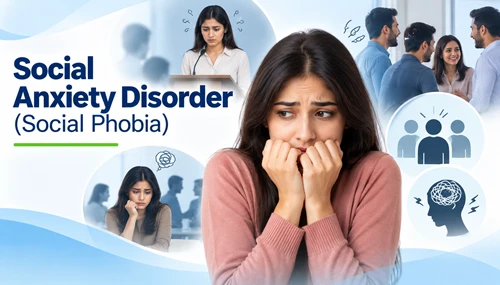
Social Anxiety Disorder, also known as Social Phobia, is a mental health condition in which a person experiences an intense and persistent fear of being judged, embarrassed, criticized, or rejected by others. Everyday situations such as meeting new people, speaking in a group, attending a social event, or answering a question at work or school can feel extremely stressful.
People with social anxiety may worry for days before an event and continue thinking about what happened long after it is over. They may avoid social situations even when they want to participate. With appropriate treatment and support, social anxiety can be managed, and people can gradually become more comfortable in social situations.
What is Social Anxiety Disorder?
Social Anxiety Disorder is more than ordinary shyness or nervousness. It involves a strong fear of social situations in which a person feels they may be watched, evaluated, or negatively judged.
For example, someone may be afraid of speaking in a meeting because they worry that others will notice their nervousness. Another person may avoid eating in public because they fear making a mistake or appearing awkward.
These fears can affect education, employment, relationships, friendships, and everyday activities. Social anxiety often begins during childhood or adolescence, although it can continue or become noticeable later in life.
Symptoms of Social Anxiety Disorder
Symptoms can affect a person’s thoughts, emotions, physical reactions, and behaviour.
Emotional Symptoms
- Strong fear of being judged or criticized
- Worry about embarrassing oneself in front of others
- Fear of speaking to unfamiliar people
- Feeling uncomfortable when attention is focused on oneself
- Worrying excessively before social events
- Low confidence in social situations
- Fear of being rejected or appearing incompetent
- Replaying conversations and worrying about mistakes afterward
Physical Symptoms
- Sweating excessively
- Blushing
- Trembling hands or voice
- Rapid heartbeat
- Nausea or stomach discomfort
- Dry mouth
- Dizziness or lightheadedness
- Difficulty breathing during intense anxiety
- Feeling that the mind has gone blank
Behavioural Symptoms
- Avoiding parties or gatherings
- Avoiding public speaking
- Finding it difficult to make eye contact
- Speaking very softly or avoiding conversations
- Avoiding phone calls
- Avoiding eating or drinking in front of others
- Refusing to participate in classroom or workplace activities
- Depending on familiar people to handle social interactions
Not everyone experiences all these symptoms. The main concern is whether the fear is persistent, causes significant distress, and interferes with everyday life.
Causes of Social Anxiety Disorder
There is no single cause of social anxiety disorder. It may develop through a combination of biological, psychological, genetic, and environmental factors.
Genetic Factors
Social anxiety and other anxiety conditions may occur more frequently in some families. However, having a family history does not mean that a person will definitely develop the disorder.
Brain and Biological Factors
The brain systems involved in fear, threat detection, and anxiety may contribute to social anxiety. Researchers continue to study how biological factors influence the condition.
Negative Social Experiences
Experiences such as bullying, repeated criticism, humiliation, or rejection may contribute to social fears in some people.
Fear of Being Judged
Some people become highly concerned about how others perceive them. They may believe that even small mistakes will lead to embarrassment or rejection.
Low Self-Confidence
A person who frequently doubts their abilities or appearance may feel uncomfortable when others pay attention to them.
Stressful Life Changes
Moving to a new place, starting a job, changing schools, or entering an unfamiliar social environment may make anxiety more noticeable in some people.
These factors may contribute to social anxiety, but the condition is not a personal weakness or a failure of character.
Types of Social Anxiety Disorder
Social anxiety can affect different situations.
Generalized Social Anxiety
A person experiences fear in many social situations, such as meeting people, starting conversations, attending gatherings, or interacting with colleagues.
Performance Anxiety
A person mainly experiences anxiety when performing in front of others, such as giving a presentation, speaking on stage, performing music, or addressing a group.
Performance-related anxiety can sometimes occur without the broader pattern of social fears seen in social anxiety disorder.
Risk Factors for Social Anxiety Disorder
Factors that may increase the likelihood of social anxiety include:
- Family history of anxiety disorders
- Childhood or teenage onset of persistent social fears
- Bullying or humiliating experiences
- Repeated criticism or rejection
- Strong fear of making mistakes in public
- Other anxiety conditions
- Depression or related mental health difficulties
These factors do not guarantee that someone will develop social anxiety. The condition can affect people from different backgrounds and personality types.
How is Social Anxiety Disorder Diagnosed?
Diagnosis usually involves an assessment by a qualified mental health professional.
Medical and Personal History
The professional may ask when the anxiety started, which situations trigger it, and how it affects relationships, education, work, and daily activities.
Assessment of Symptoms
The assessment considers the intensity of fear, avoidance of social situations, physical symptoms, and the effect on everyday functioning.
Duration of Symptoms
For a diagnosis of social anxiety disorder, the fear and anxiety generally persist for six months or longer and cause significant distress or impairment.
Screening Questionnaires
A professional may use questionnaires such as the Social Phobia Inventory (SPIN) or Liebowitz Social Anxiety Scale (LSAS) to help assess symptoms and monitor progress.
Checking Other Conditions
The professional may consider whether another condition, medication, or physical health problem contributes to the symptoms. Depression and other anxiety disorders can also occur alongside social anxiety.
Treatment for Social Anxiety Disorder
Social anxiety disorder can be treated. The appropriate treatment depends on the severity of symptoms, the person’s preferences, and their overall health.
Cognitive Behavioural Therapy (CBT)
CBT is one of the main evidence-based treatments for social anxiety disorder.
It helps people recognize unhelpful thought patterns, challenge unrealistic fears, and gradually change behaviours that maintain anxiety.
For example, a person who believes that everyone will criticize them during a conversation can learn to examine that belief and practise social interactions in manageable steps.
Exposure-Based Therapy
Exposure-based therapy helps a person gradually face feared social situations in a planned and supported way.
The aim is not to force someone into overwhelming situations. Instead, the person practises manageable steps and learns that anxiety can become more manageable over time.
Medication
A healthcare professional may recommend medication when appropriate. Selective serotonin reuptake inhibitors (SSRIs), such as sertraline or escitalopram, are among the medicines used for social anxiety disorder.
Medication choice, potential side effects, and follow-up should be discussed with a qualified prescriber. Do not start or stop psychiatric medication without medical guidance.
Guided Self-Help
CBT-based workbooks or online programmes with professional support may help some people manage symptoms and practise new skills.
Social Skills Practice
Gradually practising conversations, asking questions, making eye contact when comfortable, and participating in small group activities can help build confidence alongside appropriate treatment.
CBT specifically developed for social anxiety is a recommended first-line psychological treatment for adults in NICE guidance.
Homeopathic Treatment for Social Anxiety Disorder
Some people seek homeopathic consultation for concerns such as nervousness, fear of social situations, low confidence, or difficulty interacting with others.
A person experiencing persistent social anxiety may benefit from discussing their concerns with a psychiatrist, clinical psychologist, or other qualified mental health professional. If complementary homeopathic care is chosen, it should not delay effective treatment.
At Dr. Sanjay’s Homoeopathy, patients can discuss their general health concerns and individual symptoms. Any complementary approach should be considered alongside appropriate mental health care rather than as a proven cure for social anxiety.
Homeopathic Remedies for Social Anxiety Disorder
The following remedies are traditionally discussed in homeopathic practice for patterns of nervousness, fear, or anxiety. Their effectiveness for treating social anxiety disorder has not been established by reliable clinical evidence.
1. Gelsemium Sempervirens
Gelsemium is traditionally associated with anticipatory nervousness, trembling, and weakness before an event such as a public performance or meeting.
2. Argentum Nitricum
Argentum Nitricum is traditionally discussed for anticipatory anxiety, nervousness before social events, and digestive discomfort associated with worry.
3. Lycopodium Clavatum
Lycopodium is traditionally considered in homeopathic practice for people who experience nervousness in unfamiliar situations or when speaking in front of others.
4. Silicea
Silicea is traditionally associated with low confidence, shyness, and hesitation in certain social situations.
5. Aconitum Napellus
Aconitum is traditionally discussed for sudden episodes of intense fear or anxiety. Sudden or severe symptoms should be medically assessed, especially if they are new or unusual.
6. Kali Phosphoricum
Kali Phosphoricum is traditionally used in homeopathic practice for complaints involving nervous exhaustion, mental fatigue, and stress-related discomfort.
Lifestyle Tips for Managing Social Anxiety
Lifestyle changes can support recovery, although they are not a substitute for professional treatment when symptoms are severe.
Start With Small Social Steps
Choose manageable activities, such as greeting a neighbour, asking a simple question, or having a brief conversation with someone familiar.
Challenge Negative Thoughts
When you expect others to judge you, pause and consider whether there is evidence for that prediction. Try to avoid assuming that other people notice every small mistake.
Practise Relaxation Techniques
Slow breathing and relaxation exercises may help manage physical tension before a stressful situation.
Focus on the Conversation
Instead of constantly monitoring your appearance, voice, or behaviour, try to focus on what the other person is saying.
Maintain a Regular Routine
Adequate sleep, regular physical activity, and balanced meals can support general wellbeing.
Limit Caffeine if It Worsens Anxiety
Coffee, energy drinks, and other sources of caffeine may increase trembling, palpitations, or feelings of nervousness in some people.
Avoid Excessive Alcohol or Other Substances
Using alcohol or other substances to feel more comfortable socially can create additional problems and may worsen mental health over time.
Seek Support
Talking with a trusted person or mental health professional may make it easier to take the first steps toward treatment.
The NHS also recommends understanding anxiety patterns, practising relaxation, breaking challenging situations into smaller steps, and focusing on other people rather than assuming the worst. (NHS)
Can Social Anxiety Disorder Be Prevented?
There is no guaranteed way to prevent social anxiety disorder. However, recognizing persistent fears early and seeking appropriate support can reduce their impact.
Helpful steps include:
- Seeking help when social fears begin affecting daily life
- Encouraging children to discuss their worries without shame
- Addressing bullying and repeated humiliation
- Practising manageable social activities
- Learning healthy ways to respond to stress
- Seeking professional treatment when needed
Social anxiety is treatable, and people can improve their confidence and participation in everyday life with appropriate support.
When Should You Seek Professional Help?
Consider speaking with a mental health professional if:
- You avoid social situations because of intense fear.
- You are afraid of speaking, eating, or working in front of others.
- Anxiety affects your education or career.
- You struggle to form or maintain relationships.
- You worry excessively before and after social interactions.
- You experience repeated panic-like symptoms in social situations.
- Your anxiety is affecting your quality of life.
If anxiety is accompanied by severe depression, thoughts of self-harm, or feeling unable to keep yourself safe, seek urgent professional help or contact local emergency services.
Frequently Asked Questions
What is Social Anxiety Disorder?
Social Anxiety Disorder is a mental health condition involving persistent fear of being judged, embarrassed, or negatively evaluated in social situations.
Is social anxiety the same as shyness?
No. Shyness is a personality trait or occasional feeling of discomfort. Social anxiety disorder involves persistent fear and avoidance that can interfere with daily activities and relationships.
What are the common symptoms of social anxiety?
Symptoms may include fear of judgment, sweating, blushing, trembling, rapid heartbeat, difficulty speaking, avoiding gatherings, and worrying about social interactions before or afterward.
What causes Social Anxiety Disorder?
There is no single cause. Genetic, biological, psychological, and environmental factors may contribute to the condition.
Can Social Anxiety Disorder be treated?
Yes. Treatments such as cognitive behavioural therapy and, when appropriate, medication can help people manage symptoms and participate more comfortably in social situations.
How long does social anxiety last?
The duration varies. Without appropriate treatment, symptoms may continue for years. Treatment can help reduce anxiety and improve daily functioning.
Can social anxiety affect work and relationships?
Yes. Fear of judgment can make meetings, interviews, presentations, friendships, and relationships difficult. Treatment may help reduce these barriers.
Can homeopathy cure Social Anxiety Disorder?
There is no reliable clinical evidence that homeopathy cures social anxiety disorder. Evidence-based psychological treatment and appropriate professional assessment remain important.
Is medication always necessary for social anxiety?
No. Some people improve with psychological treatment, particularly CBT. Medication may be considered depending on symptom severity, treatment preferences, and clinical assessment.
When should I consult a mental health professional?
Seek help when fear of social situations becomes persistent, causes significant distress, or interferes with work, education, relationships, or everyday activities.
Why choose Dr. Sanjay’s Homoeopathy for Social Anxiety Disorder Treatment in Lucknow, India?
Dr. Sanjay’s Homoeopathy is a trusted clinic for Social Anxiety Disorder Treatment in Lucknow, India. With more than 22 years of experience, Dr. Sanjay Singh, MD (Homoeopathy) provides personalized consultation for people experiencing concerns related to nervousness, fear of social interactions, low confidence, and emotional wellbeing. Each consultation focuses on understanding the person’s symptoms, medical history, daily routine, lifestyle, and individual concerns. As an experienced homeopathic doctor in Lucknow, Dr. Sanjay Singh provides confidential and patient-focused care in a comfortable environment. Persistent social anxiety can affect work, education, relationships, and quality of life, so assessment by a qualified mental health professional and evidence-based treatment such as CBT are important. Patients from across the world trust Dr. Sanjay’s Homoeopathy for Social Anxiety Disorder Treatment in Lucknow.