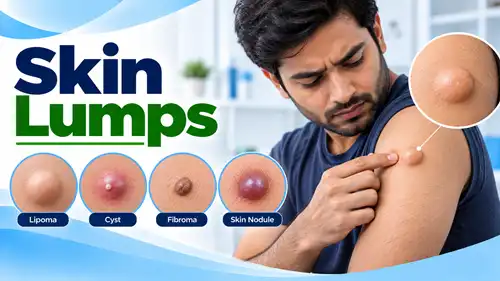
Skin lumps are raised bumps or swellings that develop on or beneath the skin. They can appear on the face, neck, scalp, arms, back, chest, abdomen, or other parts of the body. Some lumps are soft and painless, while others may be firm, tender, red, or filled with fluid.
Most skin lumps are caused by non-cancerous conditions, such as lipomas, cysts, skin tags, or boils. However, some lumps may require medical treatment or further investigation. Their size, location, appearance, and rate of growth can provide important clues about the underlying cause.
Understanding the possible causes of skin lumps and getting an appropriate medical evaluation can help determine the right treatment and prevent complications.
What are Skin Lumps?
Skin lumps are abnormal bumps, growths, or swellings that develop on the skin or in the tissue beneath it. They can vary in size, shape, colour, texture, and depth.
Some lumps develop slowly over months or years, while others appear suddenly due to an infection, injury, or inflammation. A lump may move slightly beneath the skin or feel firmly attached to the surrounding tissue.
Common examples include lipomas, skin cysts, skin tags, boils, and swollen lymph nodes. Although many of these conditions are harmless, a new or unexplained lump should be examined by a qualified healthcare professional to identify its cause.
Symptoms of Skin Lumps
The symptoms of skin lumps depend on the underlying condition. Common signs include:
- Visible swelling: A raised bump or swelling on or beneath the skin.
- Soft or firm texture: Some lumps feel soft and movable, while others are firm or hard.
- Pain or tenderness: A lump may become painful when touched or pressed.
- Redness or warmth: These symptoms may indicate inflammation or infection.
- Slow growth: Some cysts and lipomas gradually increase in size.
- Itching or irritation: Certain skin growths may cause itching or discomfort.
- Fluid or pus: Infected cysts and boils may release fluid or pus.
- Changes in skin colour: The skin over a lump may become red, darker, or discoloured.
- Bleeding or crusting: Some abnormal skin growths may bleed, form a crust, or develop a sore that does not heal.
- Multiple lumps: Some conditions cause several lumps to develop in different parts of the body.
The presence of these symptoms does not automatically mean a lump is serious. However, a growing, persistent, hard, painful, or unexplained lump should be assessed by a healthcare professional.
Causes of Skin Lumps
Skin lumps can develop for several reasons, including the growth of fatty tissue, blocked skin structures, infection, inflammation, or other medical conditions.
- Lipoma: A lipoma is a non-cancerous growth made of fatty tissue beneath the skin. It usually feels soft, moves slightly when pressed, and grows slowly. Lipomas are commonly found on the shoulders, back, arms, chest, and thighs. Most lipomas are painless and do not require treatment unless they cause discomfort, grow, or interfere with daily activities.
- Skin Cysts: Skin cysts are sac-like structures that develop in or beneath the skin. They may contain fluid, keratin, or other material. Epidermoid cysts and pilar cysts are common examples. A cyst may appear as a round lump and sometimes has a small opening in the centre. If it becomes inflamed or infected, it may turn red, swollen, or painful.
- Boils and Skin Abscesses: Boils and abscesses develop when an infection causes a collection of pus in or beneath the skin. They may produce painful, warm, red, and swollen lumps. Some infections require medical treatment, including drainage or prescribed medication. Do not squeeze or attempt to cut open a boil or abscess yourself.
- Skin Tags: Skin tags are small, soft, non-cancerous growths that often appear where skin rubs against skin or clothing. Common locations include the neck, armpits, eyelids, and skin folds. They are usually harmless, but a growth that changes, bleeds, or resembles a skin tag without a confirmed diagnosis should be examined.
- Swollen Lymph Nodes: Lymph nodes are small structures that help the immune system fight infections. They may become enlarged during an infection or in response to certain inflammatory conditions. Swollen lymph nodes commonly occur in the neck, armpits, and groin. Persistent or unexplained swelling should be medically assessed.
- Warts and Other Benign Skin Growths: Warts, seborrhoeic keratoses, dermatofibromas, and other benign growths can appear as raised or firm areas on the skin. Their appearance varies according to the type of growth. A healthcare professional can help distinguish these conditions from other skin lesions that may need treatment.
- Injury or Inflammation: An injury may cause local swelling or a lump beneath the skin. Inflammation can also lead to tenderness, redness, or thickening of the affected area. A lump that appears suddenly and becomes increasingly painful or warm may need prompt evaluation for infection or another underlying problem.
- Abnormal or Cancerous Growths: Some skin cancers and soft-tissue tumours can present as lumps or unusual growths. Warning signs may include increasing size, a hard or fixed texture, changes in colour, bleeding, or a sore that does not heal. Not every concerning lump is cancerous, but changes in a skin growth should not be ignored.
Types of Skin Lumps
Skin lumps can be classified according to their cause, appearance, and location.
- Lipomas: Lipomas are soft, fatty lumps that develop beneath the skin. They usually grow slowly and are often painless.
- Epidermoid Cysts: Epidermoid cysts are round lumps beneath the skin that contain keratin, a protein found in skin cells. They may remain stable for a long time but can become inflamed or infected.
- Pilar Cysts: Pilar cysts commonly develop on the scalp and originate from hair follicle structures. They usually appear as smooth, firm lumps beneath the skin.
- Boils: Boils are painful lumps caused by infection around a hair follicle or nearby tissue. They may contain pus and can become increasingly swollen.
- Skin Tags: Skin tags are soft growths that extend from the skin surface. They commonly develop in areas exposed to friction.
- Swollen Lymph Nodes: These lumps usually occur in the neck, armpits, or groin and may become enlarged due to infection or other medical conditions.
- Other Skin and Soft-Tissue Growths: Some lumps arise from connective tissue, blood vessels, or other structures beneath the skin. Their nature may not be clear from appearance alone, so examination and sometimes imaging or biopsy are necessary.
Correctly identifying the type of lump is important because treatment differs significantly between these conditions.
Risk Factors for Skin Lumps
The likelihood of developing a skin lump depends on its underlying cause. Factors associated with certain types of lumps include:
- Family history: Some people have a family tendency to develop particular cysts or lipomas.
- Age: Certain benign skin growths become more common with age.
- Skin friction: Repeated rubbing may contribute to the development of skin tags.
- Skin infections: Bacterial infections may cause boils or abscesses.
- Acne and blocked skin structures: Some cysts may develop in association with skin conditions.
- Injury: Trauma can cause local swelling or a collection of blood beneath the skin.
- Underlying medical conditions: Some inflammatory, inherited, or other conditions may cause lumps or swelling.
Having one or more risk factors does not establish the cause of an individual lump.
Diagnosis of Skin Lumps
A proper diagnosis helps determine whether a lump can be monitored, requires treatment, or needs further investigation.
- Medical History: The healthcare professional may ask when the lump appeared, whether it has grown, whether it is painful, and whether there are other symptoms or similar lumps elsewhere on the body.
- Physical Examination: The lump is examined for its size, shape, texture, mobility, colour, tenderness, and location. The surrounding skin may also be checked for signs of infection or inflammation.
- Ultrasound: An ultrasound may help determine whether a lump is solid or fluid-filled and assess its depth and relationship to nearby tissues.
- Blood Tests: Blood tests may be recommended when an infection, inflammatory condition, or another underlying medical problem is suspected. They are not necessary for every skin lump.
- Biopsy: A biopsy involves taking a small tissue sample for laboratory examination. It may be recommended when the diagnosis is uncertain or a suspicious growth needs further investigation.
- Additional Imaging: Depending on the lump’s location and characteristics, further imaging may be recommended to assess deeper tissues.
Not every lump requires all these tests. The appropriate investigation depends on the findings of the medical examination.
Skin Lumps Treatment
Treatment depends on the type of lump, its size, location, symptoms, and underlying cause. Some harmless lumps only require monitoring, while others may need medication, drainage, or removal.
1. Observation and Monitoring
Small, confirmed benign lumps that do not cause symptoms may not require immediate treatment. A healthcare professional may recommend monitoring their size and appearance.
2. Treatment of Skin Cysts
A cyst that is not causing problems may be left alone after assessment. If it becomes infected, painful, or repeatedly inflamed, medical treatment or a procedure to remove it may be recommended.
Do not squeeze a cyst because doing so can cause inflammation or infection.
3. Treatment of Lipomas
Lipomas usually do not require treatment if they are confirmed to be harmless and are not causing discomfort. Removal may be considered if a lipoma becomes painful, grows, interferes with movement, or causes other concerns.
4. Treatment of Boils and Abscesses
Some boils improve with appropriate care, while larger or more severe abscesses may require drainage by a healthcare professional. Antibiotics may be needed in selected cases.
Do not attempt to puncture or drain an abscess at home.
5. Removal of Skin Tags and Other Benign Growths
A confirmed benign growth may be removed if it causes irritation, discomfort, or cosmetic concerns. The appropriate procedure depends on its type and location.
6. Treatment of Suspicious Lumps
Lumps that grow rapidly, feel hard or fixed, bleed, or show other concerning changes require prompt evaluation. Further tests or specialist treatment may be necessary.
7. Treatment of Underlying Conditions
If the lump is caused by an infection, inflammation, or another medical condition, treatment should target that underlying cause.
A lump should not be treated based on appearance alone when its diagnosis is uncertain.
Homeopathic Treatment for Skin Lumps
Skin lumps can develop for different reasons, including fatty tissue growths, cysts, skin infections, and other conditions. Because their causes and characteristics vary, identifying the nature of a lump is an important first step before considering any treatment approach.
At Dr. Sanjay’s Homoeopathy, Dr. Sanjay Singh provides individualized consultations that consider a person’s symptoms, medical history, lifestyle, and previous treatment. People concerned about recurring skin complaints can discuss their concerns and learn about suitable healthcare options based on their individual circumstances.
Homeopathic practice uses an individualized approach to remedy selection. However, homeopathy has not been reliably shown to shrink or remove lipomas, dissolve cysts, treat abscesses, or eliminate other structural skin growths. It should not be used as a substitute for medical diagnosis or procedures when these are necessary.
Homeopathic Remedies for Skin Lumps
In traditional homeopathic literature, certain remedies are associated with different types of skin complaints. These traditional homeopathic remedies can help to reduce Skin Lumps; use only when prescribed by homeopathic specialists.
- Calcarea Carbonica: Traditionally associated with certain skin and glandular complaints in homeopathic practice.
- Silicea: Traditionally associated with some skin complaints involving inflammation or discharge.
- Hepar Sulphuris Calcareum: Traditionally associated with painful, inflamed skin complaints.
- Thuja Occidentalis: Traditionally associated with certain skin growths, particularly wart-like lesions.
- Graphites: Traditionally associated with some chronic skin complaints involving thickened, cracked, or irritated skin.
Lifestyle Tips for Skin Health
Healthy skin-care habits can help reduce irritation and support general skin health. However, lifestyle changes cannot reliably remove an existing cyst, lipoma, or other structural growth.
- Avoid squeezing lumps: Pressing, puncturing, or cutting a lump can cause injury or infection.
- Maintain skin hygiene: Clean the skin gently and avoid harsh products that cause irritation.
- Protect irritated areas: Avoid friction and pressure on lumps that become uncomfortable.
- Keep the area clean: If a lump opens or drains, follow medical advice for wound care.
- Monitor changes: Note any increase in size, changes in colour, pain, bleeding, or other new symptoms.
- Avoid unverified topical remedies: Some products can irritate the skin or delay appropriate treatment.
- Seek medical advice early: Do not assume that a lump is harmless without an appropriate assessment.
When to See a Doctor for Skin Lumps
Consult a healthcare professional if:
- You develop a new lump and do not know what it is.
- The lump persists for more than two weeks.
- The lump increases in size or changes in appearance.
- It feels hard or does not move beneath the skin.
- It becomes painful, red, warm, or swollen.
- It repeatedly returns after removal.
- It bleeds, forms a persistent sore, or does not heal.
- You notice unexplained swelling in the neck, armpit, or groin.
Seek urgent medical assessment if a lump becomes rapidly more painful, red, or hot, particularly if you also develop fever or feel unwell. A growing or changing lump should also be evaluated promptly to determine whether further testing is needed.
These signs do not automatically mean that a lump is cancerous, but they should not be ignored.
Frequently Asked Questions About Skin Lumps
What causes skin lumps?
Skin lumps can develop due to lipomas, cysts, boils, skin tags, swollen lymph nodes, injuries, inflammation, or other skin and soft-tissue growths. A medical examination helps determine the cause.
Are skin lumps usually harmless?
Many skin lumps are benign, including common lipomas and cysts. However, some lumps require investigation, so a new or unexplained lump should be assessed.
Can skin lumps disappear on their own?
Some types of swelling may improve as an infection or inflammation resolves. Other lumps, such as lipomas and certain cysts, may persist. Whether a lump will disappear depends on its underlying cause.
What is the difference between a lipoma and a cyst?
A lipoma is made of fatty tissue and usually feels soft and slightly movable beneath the skin. A cyst is a sac-like structure that may contain keratin or fluid. Both can appear as lumps, and a healthcare professional can help distinguish them.
Are skin lumps painful?
Some lumps are painless, while others may be tender or painful. Pain can occur with infection, inflammation, injury, or pressure on nearby tissues.
Can skin lumps be a sign of cancer?
Some cancerous growths can appear as lumps, although many lumps are benign. Rapid growth, a hard or fixed texture, bleeding, persistent sores, or changes in appearance warrant medical evaluation.
How are skin lumps diagnosed?
Diagnosis may involve a medical history and physical examination. Depending on the findings, an ultrasound, other imaging, or a biopsy may be recommended.
Should I squeeze or puncture a skin lump?
No. Squeezing or puncturing a lump can cause inflammation, bleeding, or infection. An infected cyst or abscess may require treatment by a healthcare professional.
Why choose Dr. Sanjay’s Homoeopathy for Skin Lumps Treatment in Lucknow, India?
Dr. Sanjay’s Homoeopathy is a trusted Homeopathic Centre for Skin Lumps Treatment in Lucknow, India. With more than 22 years of experience, Dr. Sanjay Singh, MD (Homoeopathy) considers the patient’s symptoms, medical history, lifestyle, and previous treatment during consultation. People concerned about skin irritation or recurring skin problems can discuss their concerns and learn about suitable care options in a patient-focused environment. Since skin lumps may have different underlying causes, medical examination is essential to establish the diagnosis and determine whether further testing or treatment is needed. Patients from across the world trust Dr. Sanjay’s Homeopathy for Skin Lumps Homeopathic Treatment in Lucknow, India.