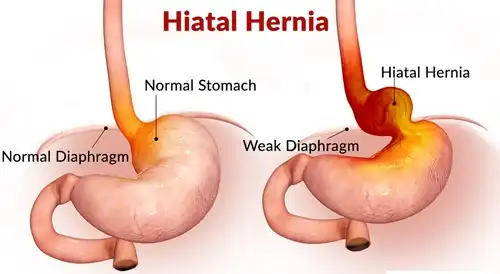
Hiatal hernia in children is a condition in which a portion of the stomach moves upward through the diaphragm into the chest cavity. The diaphragm is a muscle that separates the chest from the abdomen and helps in breathing. In pediatric hiatal hernia, the opening in the diaphragm becomes enlarged or weak, allowing part of the stomach to slip upward. This condition may cause digestive problems, acid reflux, feeding difficulties, and breathing discomfort in infants and children. Although hiatal hernia is less common in children compared to adults, early diagnosis and proper treatment are important to prevent complications and improve the child’s quality of life.
What is a Pediatric Hiatal Hernia?
A pediatric hiatal hernia occurs when the upper part of the stomach pushes through the hiatus, which is a small opening in the diaphragm through which the food pipe (esophagus) passes.
In children, this condition may be congenital (present from birth) or develop due to weakness in the diaphragm muscles. Some children may have mild symptoms, while others may experience significant digestive and feeding problems.
Symptoms of Hiatal Hernia in Children
The symptoms of a hiatal hernia in children can vary depending on the severity of the condition. Common symptoms include:
- Frequent acid reflux or regurgitation
- Vomiting after feeding
- Difficulty swallowing
- Heartburn or chest discomfort
- Poor feeding in infants
- Frequent burping or hiccups
- Chronic cough
- Breathing difficulties in severe cases
- Poor weight gain or growth problems
- Irritability in babies
Parents should consult a doctor if these symptoms persist or worsen over time.
Causes of Hiatal Hernia in Children
Hiatal hernia in children may develop due to several factors, including:
- Congenital weakness of the diaphragm
- An enlarged opening in the diaphragm is present from birth
- Premature birth
- Increased abdominal pressure
- Neuromuscular disorders
- Connective tissue weakness
In many pediatric cases, the exact cause may not be clearly identified.
Types of Hiatal Hernia in Children
- Sliding Hiatal Hernia: This is the most common type, in which the stomach and lower part of the esophagus slide upward into the chest.
- Paraesophageal Hiatal Hernia: In this type, part of the stomach pushes beside the esophagus into the chest cavity. This type is less common but may lead to serious complications.
How is a pediatric hiatal hernia diagnosed?
Doctors may diagnose a hiatal hernia using physical examination and imaging tests, including:
- X-rays
- Barium swallow test
- Upper GI endoscopy
- CT scan in complex cases
These tests help determine the size and severity of the hernia.
Treatment for Pediatric Hiatal Hernia
Lifestyle and Feeding Modifications
Doctors may recommend smaller and more frequent meals, proper feeding positions, and avoiding foods that worsen acid reflux symptoms.
Homeopathic Treatment
Homeopathy focuses on improving digestion, reducing acid reflux symptoms, and supporting the child’s overall health naturally. At Dr. Sanjay’s Homoeopathy, treatment is individualized according to the child’s symptoms, digestive health, immunity, feeding pattern, and constitutional condition. The clinic follows a gentle and holistic approach aimed at improving long-term wellbeing naturally in children.
Medical Treatment
Some children may require medicines to control acid reflux, reduce stomach acid, and improve digestive comfort.
Surgical Treatment
In severe cases where symptoms are persistent or complications develop, surgery may be needed to repair the hiatal hernia and prevent reflux.
Hiatal Hernia Homeopathic Remedies
Homeopathic remedies are selected according to the child’s symptoms and overall constitutional health.
Nux Vomica
May help children with acid reflux, irritability, indigestion, and digestive discomfort.
Robinia
Often considered for severe acidity and sour vomiting.
Lycopodium
May be useful in bloating, gas formation, and digestive weakness.
Calcarea Carbonica
Commonly used in children with weak digestion, poor muscle tone, and delayed physical development.
Carbo Vegetabilis
Sometimes recommended for excessive gas, bloating, and digestive heaviness.
Homeopathic treatment should always be taken under the supervision of an experienced doctor.
Complications of Untreated Hiatal Hernia
If left untreated, pediatric hiatal hernia may lead to:
- Chronic acid reflux
- Esophagitis (inflammation of the food pipe)
- Feeding difficulties
- Poor growth and nutrition
- Respiratory infections
- Breathing problems
Early diagnosis and treatment help prevent these complications.
Frequently Asked Questions (FAQs)
What is a hiatal hernia in children?
A hiatal hernia is a condition in which part of the stomach moves upward through the diaphragm into the chest cavity.
What are the common symptoms of pediatric hiatal hernia?
Common symptoms include acid reflux, vomiting, feeding difficulties, chest discomfort, chronic cough, and poor weight gain.
Can a hiatal hernia cause breathing problems in children?
Yes, a severe hiatal hernia may sometimes lead to breathing difficulties and recurrent respiratory infections.
Can homeopathy help in pediatric hiatal hernia?
Homeopathy may help support digestion, reduce acid reflux symptoms, and improve overall health naturally in children.
When does a hiatal hernia require surgery?
Surgery may be required if symptoms become severe, persistent, or complications such as severe reflux and feeding difficulties develop.
Why choose Dr. Sanjay’s Homoeopathy for Pediatric Hiatal Hernia Treatment in Lucknow, India?
At Dr. Sanjay’s Homoeopathy, children with hiatal hernia receive advanced and holistic homeopathic care under the expert guidance of Dr. Sanjay Singh, MD (Homoeopathy), who has more than 22 years of experience in treating pediatric and chronic diseases. The clinic is trusted by parents from Lucknow, across India, and internationally for providing individualized treatment based on detailed evaluation of digestion, feeding habits, immunity, physical development, and overall constitutional health of the child. Dr. Sanjay’s Homoeopathy combines classical homeopathic principles with modern medical understanding to provide safe, gentle, and child-friendly care focused on improving long-term digestive health naturally. Parents choose the clinic for its ethical treatment approach, transparent guidance, compassionate care, and honest recommendations regarding medical or surgical management whenever necessary.