Myopia, commonly known as nearsightedness, is one of the most common vision problems in children. In this condition, children can see nearby objects clearly, but distant objects appear blurred. Myopia usually develops during school-age years and may gradually worsen as the child grows. Early diagnosis through regular eye examinations and timely treatment can help improve vision, slow the progression of myopia, and support healthy visual development.
What is Myopia in Children?
Myopia is a refractive error that occurs when the eyeball is longer than normal or the cornea is too curved. As a result, light entering the eye focuses in front of the retina instead of directly on it, making distant objects appear blurry while nearby objects remain clear.
Children with untreated myopia may struggle to see the classroom board, road signs, or distant objects, which can affect learning and daily activities.
What are the Symptoms of Myopia in Children?
Symptoms may develop gradually and include:
- Blurred vision when looking at distant objects
- Squinting to see clearly
- Sitting very close to the television
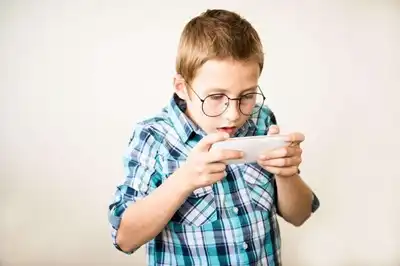
- Holding books or mobile devices very close to the face
- Difficulty seeing the classroom board
- Frequent headaches
- Eye strain
- Excessive blinking
- Rubbing the eyes frequently
- Poor academic performance due to vision problems
Parents should arrange an eye examination if their child complains of blurred distance vision or shows any of these signs.
What are the Causes of Myopia in Children?
Several factors contribute to the development of myopia.
Genetics
Children with one or both parents having myopia are at a higher risk.
Excessive Near Work
Long hours spent reading, writing, or using digital devices may increase the risk of myopia progression.
Limited Outdoor Activity
Children who spend less time outdoors may have a higher chance of developing myopia.
Eye Growth
Abnormal elongation of the eyeball during childhood causes light to focus in front of the retina.
Environmental Factors
Lifestyle and visual habits may influence the progression of myopia in genetically susceptible children.
Which Children are at Higher Risk?
Children at higher risk include:
- Children with a family history of myopia
- School-going children
- Children with prolonged screen time
- Children who spend long hours reading or doing close-up work
- Children with limited outdoor activities
Types of Myopia in Children
Simple Myopia
The most common form, usually developing during childhood and adolescence.
Progressive Myopia
Myopia that gradually worsens as the child grows.
High Myopia
A severe form of myopia associated with a higher risk of eye complications later in life.
How is Myopia Diagnosed?
Doctors diagnose myopia through a comprehensive eye examination performed by an ophthalmologist or optometrist.
Diagnostic tests may include:
- Vision assessment
- Visual acuity test
- Refraction test
- Eye examination after pupil dilation
- Eye pressure measurement when indicated
- Examination of the retina
These tests help determine the degree of myopia and identify any associated eye conditions.
Treatment for Myopia in Children
Prescription Glasses
Eyeglasses are the most common and effective treatment for correcting myopia.
Contact Lenses
Older children and teenagers may be suitable candidates for contact lenses under professional supervision.
Myopia Control Treatments
Some children may benefit from treatments that help slow the progression of myopia, including specially designed contact lenses, spectacle lenses, or low-dose atropine eye drops as recommended by an eye specialist.
Healthy Eye Habits
Encouraging regular outdoor play, reducing prolonged screen time, and taking frequent breaks during reading or computer use may support healthy vision.
Homeopathic Treatment
Homeopathy focuses on supporting overall eye health and general wellbeing through individualized care. At Dr. Sanjay’s Homoeopathy, treatment is tailored according to the child’s general health, eye symptoms, lifestyle, family history, and constitutional profile. The clinic follows a holistic approach designed to complement professional ophthalmic care. Homeopathy should not replace prescription glasses, contact lenses, myopia control therapies, or regular eye examinations.
Homeopathic Remedies for Myopia in Children
Homeopathic medicines are prescribed individually after a comprehensive evaluation.
Physostigma Venenosum
Often considered in homeopathic practice for eye strain and visual fatigue.
Ruta Graveolens
May be recommended for children experiencing eye strain after prolonged reading or screen use.
Calcarea Phosphorica
Sometimes considered for growing children with constitutional health concerns.
Natrum Muriaticum
May be prescribed according to the child’s overall constitutional profile.
Gelsemium
Sometimes considered for eye fatigue and heaviness under professional supervision.
Homeopathic treatment should always be supervised by a qualified physician and should complement regular ophthalmic care.
Complications of Untreated Myopia
Without appropriate correction and follow-up, myopia may lead to:
- Poor academic performance
- Eye strain
- Frequent headaches
- Reduced participation in sports
- Increased risk of progressive myopia
- Retinal complications in severe myopia
- Reduced quality of life
Regular eye examinations help detect progression early and reduce long-term risks.
How Can Parents Help Prevent Myopia Progression?
Parents can help by:
- Scheduling regular eye examinations
- Encouraging at least 1–2 hours of outdoor play daily
- Limiting unnecessary screen time
- Encouraging the 20-20-20 rule during near work (every 20 minutes, look at something 20 feet away for 20 seconds)
- Ensuring good lighting while reading
- Encouraging children to maintain a proper reading distance
Frequently Asked Questions (FAQs)
What is myopia in children?
Myopia, or nearsightedness, is a condition in which distant objects appear blurry while nearby objects remain clear because light focuses in front of the retina.
At what age can myopia develop?
Myopia commonly develops between 6 and 14 years of age but may occur earlier or later in some children.
Can myopia be cured?
Myopia cannot usually be cured, but it can be effectively managed with glasses, contact lenses, and myopia control treatments to improve vision and slow progression.
Can homeopathy help children with myopia?
Homeopathy may provide supportive care for overall eye health and wellbeing as part of a comprehensive treatment plan alongside regular ophthalmic care and prescribed vision correction.
How can parents reduce the risk of myopia progression?
Encouraging outdoor activities, limiting excessive screen time, maintaining healthy reading habits, and scheduling regular eye examinations can help reduce the progression of myopia.
Why choose Dr. Sanjay’s Homoeopathy for Myopia Treatment in Children in Lucknow, India?
At Dr. Sanjay’s Homoeopathy, children with eye-related concerns receive advanced and holistic homeopathic supportive care under the expert guidance of Dr. Sanjay Singh, MD (Homoeopathy), who has over 22 years of experience in treating pediatric chronic health conditions naturally. The clinic is trusted by families from Lucknow, across India, and internationally for its individualized treatment plans, comprehensive child evaluations, and compassionate care. Every child is assessed according to visual symptoms, general health, lifestyle, nutritional status, family history, and constitutional profile to provide personalized supportive care aimed at promoting overall wellbeing naturally. Dr. Sanjay’s Homoeopathy also strongly recommends regular follow-up with pediatric ophthalmologists for accurate vision assessment, prescription updates, and evidence-based myopia management.