What is Macular Degeneration?
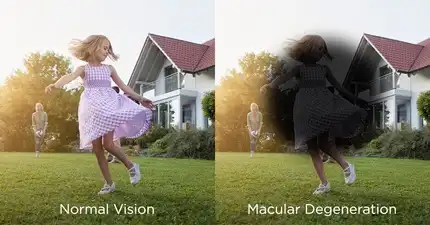
Macular Degeneration, also known as Age-related Macular Degeneration (AMD), is an eye condition that affects the macula — the central part of the retina responsible for sharp and detailed vision. The macula helps us see fine details clearly when reading, driving, or recognizing faces.
When the macula gets damaged, central vision becomes blurred or distorted, while side (peripheral) vision usually remains normal. This means a person with macular degeneration may still see around the edges but not directly in front.
Macular Degeneration is one of the leading causes of vision loss in people aged 50 and above. Though it does not cause total blindness, it can greatly affect daily activities and quality of life.
What are the common symptoms of macular degeneration?
Symptoms develop slowly and may not be noticed in the early stages. Common signs include:
- Blurred or fuzzy central vision
- Difficulty reading or recognizing faces
- Straight lines appearing wavy or distorted
- Dark or empty spots in the center of vision
- Trouble seeing in dim light or at night
- Reduced brightness or intensity of colors
In most cases, the disease affects both eyes, but one eye may develop symptoms earlier than the other.
What causes macular degeneration?
The exact cause of macular degeneration is not fully understood, but it is mainly related to ageing and deterioration of the retinal tissues. Over time, waste materials from cells accumulate under the retina, leading to damage and weakening of the macula.
Contributing causes include:
- Age: Risk increases significantly after age 50.
- Genetics: Family history of AMD raises the risk.
- Smoking: Reduces oxygen supply to eye tissues.
- Poor nutrition: Lack of antioxidants and vitamins.
- High blood pressure or heart disease.
- Obesity and lack of exercise.
- Excessive exposure to sunlight (UV light).
- Prolonged screen use or eye strain.
What are the types of macular degeneration?
Macular degeneration is classified into two main types:
- Dry (Atrophic) Macular Degeneration
This is the most common form, accounting for about 80–90% of all cases. It develops slowly as the light-sensitive cells in the macula gradually break down. Patients experience mild to moderate vision loss over time.
- Wet (Neovascular) Macular Degeneration
This type occurs when abnormal blood vessels grow under the retina and leak fluid or blood, leading to rapid and severe vision loss. It requires urgent medical attention to prevent permanent damage.
Who is at risk for macular degeneration?
You are more likely to develop macular degeneration if you:
- Are over 50 years of age
- Have a family history of AMD
- Smoke regularly
- Have high blood pressure or heart disease
- Have a diet low in fruits and green leafy vegetables
- Are you overweight or inactive
- Have prolonged exposure to sunlight without eye protection
Understanding your risk helps you take early steps to protect your eyes.
How is macular degeneration different from other eye diseases?
Unlike cataract, which causes cloudy vision due to a lens problem, macular degeneration affects the retina, the light-sensitive tissue at the back of the eye. It primarily affects central vision, while peripheral vision often remains normal.
This means you may still see shapes and movements around you, but struggle to focus on details directly in front of your eyes.
How is macular degeneration diagnosed?
Macular degeneration can be detected through a detailed eye examination by an ophthalmologist. Common tests include:
- Visual acuity test: Checks the sharpness of vision.
- Amsler grid test: Detects distortion or blank spots in central vision.
- Dilated eye exam: Allows the doctor to see the retina and macula clearly.
- Optical Coherence Tomography (OCT): Creates a cross-sectional image of the retina to detect fluid or damage.
- Fluorescein angiography: Uses dye to check for leaking blood vessels in the retina (for wet AMD).
Regular eye exams are crucial, especially for people above 50 or with a family history of AMD.
Can macular degeneration be prevented?
Although age and genetics cannot be changed, certain healthy habits can help reduce the risk or slow progression:
- Eat a diet rich in antioxidants, leafy vegetables, and fruits.
- Include foods containing omega-3 fatty acids (fish, flaxseeds).
- Avoid smoking and limit alcohol consumption.
- Maintain normal blood pressure and cholesterol levels.
- Protect your eyes from UV light with sunglasses.
- Exercise regularly to improve blood circulation.
- Control body weight and manage diabetes if present.
Prevention focuses on maintaining healthy eyes and supporting macular health through lifestyle and nutrition.
What are the treatment options for macular degeneration?
The treatment depends on the type and stage of the disease.
- For Dry Macular Degeneration:
There is no complete cure, but treatment aims to slow down progression and preserve remaining vision.
- Nutritional supplements: Studies show that vitamins C, E, zinc, lutein, and zeaxanthin can slow down dry AMD.
- Healthy diet: Include green vegetables, nuts, fruits, and fish.
- Regular monitoring: Helps detect any change to wet AMD early.
- For Wet Macular Degeneration:
Treatment focuses on stopping the growth of abnormal blood vessels and preventing further vision loss.
- Anti-VEGF injections: These medicines block abnormal vessel growth.
- Laser therapy: Destroys leaking blood vessels.
- Photodynamic therapy: Uses light and medicine to seal leaky vessels.
Prompt treatment can help preserve vision and prevent severe vision loss.
Can homeopathy help in treating macular degeneration?
Yes, homeopathy can help manage macular degeneration naturally by improving blood circulation to the retina, reducing oxidative stress, and slowing the disease’s progression. It aims to strengthen the optic nerve and support the overall health of the eyes.
Some commonly used homeopathic medicines for macular degeneration include:
- Phosphorus: For blurred vision and light sensitivity.
- Arnica montana: Improves retinal circulation and prevents bleeding.
- Calcarea fluorica: For hardening or degenerative changes in the retina.
- Baryta carbonica: For age-related degeneration and weakness.
- Secale cornutum: For poor blood supply to the retina.
Homeopathic treatment should always be taken under the guidance of an experienced doctor. It works gently and holistically, improving vision quality and eye strength without side effects.
What are the home remedies or lifestyle tips for macular degeneration?
- Eat a diet rich in vitamins A, C, E, and zinc.
- Include carrots, spinach, kale, and fish in your meals.
- Quit smoking and avoid alcohol.
- Do regular light exercise like walking or yoga.
- Wear sunglasses outdoors to protect from the sunlight.
- Avoid processed foods and excess sugar.
- Use proper lighting when reading or working.
- Take regular breaks while using screens.
- Practice relaxation techniques to reduce stress.
Can macular degeneration cause blindness?
Macular degeneration does not usually cause complete blindness, as peripheral vision is often preserved. However, it can severely affect central vision, making reading, driving, and detailed work very difficult.
With timely diagnosis and proper treatment, most people can manage the condition and maintain useful vision for life.
Is macular degeneration hereditary?
Yes. Family history plays a significant role in developing AMD. If your parents or siblings have the condition, you should have regular eye exams after age 40, even if you have no symptoms.
When should you see a doctor for macular degeneration?
Seek immediate medical attention if you notice:
- Straight lines appearing bent or wavy
- Blurred or distorted central vision
- Difficulty reading fine print
- Dark spots in your visual field
- Rapid change in vision in one or both eyes
Early diagnosis can prevent severe vision loss and improve treatment success.
Macular Degeneration is a progressive eye condition that affects central vision and can impact daily life. Although it cannot always be cured, early diagnosis, proper medical care, and lifestyle changes can slow down its progression and help preserve your eyesight.
Homeopathy offers a safe and holistic approach that strengthens the eyes naturally and supports long-term retinal health.
If you notice any vision changes, do not delay — consult an eye specialist or homeopathic doctor for proper evaluation and personalized care.
Why choose Dr. Sanjay’s Homoeopathy for Macular Degeneration Treatment in Lucknow, India?
Dr. Sanjay’s Homoeopathy is a trusted clinic for safe and effective Macular Degeneration treatment in Lucknow, India. With years of expertise, Dr. Sanjay Singh provides specialized homeopathy treatment for Macular Degeneration in Lucknow, which helps manage central vision loss, blurriness, distorted vision, light sensitivity, and difficulty reading—naturally without side effects. As a leading homeopathic doctor in Lucknow, he follows international treatment standards and offers personalized care that focuses on protecting the macula, improving retinal health, and slowing the progression of vision deterioration. Patients choose Dr. Sanjay’s Homoeopathy for its holistic healing, long-lasting relief, and compassionate approach in managing chronic eye conditions like Macular Degeneration. Patients from across the world trust Dr. Sanjay Singh for his Macular Degeneration root cause treatment approach. He treats thousands of patients of Macular Degeneration with a 98% success rate every year.