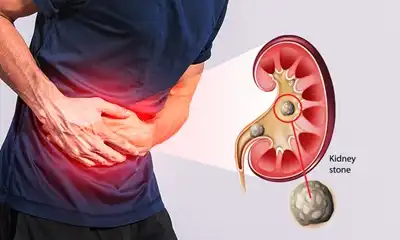
What is a Kidney Stone?
A Kidney Stone is a hard, crystal-like deposit that forms inside the kidneys when minerals and salts in the urine become concentrated and solidify. These stones can vary in size, from tiny grains to large masses that block the urinary tract. When a stone moves through the ureter (the tube connecting the kidney to the bladder), it can cause severe pain, blood in the urine, nausea, and difficulty urinating. Kidney stones are common in adults but may occur at any age. While small stones often pass on their own, larger stones may require medical treatment. Early diagnosis helps prevent complications such as infection or kidney damage.
What are the common symptoms of a Kidney Stone?
Symptoms may differ depending on the stone’s size and position, but commonly include:
- Sharp, severe pain in the side or back (renal colic)
- Pain radiating to the lower abdomen or groin
- Burning or pain during urination
- Blood in urine (pink, red, or brown colour)
- Frequent urge to urinate
- Passing small amounts of urine
- Nausea or vomiting
- Cloudy or foul-smelling urine
- Fever or chills (if infection is present)
Pain often comes in waves as the stone moves through the urinary tract.
Types of Kidney Stones
Kidney stones are categorised based on their chemical composition:
- Calcium Stones: Most common type; formed from calcium oxalate or calcium phosphate.
- Uric Acid Stones: Develop when urine is too acidic; common in people with gout or high-protein diets.
- Struvite Stones: Caused by urinary infections, grow quickly and can become large.
- Cystine Stones: Rare; caused by a hereditary condition resulting in excess cystine in urine.
What causes Kidney Stones?
Kidney stones form when the urine contains more minerals and salts than the kidneys can dissolve. Common causes include:
- Low water intake (dehydration)
- High-salt, high-sugar, or high-oxalate diet
- Family history of kidney stones
- Obesity or a sedentary lifestyle
- Urinary tract infections
- Metabolic disorders
- Certain medications
- Excessive consumption of protein, calcium, or vitamin D
- Digestive diseases (Crohn’s, etc.) affect nutrient absorption
Who is at risk of developing Kidney Stones?
You may be at higher risk if you:
- Drink less water or live in hot climates
- Eat a high-sodium or high-protein diet
- Have had previous stones
- Have a family history of kidney stones
- Suffer from obesity or diabetes
- Take calcium supplements excessively
- Have recurrent urinary infections
- Have gout or high uric acid levels
Men are more commonly affected than women.
Is a Kidney Stone a serious condition?
Kidney stones are painful but usually not life-threatening. However, untreated stones may cause:
- Kidney infection
- Blockage of urine flow
- Hydronephrosis (kidney swelling)
- Kidney damage or reduced kidney function
- Recurrent stones
- Blood in urine
Prompt treatment helps avoid complications and provides quick relief.
How is a Kidney Stone diagnosed?
Diagnosis involves:
- Ultrasound: Detects most stones and kidney swelling
- CT scan: Most accurate test for identifying stone size and location
- X-ray (KUB): For tracking larger stones
- Urine test: To check for infection or mineral imbalance
- Blood tests: To assess kidney function and mineral levels
How is a Kidney Stone treated?
Treatment depends on size, location, and severity.
Conventional Medical Treatment
- Pain medications: To relieve severe pain
- Increased water intake: Helps flush out small stones
- Alpha-blockers: To relax the ureters and ease stone passage
- Antibiotics: For infections
- Shock Wave Lithotripsy (SWL): Breaks stones into smaller pieces
- Ureteroscopy: To remove stones using a thin scope
- Surgery (PCNL): For very large or complex stones
Lifestyle changes are essential to prevent recurrence.
How is a Kidney Stone treated through Homoeopathy?
Homoeopathy offers a safe and natural approach to dissolving stones, relieving pain, and preventing recurrence. It helps improve kidney function, reduce inflammation, promote stone expulsion, and correct mineral imbalance.
Individualized Approach
At Dr. Sanjay’s Homoeopathy, treatment is customised based on:
- Stone size and location
- Type of symptoms
- Frequency of stone formation
- Infection status
- Patient’s overall constitution
Remedies help reduce pain, improve urine flow, and prevent new stones from forming.
Commonly Used Homoeopathic Medicines for Kidney Stones
- Berberis Vulgaris: For sharp, radiating kidney pain
- Cantharis: For burning urination and inflammation
- Sarsaparilla: For pain at the end of urination
- Hydrangea: For stone, grave,l and large stones
- Lycopodium: For right-sided kidney stones
- Ocimum Canum: For intense renal colic with vomiting
(Medicine selection depends on individual symptoms.)
Benefits of Homoeopathic Treatment
- Helps dissolve small to medium stones naturally
- Eases pain and inflammation
- Promotes smooth stone passage
- Prevents recurring stones
- Improves kidney filtration
- Safe for long-term use without side effects
- Strengthens urinary tract health
Home Remedies and Lifestyle Tips for Kidney Stones
- Drink 8–10 glasses of water daily
- Reduce salt and processed foods
- Limit animal protein (meat, eggs)
- Consume lemon water to reduce stone formation
- Avoid excess spinach, nuts, and chocolate (high oxalate)
- Maintain a healthy weight
- Reduce sugary drinks and sodas
- Drink coconut water or barley water for kidney support
Can Kidney Stones be prevented?
Yes, most stones can be prevented by:
- Staying well-hydrated
- Eating a balanced, low-sodium diet
- Managing uric acid levels
- Avoiding excessive supplements
- Treating infections promptly
- Maintaining a healthy lifestyle
Why choose Dr. Sanjay’s Homoeopathy for Kidney Stone Treatment in Lucknow, India?
Dr. Sanjay’s Homoeopathy is a trusted clinic for safe and effective Kidney Stone treatment in Lucknow, India. With years of expertise, Dr. Sanjay provides specialised homeopathy treatment that helps manage severe flank pain, burning urination, nausea, blood in urine, stone formation, and recurrent urinary tract discomfort naturally without side effects. As a leading homeopathic doctor for Kidney disease treatment in Lucknow, he follows international treatment standards and offers personalised care that focuses on dissolving stones, easing their passage, preventing new stone formation, and improving overall kidney function. Patients choose Dr. Sanjay’s Homoeopathy for its holistic healing, long-lasting relief, and compassionate approach in managing urinary conditions like Kidney Stones.
Patients from across the world trust Dr. Sanjay’s Homoeopathy for Kidney Stone Treatment in Lucknow, India. Dr. Sanjay Singh, who led this clinic, has successfully treated thousands of patients with Kidney stones, which makes him the best doctor for kidney stone treatment in Lucknow, India.