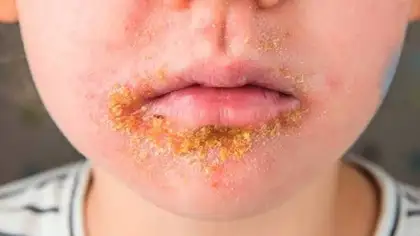
Impetigo in children is a highly contagious bacterial skin infection that commonly affects infants and young children. It usually begins as small red sores or blisters that quickly burst, ooze fluid, and develop a characteristic honey-colored crust. Impetigo most often occurs around the nose, mouth, hands, and legs but can spread to other parts of the body through scratching or close contact. Although the infection is usually mild, prompt treatment is important to prevent its spread, speed up healing, and reduce the risk of complications.
What is Impetigo in Children?
Impetigo is a superficial bacterial infection of the skin caused primarily by Staphylococcus aureus or Streptococcus pyogenes. The bacteria enter the skin through small cuts, insect bites, scratches, eczema, or other skin injuries.
The infection spreads easily through direct skin-to-skin contact or by sharing towels, clothing, toys, or bedding.
What are the Symptoms of Impetigo in Children?
The symptoms may vary depending on the type of impetigo. Common signs include:
- Small red sores or blisters
- Honey-colored crusts on the skin
- Itching around the affected area
- Oozing or leaking fluid from sores
- Skin redness and irritation
- Mild pain or tenderness
- Swollen lymph nodes near the affected area
- Lesions around the nose, mouth, hands, or legs
- New sores developing after scratching
Parents should seek medical advice if the rash spreads rapidly, the child develops fever, or the sores do not improve within a few days.
What are the Causes of Impetigo in Children?
Impetigo develops when bacteria enter damaged skin.
Common causes include:
Bacterial Infection
The most common bacteria responsible are Staphylococcus aureus and Streptococcus pyogenes.
Skin Injuries
Minor cuts, scrapes, insect bites, burns, or scratches allow bacteria to enter the skin.
Eczema and Other Skin Conditions
Children with eczema or other itchy skin diseases have a higher risk due to frequent scratching.
Close Contact
The infection spreads easily in schools, daycare centers, playgrounds, and within families.
Poor Hygiene
Infrequent handwashing and sharing personal items can increase the risk of infection.
Which Children are at Higher Risk?
Children at increased risk include:
- Children between 2 and 5 years of age
- Children attending daycare or school
- Children with eczema
- Children involved in close-contact sports
- Children living in warm and humid climates
- Children with poor skin hygiene
Types of Impetigo in Children
Non-Bullous Impetigo
The most common type, characterized by small sores that rupture and form honey-colored crusts.
Bullous Impetigo
Causes larger, fluid-filled blisters that burst and leave thin brown crusts.
Ecthyma
A deeper form of impetigo that extends into the deeper layers of the skin and may leave scars if untreated.
How is Impetigo Diagnosed in Children?
Doctors diagnose impetigo through medical history and physical examination.
Additional investigations may include:
- Physical examination
- Bacterial culture of the wound in recurrent or severe cases
- Evaluation for underlying skin conditions
Most children do not require laboratory testing.
Treatment for Impetigo in Children
Medical Treatment
Treatment usually includes topical antibiotic ointments for mild infections and oral antibiotics for widespread or severe impetigo. Completing the full course of antibiotics is important to prevent recurrence and complications.
Skin Care
Keeping the affected area clean, washing crusts gently with warm water, and avoiding scratching help promote healing and reduce spread.
Infection Prevention
Children should avoid sharing towels, clothing, bedding, or personal items until the infection has healed.
Homeopathic Treatment
Homeopathy focuses on supporting skin healing, strengthening immunity, reducing the tendency for recurrent skin infections, and promoting overall wellbeing naturally in children. At Dr. Sanjay’s Homoeopathy, treatment is individualized according to the child’s skin condition, infection history, immunity, allergy profile, and constitutional makeup. The clinic follows a holistic approach designed to complement appropriate medical treatment. Homeopathy should not replace antibiotic therapy for active bacterial skin infections.
Impetigo Homeopathic Remedies for Children
Homeopathic medicines are prescribed individually after a detailed assessment.
Graphites
Often considered for sticky, oozing skin lesions with crust formation.
Hepar Sulphuris Calcareum
May be recommended for painful skin infections with pus formation.
Mercurius Solubilis
Commonly considered for infected skin lesions with yellow discharge.
Antimonium Crudum
May help children with recurrent crusted skin eruptions.
Sulphur
Sometimes prescribed for chronic skin infections associated with itching and recurrent flare-ups.
Homeopathic treatment should always be supervised by a qualified physician and should complement appropriate antibiotic treatment and skin care.
Complications of Untreated Impetigo
Without proper treatment, impetigo may lead to:
- Spread of infection to other parts of the body
- Cellulitis (deeper skin infection)
- Permanent skin scarring (rare)
- Post-streptococcal kidney inflammation (rare)
- Recurrent skin infections
- Infection spreading to family members and classmates
Early treatment significantly reduces the risk of complications.
How Can Parents Help Prevent Impetigo?
Parents can help by:
- Encouraging regular handwashing
- Keeping cuts and scratches clean and covered
- Trimming the child’s fingernails to reduce scratching
- Avoiding sharing towels, clothing, and personal items
- Washing bedding and clothes regularly
- Seeking prompt treatment for skin infections and eczema
Frequently Asked Questions (FAQs)
What is impetigo in children?
Impetigo is a highly contagious bacterial skin infection that causes red sores, blisters, and honey-colored crusts, most commonly around the nose and mouth.
Is impetigo contagious?
Yes. Impetigo spreads easily through direct contact with infected skin or contaminated objects such as towels, clothing, or bedding.
How is impetigo treated?
Treatment usually includes topical or oral antibiotics, proper skin hygiene, and measures to prevent the spread of infection.
Can homeopathy help children with impetigo?
Homeopathy may help support skin healing and overall immunity naturally as part of a comprehensive treatment plan alongside appropriate antibiotic treatment and medical care.
When should parents consult a doctor?
Parents should seek medical evaluation if the rash spreads rapidly, causes fever, becomes painful, produces excessive pus, or does not improve within a few days of treatment.
Why choose Dr. Sanjay’s Homoeopathy for Impetigo Treatment in Children in Lucknow, India?
At Dr. Sanjay’s Homoeopathy, children with recurrent skin infections and chronic pediatric skin conditions receive advanced and holistic homeopathic care under the expert guidance of Dr. Sanjay Singh, MD (Homoeopathy), who has over 22 years of experience in treating children’s skin disorders naturally. The clinic is trusted by families from Lucknow, across India, and internationally for its personalized treatment plans, detailed skin assessments, and compassionate child-centered care. Every child is evaluated according to the severity of the infection, skin sensitivity, immune health, allergy history, hygiene practices, and constitutional profile to provide individualized treatment aimed at supporting healthy skin naturally. Dr. Sanjay’s Homoeopathy also emphasizes the importance of timely antibiotic treatment, proper hygiene, and dermatological consultation whenever necessary.