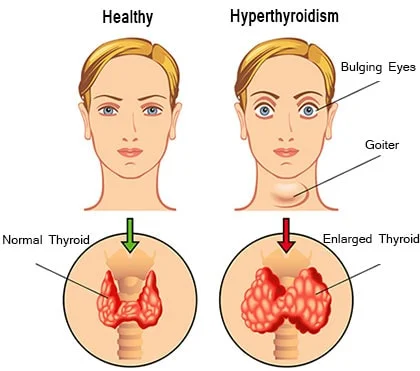
Hyperthyroidism is a condition in which the thyroid gland produces more thyroid hormones than the body needs. These hormones regulate metabolism, heart rate, body temperature, and many other important functions. When thyroid hormone levels become excessive, several body systems can become overactive.
Common symptoms may include unexplained weight loss, increased sweating, rapid heartbeat, nervousness, tremors, heat intolerance, increased appetite, difficulty sleeping, and frequent bowel movements. Early diagnosis and appropriate management can help control symptoms and support better overall health.
What is Hyperthyroidism?
Hyperthyroidism occurs when the thyroid gland becomes overactive and produces excessive amounts of thyroxine (T4) and triiodothyronine (T3).
The thyroid is a butterfly-shaped gland located at the front of the neck. Thyroid hormones influence metabolism and affect the functioning of the heart, digestive system, muscles, nervous system, and other organs.
Hyperthyroidism can develop gradually or appear relatively suddenly, depending on its underlying cause.
What are the Symptoms of Hyperthyroidism?
Common symptoms of hyperthyroidism may include:
- Unexplained weight loss
- Increased appetite
- Rapid or irregular heartbeat
- Excessive sweating
- Increased sensitivity to heat
- Nervousness or anxiety
- Irritability or mood changes
- Hand tremors
- Difficulty sleeping
- Muscle weakness
- Fatigue
- Frequent bowel movements
- Increased thirst
- Menstrual irregularities
- Difficulty concentrating
- Increased sensitivity to heat
- Hair thinning or hair loss
- Enlarged thyroid gland or swelling in the neck
Some people may have only a few symptoms, while others can experience multiple symptoms affecting daily life.
What Causes Hyperthyroidism?
Several conditions can cause the thyroid gland to become overactive, including:
- Graves’ disease
- Overactive thyroid nodules
- Thyroiditis
- Excessive intake of thyroid hormone medicines
- Excessive iodine exposure in certain situations
- Certain medications
- Rarely, problems involving the pituitary gland
Graves’ disease is one of the most common causes of hyperthyroidism.
Who is at Higher Risk of Hyperthyroidism?
The risk of developing hyperthyroidism may be higher in people with:
- A family history of thyroid disorders
- A history of autoimmune disease
- Existing thyroid problems
- Previous thyroiditis
- Certain medication or iodine exposures
- Previous thyroid surgery or thyroid-related treatment
Women are also more commonly affected by thyroid disorders than men.
Types of Hyperthyroidism
Graves’ Disease
Graves’ disease is an autoimmune condition in which the immune system stimulates the thyroid gland to produce excessive thyroid hormones.
Toxic Multinodular Goiter
Multiple thyroid nodules may become overactive and produce excessive thyroid hormones.
Toxic Thyroid Adenoma
A single thyroid nodule can become overactive and produce thyroid hormones independently of normal thyroid regulation.
Thyroiditis
Inflammation of the thyroid can cause stored thyroid hormones to leak into the bloodstream, temporarily producing symptoms of hyperthyroidism.
Medication- or Iodine-Related Hyperthyroidism
Certain medicines or excessive iodine exposure can sometimes contribute to thyroid overactivity.
How is Hyperthyroidism Diagnosed?
Diagnosis begins with a detailed assessment of symptoms and medical history. Thyroid function tests are important for confirming thyroid overactivity.
Evaluation may include:
- TSH blood test
- Free T4 and T3 tests
- Thyroid antibody testing when autoimmune thyroid disease is suspected
- Thyroid ultrasound
- Radioactive iodine uptake or thyroid scan when appropriate
- Physical examination of the thyroid gland
- Heart rate and cardiovascular assessment
A proper evaluation helps identify the underlying cause and determine the most appropriate management plan.
Treatment for Hyperthyroidism
Treatment depends on the underlying cause, thyroid hormone levels, severity of symptoms, age, overall health, and other individual factors.
Medical Treatment
Conventional treatment options may include:
- Antithyroid medicines
- Medicines to control symptoms such as rapid heartbeat and tremors
- Radioactive iodine treatment in selected cases
- Surgery in specific situations
The treatment approach should be determined after appropriate thyroid evaluation.
Lifestyle and Dietary Measures
Along with appropriate treatment, healthy lifestyle habits may support overall well-being:
- Follow a balanced and nutritious diet
- Maintain adequate hydration
- Limit excessive caffeine if it worsens palpitations or anxiety
- Get adequate sleep
- Practice stress-management techniques
- Maintain regular but appropriate physical activity
- Attend recommended thyroid check-ups
- Take prescribed thyroid medicines exactly as directed
Dietary changes involving iodine should be discussed with a healthcare professional rather than undertaken independently.
Homeopathic Treatment for Hyperthyroidism
Homeopathy offers an individualized approach to managing symptoms associated with thyroid overactivity. Treatment is selected according to the patient’s specific symptoms, thyroid-related complaints, emotional and physical characteristics, lifestyle, medical history, and overall constitution.
At Dr. Sanjay’s Homoeopathy, each patient receives a personalized homeopathic treatment plan based on their complete symptom picture. The approach focuses on holistic care and supporting overall well-being while managing symptoms associated with thyroid imbalance.
Regular thyroid function monitoring and appropriate medical evaluation remain important, particularly when thyroid hormone levels are significantly abnormal or symptoms are severe.
Homeopathic Remedies for Hyperthyroidism
Homeopathic medicines are selected individually according to the patient’s symptoms and overall constitution. Some commonly considered remedies include:
Iodum
Traditionally considered for symptoms associated with an overactive thyroid, particularly increased appetite with weight loss, heat intolerance, restlessness, and a rapid metabolism.
Lycopus Virginicus
Often considered in homeopathic practice for thyroid-related complaints accompanied by palpitations, rapid heartbeat, nervousness, and tremors.
Spongia Tosta
Traditionally considered when thyroid enlargement is associated with a feeling of pressure or tightness in the neck and accompanying thyroid symptoms.
Natrum Muriaticum
May be considered when thyroid-related symptoms occur alongside weight loss, weakness, palpitations, heat sensitivity, and individual constitutional characteristics.
Phosphorus
Traditionally used for certain constitutional patterns involving nervousness, weakness, palpitations, heat sensitivity, and increased sensitivity to environmental factors.
Calcarea Carbonica
May be considered according to the individual’s overall constitutional picture when thyroid complaints occur alongside fatigue, weakness, sweating, and metabolic changes.
Glandula Thyreoidea
A thyroid-derived homeopathic preparation traditionally considered in homeopathic practice for certain thyroid-related complaints.
The appropriate remedy, potency, and treatment plan depend on the individual’s complete symptom picture and should be selected by a qualified homeopathic practitioner.
Complications of Untreated Hyperthyroidism
Persistent untreated hyperthyroidism can affect multiple body systems and may lead to complications such as:
- Heart rhythm abnormalities
- Rapid or irregular heartbeat
- Heart-related complications
- Bone weakening and osteoporosis
- Muscle weakness
- Menstrual and fertility-related problems
- Eye complications associated with Graves’ disease
- Significant weight loss
- Thyroid storm in severe cases
A thyroid storm is a medical emergency and requires immediate medical attention.
How Can You Manage Hyperthyroidism?
Helpful measures include:
- Get regular thyroid function testing
- Follow the treatment plan recommended by your healthcare professional
- Do not stop thyroid medicines without medical advice
- Maintain a balanced diet
- Avoid excessive caffeine if it increases palpitations or nervousness
- Get adequate sleep
- Manage stress
- Stay physically active according to your health status
- Monitor changes in weight, heart rate, and symptoms
- Seek prompt medical care if symptoms suddenly become severe
Frequently Asked Questions (FAQs)
What is hyperthyroidism?
Hyperthyroidism is a condition in which the thyroid gland produces excessive thyroid hormones, causing the body’s metabolism and several other functions to become overactive.
What are the common symptoms of hyperthyroidism?
Common symptoms include weight loss, increased appetite, excessive sweating, heat intolerance, rapid heartbeat, tremors, anxiety, nervousness, fatigue, and difficulty sleeping.
What is the most common cause of hyperthyroidism?
Graves’ disease is one of the most common causes of hyperthyroidism. Other causes include overactive thyroid nodules and thyroiditis.
Can hyperthyroidism cause weight loss?
Yes. Increased thyroid hormone levels can speed up metabolism and may result in unexplained weight loss, sometimes despite an increased appetite.
Can hyperthyroidism cause a fast heartbeat?
Yes. Excess thyroid hormone can increase heart rate and may cause palpitations or irregular heartbeat.
Can homeopathy help with hyperthyroidism?
Homeopathy offers an individualized approach to managing symptoms associated with thyroid overactivity. Treatment is selected according to the patient’s complete symptom picture, constitution, and overall health.
Which homeopathic remedies are commonly considered for hyperthyroidism?
Remedies such as Iodum, Lycopus Virginicus, Spongia Tosta, Natrum Muriaticum, Phosphorus, Calcarea Carbonica, and Glandula Thyreoidea may be considered according to individual symptoms.
Is hyperthyroidism a lifelong condition?
Not necessarily. The duration and outcome depend on the underlying cause. Some forms may be temporary, while others require longer-term management.
What tests are used to diagnose hyperthyroidism?
TSH, free T4, and T3 blood tests are commonly used. Additional antibody tests, ultrasound, or thyroid scans may be recommended to identify the underlying cause.
When should I seek medical attention for hyperthyroidism?
Seek prompt medical attention for severe or rapidly worsening symptoms, particularly very rapid heartbeat, chest pain, severe weakness, confusion, high fever, or difficulty breathing.
Where can I consult for homeopathic treatment for hyperthyroidism in Lucknow?
You can consult Dr. Sanjay’s Homoeopathy in Lucknow, India, for an individualized assessment and homeopathic treatment plan for hyperthyroidism-related symptoms.
Why Choose Dr. Sanjay’s Homoeopathy for Hyperthyroidism Treatment in Lucknow, India?
Dr. Sanjay’s Homoeopathy is a trusted clinic for Hyperthyroidism treatment in Lucknow, India. With more than 22 years of experience, Dr. Sanjay Singh, MD (Homoeopathy), provides personalized homeopathic treatment focused on managing symptoms associated with thyroid overactivity, including weight loss, excessive sweating, palpitations, nervousness, tremors, heat intolerance, fatigue, and sleep difficulties. As a leading homeopathic doctor in Lucknow, he follows an individualized approach based on the patient’s symptoms, thyroid health, medical history, lifestyle, and overall constitution, with a focus on holistic care and long-term well-being. Patients from across India and around the world choose Dr. Sanjay’s Homoeopathy for its personalized treatment, holistic approach, experienced consultation, and compassionate patient care for Hyperthyroidism and other thyroid-related health concerns.