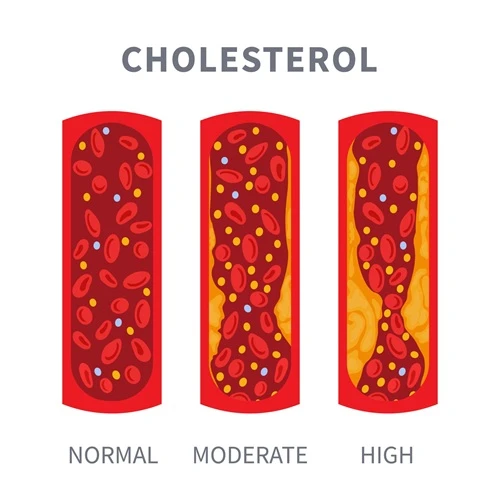
Hyperlipidemia, commonly called high cholesterol, is a condition in which there are unhealthy levels of cholesterol or other fats in the blood. It may involve high LDL cholesterol, high triglycerides, low HDL cholesterol, or a combination of these problems.
Cholesterol is needed by the body for important functions, including making hormones and supporting cells. However, too much LDL cholesterol can gradually contribute to fatty deposits, called plaque, inside the arteries. Over time, this can increase the risk of heart disease, heart attack, stroke, and other blood-vessel problems.
One of the main concerns with hyperlipidemia is that it usually does not cause noticeable symptoms. Many people only discover that their cholesterol is high after having a blood test.
What is Hyperlipidemia?
Hyperlipidemia means having an abnormally high level of lipids, or fats, in the blood.
The main substances checked during a cholesterol test include:
- LDL cholesterol – often called “bad cholesterol”
- HDL cholesterol – often called “good cholesterol”
- Triglycerides – another type of fat in the blood
- Total cholesterol
High LDL cholesterol can contribute to plaque buildup in the arteries. High triglycerides combined with high LDL or low HDL can also increase cardiovascular risk.
Hyperlipidemia can develop because of lifestyle factors, inherited conditions, certain diseases, medicines, or a combination of these factors.
What are the Symptoms of Hyperlipidemia?
Most people with hyperlipidemia do not have any symptoms.
A person can have high LDL cholesterol or triglycerides and feel completely healthy. The only reliable way to know whether cholesterol levels are high is through a blood test called a lipid profile or lipid panel.
In some people with extremely high cholesterol, particularly certain inherited forms, physical signs may appear. These can include:
- Yellowish cholesterol deposits around the eyes
- Fatty deposits under the skin called xanthomas
- A grayish-white ring around the cornea
These signs are not present in most people with high cholesterol.
What are the Causes of Hyperlipidemia?
Hyperlipidemia can have several causes.
Unhealthy Diet
Eating a diet high in saturated fats and trans fats can contribute to unhealthy cholesterol levels.
Foods that may contribute include:
- Fatty meats
- Full-fat dairy products
- Fried foods
- Processed foods
- Certain bakery products
- Foods containing trans fats
Reducing saturated and trans fats can help support healthier LDL cholesterol levels.
Lack of Physical Activity
Not getting enough physical activity can contribute to weight gain and unhealthy cholesterol levels.
Regular physical activity is an important part of maintaining healthy cholesterol and cardiovascular health.
Overweight or Obesity
Excess weight is associated with higher triglycerides, higher LDL cholesterol, and lower HDL cholesterol in some people.
Family History
Some people inherit genes that make it difficult for their body to remove LDL cholesterol from the blood.
Familial hypercholesterolemia (FH) is an inherited condition that can cause very high LDL cholesterol from a young age.
Diabetes
Diabetes can affect cholesterol levels and is also an important cardiovascular risk factor.
Thyroid Problems
An underactive thyroid, or hypothyroidism, can contribute to abnormal cholesterol levels.
Kidney Disease
Certain kidney conditions can also affect blood lipid levels.
Smoking
Smoking damages blood vessels and may lower HDL cholesterol, adding to cardiovascular risk.
Certain Medicines
Some medicines can affect cholesterol or triglyceride levels. Your healthcare professional can review your medicines if your lipid levels change unexpectedly.
Types of Hyperlipidemia
Hyperlipidemia can be described according to which blood fats are elevated.
High LDL Cholesterol
This is one of the most common lipid problems. High LDL can contribute to plaque formation in the arteries.
High Triglycerides
Triglycerides are fats that the body uses for energy. Very high triglyceride levels can require specific medical management.
Low HDL Cholesterol
HDL helps transport cholesterol toward the liver. Low HDL can be associated with increased cardiovascular risk.
Mixed Hyperlipidemia
Some people have both high LDL cholesterol and high triglycerides. They may also have low HDL cholesterol.
Familial Hypercholesterolemia
Familial hypercholesterolemia is an inherited condition that can cause very high LDL cholesterol levels. Because it can begin at a young age, people with a strong family history of high cholesterol or early heart disease may need evaluation.
Risk Factors for Hyperlipidemia
Your risk may be higher if you have:
- Family history of high cholesterol
- Unhealthy diet
- Lack of physical activity
- Overweight or obesity
- Diabetes
- High blood pressure
- Smoking
- Kidney disease
- Thyroid disease
- Increasing age
Some risk factors, such as age and genetics, cannot be changed. Lifestyle-related factors can often be improved.
How is Hyperlipidemia Diagnosed?
Hyperlipidemia is diagnosed using a blood test called a lipid profile or lipid panel.
The test generally measures:
- Total cholesterol
- LDL cholesterol
- HDL cholesterol
- Triglycerides
The test provides important information about your lipid levels. However, treatment decisions are not based on cholesterol numbers alone.
Your healthcare professional may also consider:
- Age
- Blood pressure
- Diabetes
- Smoking
- Family history
- Previous heart disease
- Previous stroke
- Other cardiovascular risk factors
The overall cardiovascular risk helps determine whether lifestyle changes alone are appropriate or whether medication may be needed.
Cholesterol Levels
Cholesterol targets can vary depending on a person’s overall health and cardiovascular risk.
As a general reference, CDC information lists the following commonly used optimal levels:
- Total cholesterol: about 150 mg/dL
- LDL cholesterol: about 100 mg/dL
- HDL cholesterol: at least 40 mg/dL in men and 50 mg/dL in women
- Triglycerides: less than 150 mg/dL
These numbers should not be used as a personal treatment target without medical advice. People with heart disease or other high-risk conditions may have lower LDL goals.
Treatment for Hyperlipidemia
Treatment depends on the person’s lipid levels and overall risk of heart disease and stroke.
For some people, lifestyle changes may be enough. Others may need cholesterol-lowering medicines along with lifestyle changes.
Healthy Diet
A heart-healthy diet is an important part of cholesterol management.
Try to:
- Reduce saturated fats
- Avoid trans fats
- Eat more vegetables and fruits
- Choose whole grains
- Include beans and other fiber-rich foods
- Choose healthier sources of protein
- Reduce highly processed foods
- Watch portion sizes
The NHLBI Therapeutic Lifestyle Changes program combines diet, physical activity, and weight management to help lower LDL cholesterol.
Regular Physical Activity
Regular physical activity can support healthier cholesterol levels and overall cardiovascular health.
The right amount and type of exercise depends on your age, fitness level, and existing medical conditions.
Weight Management
If you are overweight, gradual weight reduction can improve several cardiovascular risk factors, including cholesterol and triglycerides.
Stop Smoking
Smoking damages blood vessels and can increase cardiovascular risk. Quitting is an important part of protecting heart health.
Manage Other Health Problems
Diabetes, high blood pressure, thyroid disorders, and kidney disease may affect lipid levels and should be properly managed.
Medicines for Hyperlipidemia
Some people require medication to lower cholesterol and reduce their cardiovascular risk.
Statins
Statins are the most commonly used medicines for high LDL cholesterol. They reduce cholesterol production in the liver and have been shown to reduce the risk of heart attack and stroke in appropriate patients.
Examples include:
- Atorvastatin
- Rosuvastatin
- Simvastatin
- Pravastatin
Ezetimibe
Ezetimibe reduces the amount of cholesterol absorbed from food and can be used in certain patients when additional LDL reduction is needed.
Other Cholesterol-Lowering Medicines
Depending on the individual’s condition, doctors may consider medicines such as:
- Bempedoic acid
- PCSK9 inhibitors
- Bile acid sequestrants
- Other lipid-lowering medicines
The choice depends on the person’s cholesterol levels, cardiovascular risk, other health conditions, and response to treatment.
Do not stop or change prescribed cholesterol medication without discussing it with your doctor.
Homeopathic Treatment for Hyperlipidemia
Some patients may seek homeopathic care as part of their overall health management.
Hyperlipidemia can increase the long-term risk of plaque buildup, heart disease, heart attack, and stroke. Therefore, patients should continue appropriate lipid testing and follow the treatment plan recommended by their healthcare professional.
Homeopathic consultation may focus on the person’s general health, dietary habits, lifestyle, and other individual concerns as supportive care.
If you are already taking a statin or another cholesterol-lowering medicine, do not stop it without speaking with the prescribing healthcare professional.
Lifestyle Tips for Managing Hyperlipidemia
Managing cholesterol is not only about taking medicine. Daily habits also matter.
Eat More Fiber-Rich Foods
Vegetables, fruits, whole grains, beans, and other fiber-rich foods can be part of a heart-healthy diet.
Reduce Saturated Fat
Limit foods that are high in saturated fats, including fatty meats, some full-fat dairy products, and certain processed foods.
Stay Physically Active
Choose regular physical activity that fits your health and lifestyle.
Maintain a Healthy Weight
If you are overweight, gradual and sustainable weight management can support healthier cholesterol and cardiovascular health.
Avoid Smoking
If you smoke, quitting can help protect your blood vessels and heart.
Limit Highly Processed Foods
Choose fresh or minimally processed foods more often and reduce foods high in saturated fat, added sugar, and excess calories.
Monitor Your Cholesterol
Regular lipid testing helps determine whether lifestyle changes or treatment are working.
Homeopathic Remedies for Hyperlipidemia
In homeopathy, the choice of a remedy is generally based on the person’s overall symptoms, health history, lifestyle, dietary habits, and other individual characteristics rather than cholesterol numbers alone. The following remedies are traditionally discussed in homeopathic practice for people with concerns related to high cholesterol and abnormal lipid levels.
1. Cholesterinum
Cholesterinum is traditionally used in homeopathic practice for complaints associated with disturbed cholesterol metabolism. It may be considered when there are concerns about elevated cholesterol levels, particularly when the condition is associated with other metabolic or digestive complaints.
2. Allium Sativum
Allium Sativum, prepared from garlic, is traditionally used in homeopathy for circulatory and metabolic complaints. It may be considered when high cholesterol occurs along with concerns related to circulation, digestion, or dietary habits.
3. Crataegus Oxyacantha
Crataegus Oxyacantha is traditionally associated with cardiovascular health in homeopathic practice. It may be considered when cholesterol concerns occur alongside symptoms related to the heart or circulation.
4. Lycopodium Clavatum
Lycopodium Clavatum may be considered by homeopathic practitioners when metabolic or digestive complaints occur together with abnormal lipid levels. Digestive discomfort, bloating, and dietary intolerance may also be considered when selecting this remedy.
5. Nux Vomica
Nux Vomica is traditionally considered for people with digestive complaints associated with an unhealthy lifestyle, irregular eating habits, rich foods, or excessive intake of stimulants. A homeopathic practitioner may consider it when these features are present along with metabolic concerns.
6. Phosphorus
Phosphorus is another remedy traditionally used in homeopathic practice for certain digestive, circulatory, and general health complaints. Its selection depends on the person’s complete symptom pattern rather than cholesterol levels alone.
7. Calcarea Carbonica
Calcarea Carbonica may be considered when metabolic concerns are associated with weight gain, low activity levels, fatigue, and other symptoms that match the individual’s overall homeopathic picture.
Can Hyperlipidemia Be Prevented?
Not every case can be prevented. Genetic conditions such as familial hypercholesterolemia can cause high LDL cholesterol even when a person follows a healthy lifestyle.
However, healthy habits can help reduce the risk of unhealthy cholesterol levels and cardiovascular disease.
Helpful habits include:
- Eating a balanced diet
- Limiting saturated and trans fats
- Staying physically active
- Maintaining a healthy weight
- Avoiding smoking
- Managing diabetes and blood pressure
- Getting cholesterol checked regularly
Healthy eating, physical activity, and weight management are key parts of NHLBI’s cholesterol-lowering lifestyle approach.
When Should You See a Doctor?
You should consider having your cholesterol checked if:
- You have a family history of high cholesterol
- A close family member had heart disease at a young age
- You have diabetes
- You have high blood pressure
- You are overweight or obese
- You smoke
- You have kidney or thyroid disease
- A previous blood test showed high cholesterol
- You have already been diagnosed with cardiovascular disease
People with existing heart disease, diabetes, or a strong family history may need cholesterol testing more frequently than healthy adults.
Frequently Asked Questions
What is hyperlipidemia?
Hyperlipidemia is a condition in which there are unhealthy levels of cholesterol or other fats in the blood. It is commonly used to describe high cholesterol and related lipid abnormalities.
Is hyperlipidemia the same as high cholesterol?
The terms are often used interchangeably, but hyperlipidemia is a broader term. It can involve high LDL cholesterol, high triglycerides, or other abnormal lipid levels.
Does hyperlipidemia cause symptoms?
Usually, no. Most people with high cholesterol do not notice any symptoms. A lipid blood test is needed to identify the condition.
Can hyperlipidemia cause heart disease?
Yes. High LDL cholesterol can contribute to plaque buildup inside the arteries. Over time, this can increase the risk of heart disease, heart attack, and stroke.
What test is used to diagnose hyperlipidemia?
A lipid profile or lipid panel is a blood test used to measure total cholesterol, LDL cholesterol, HDL cholesterol, and triglycerides.
Can hyperlipidemia be controlled without medicine?
Some people can improve their cholesterol through diet, physical activity, weight management, and other lifestyle changes. However, some people need medication depending on their LDL level and overall cardiovascular risk.
Are statins safe?
Statins are widely used to lower LDL cholesterol and reduce cardiovascular risk. Like all medicines, they can have side effects, so treatment should be discussed with a healthcare professional.
Can familial hypercholesterolemia be treated?
Yes. Familial hypercholesterolemia can often be managed with lifestyle measures and cholesterol-lowering medicines. Because it is inherited, family members may also need cholesterol testing.
Can homeopathy replace statins?
No. If a healthcare professional has prescribed a statin or another cholesterol-lowering medicine, it should not be stopped or replaced with homeopathy without medical advice.
How often should cholesterol be checked?
The appropriate interval depends on your age, health, family history, and cardiovascular risk. Healthy adults may be checked every 4–6 years, while people with certain risk factors may need more frequent testing.
Why choose Dr. Sanjay’s Homoeopathy for Hyperlipidemia (High Cholesterol) Treatment in Lucknow, India?
Dr. Sanjay’s Homoeopathy is a trusted clinic for Hyperlipidemia Treatment in Lucknow, India. With more than 22 years of experience, Dr. Sanjay Singh, MD (Homoeopathy) provides personalized consultation for people experiencing concerns related to high cholesterol, abnormal lipid levels, lifestyle-related health problems, and related health concerns. Each consultation focuses on understanding the person’s symptoms, medical history, dietary habits, lifestyle, family history, and overall health. As an experienced homeopathic doctor in Lucknow, Dr. Sanjay Singh provides confidential and patient-focused care in a comfortable environment. For hyperlipidemia, regular lipid testing and appropriate medical assessment are important to understand cardiovascular risk and determine whether cholesterol-lowering treatment is needed. Patients from across the world trust Dr. Sanjay’s Homoeopathy for Hyperlipidemia (High Cholesterol) Homeopathic Treatment in Lucknow, India.