What is Gastroparesis?
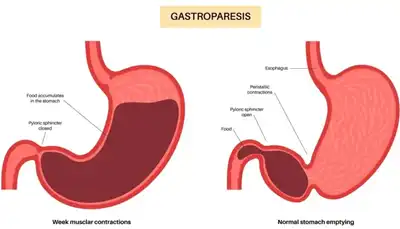
Gastroparesis is a condition in which the stomach empties food into the small intestine more slowly than normal, without any physical blockage. The word “gastro” refers to stomach, and “paresis” means partial paralysis. In this condition, the stomach muscles do not work properly, leading to delayed digestion.
Normally, after eating, the stomach muscles contract and push food forward into the intestine. In gastroparesis, these contractions become weak or uncoordinated, so food stays in the stomach longer than it should.
Gastroparesis can cause bloating, nausea, vomiting, fullness after small meals, and poor appetite.
Why does Gastroparesis happen?
Gastroparesis usually occurs when the vagus nerve, which controls stomach muscles, is damaged or not functioning properly.
Common Causes
- Long-standing diabetes
- Nerve damage
- Previous stomach surgery
- Viral infections
- Certain medications (painkillers, antidepressants)
- Autoimmune disorders
- Unknown cause (idiopathic)
Diabetes is one of the most common causes because high blood sugar damages nerves over time.
Who is at Risk?
People at higher risk include:
- Diabetic patients
- People with thyroid disorders
- Patients who had abdominal surgery
- Individuals taking certain medications
- Women (more common than men)
Symptoms of Gastroparesis
Symptoms may vary from mild to severe.
Common Symptoms
- Feeling full after eating small amounts
- Nausea
- Vomiting undigested food
- Bloating
- Upper abdominal discomfort
Other Symptoms
- Loss of appetite
- Weight loss
- Acid reflux
- Fluctuating blood sugar levels
- Weakness
Symptoms often worsen after heavy or fatty meals.
How does Gastroparesis affect daily life?
Gastroparesis can impact:
- Nutritional health
- Blood sugar control (especially in diabetics)
- Energy levels
- Work and daily activities
- Emotional well-being
Eating becomes uncomfortable and unpredictable.
Is Gastroparesis serious?
Gastroparesis is usually not life-threatening, but it can cause complications such as:
- Dehydration
- Malnutrition
- Severe blood sugar fluctuations
- Formation of bezoars (hard food masses in stomach)
Proper management prevents complications.
How is Gastroparesis diagnosed?
Diagnosis may include:
- Medical history and symptom review
- Upper endoscopy
- Gastric emptying study
- Ultrasound
- Blood tests
Doctors rule out physical blockage before confirming diagnosis.
Conventional Medical Treatment
Treatment focuses on symptom management.
- Dietary Changes
- Small frequent meals
- Low-fat diet
- Low-fiber foods
- Soft or liquid meals
- Medications
- Drugs that improve stomach motility
- Anti-nausea medicines
- Blood sugar control in diabetics
- Severe Cases
- Feeding tubes
- IV nutrition
- Surgical intervention (rare cases)
Diet Tips for Gastroparesis
- Eat 5–6 small meals daily
- Chew food thoroughly
- Avoid fried and fatty foods
- Limit carbonated drinks
- Stay upright after eating
- Drink sufficient fluids
Diet plays a major role in symptom control.
Homeopathic Treatment for Gastroparesis in Lucknow
Homeopathy offers a gentle and holistic treatment approach for gastroparesis. It does not replace necessary medical treatment but may help in:
- Reducing nausea and bloating
- Improving digestive strength
- Supporting nerve function
- Managing weakness
- Improving appetite
- Enhancing overall digestive balance
Homeopathic treatment is individualised based on:
- Digestive pattern
- Emotional stress
- Associated diabetes
- Food intolerance
- Overall constitution
Common Homeopathic Medicines Used
(Prescribed only under expert supervision)
- Nux Vomica – Indigestion with nausea
- Lycopodium – Bloating after small meals
- Pulsatilla – Fullness and heaviness
- Carbo Vegetabilis – Gas and weak digestion
- Ipecacuanha – Persistent nausea
Benefits of Homeopathic Treatmen
- Natural and non-toxic
- Safe alongside conventional care
- Helps reduce discomfort
- Improves appetite
- Supports emotional balance
- Enhances quality of life
Gastroparesis and Diabetes
In diabetic patients:
- Blood sugar swings may worsen symptoms
- Delayed stomach emptying affects insulin timing
Good blood sugar control improves outcomes.
Emotional Impact of Gastroparesis
Chronic digestive discomfort may lead to:
- Anxiety
- Frustration
- Fear of eating
- Social withdrawal
Holistic care addresses both physical and emotional health.
Can Gastroparesis be cured?
In some cases, symptoms improve over time, especially if caused by temporary nerve injury. Chronic diabetic gastroparesis requires long-term management.
Early intervention improves quality of life.
Frequently Asked Questions
Is gastroparesis dangerous?
It can cause complications if severe but is manageable.
Can gastroparesis go away?
Sometimes, depending on cause.
Is homeopathy safe for gastroparesis?
Yes, under expert supervision, homeopathy is safe for gastroparesis.
Can diet alone control gastroparesis?
Diet helps significantly but may not be sufficient in all cases.
Why choose Dr. Sanjay’s Homoeopathy for Gastroparesis Treatment in Lucknow, India?
Dr. Sanjay’s Homoeopathy is a trusted clinic for safe and effective Gastroparesis treatment in Lucknow, India. With more than 22 years of experience, Dr. Sanjay Singh, MD (Homoeopathy), provides specialized homeopathy treatment that helps manage delayed stomach emptying, nausea, vomiting, bloating, early fullness, abdominal pain, and poor digestion naturally without side effects. As a leading homeopathic doctor in Lucknow, he follows international treatment standards and offers a personalized approach that focuses on improving gastric motility, strengthening digestive function, reducing discomfort, and preventing complications, making him the best homeopathy doctor for Gastroparesis in Lucknow. Patients from across India and around the world choose Dr. Sanjay’s Homoeopathy for its holistic healing, long-lasting relief, and compassionate care in managing chronic digestive conditions like Gastroparesis.