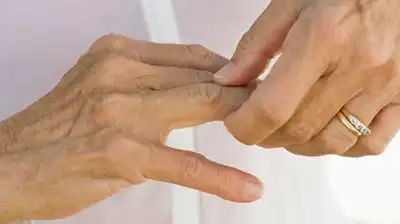
What is Finger & Small Joint Pain?
Finger and small joint pain refers to discomfort, aching, or stiffness in the small joints of the fingers, hands, wrists, or toes. These joints are essential for daily tasks such as gripping, typing, writing, and walking. Pain in these areas can significantly affect an individual’s quality of life, especially as these joints are involved in fine motor skills.
The pain may be felt as a sharp stabbing sensation, a dull ache, or a burning sensation, and it can affect one or multiple joints. The pain may come suddenly, such as after an injury, or develop gradually over time due to underlying conditions. It may limit basic activities like holding a pen, opening a jar, or walking.
Identifying the underlying cause of finger and small joint pain is essential for effective treatment and long-term relief.
What are the Symptoms of Finger & Small Joint Pain?
The symptoms of finger and small joint pain may vary depending on the cause, but common signs include:
- Pain, tenderness, or swelling in the fingers, hands, wrists, or toes
- Reduced range of motion in the affected joint
- Stiffness, especially in the morning or after inactivity
- Joint deformities, such as swelling or misalignment
- Clicking, cracking, or popping sounds during movement
- Redness, warmth, or swelling around the joint (if inflammation is present)
- Difficulty with daily tasks, such as gripping or pinching objects
- Pain that worsens after activity or prolonged use of the joint
- Numbness or tingling in the fingers or toes (in the case of nerve involvement)
Symptoms can range from mild discomfort to severe pain that interferes with daily life. The duration and severity of symptoms will vary depending on the underlying cause.
How Quickly Do Symptoms Appear?
The onset of pain in the fingers and small joints depends on the cause:
- Injuries (such as sprains or fractures) typically result in sudden, severe pain and swelling.
- Arthritis-related pain can develop gradually over time, with stiffness, pain, and swelling worsening slowly.
- Tendonitis or tenosynovitis (inflammation of the tendons or the lining around the tendons) may develop within a few days of repetitive use or injury.
- Infections can cause pain that progresses over a few days and may be associated with redness, warmth, or fever.
- Gout or pseudogout can lead to sudden, intense pain, often in the big toe or other small joints.
Early attention to new or worsening pain can help prevent chronic issues or complications.
What Causes Finger & Small Joint Pain?
Finger and small joint pain can result from a variety of conditions affecting the joints, muscles, tendons, or surrounding tissues. Some common causes include:
- Joint Problems:
- Osteoarthritis (wear and tear of cartilage in the joints)
- Rheumatoid arthritis (an autoimmune condition that causes inflammation in the joints)
- Psoriatic arthritis (a type of arthritis linked with psoriasis)
- Gout (caused by the buildup of uric acid crystals in the joints)
- Pseudogout (similar to gout, but caused by calcium pyrophosphate crystals)
- Trauma or fractures affecting the small joints
- Muscular & Soft Tissue Causes:
- Tendonitis (inflammation of the tendons)
- Tenosynovitis (inflammation of the sheath surrounding a tendon)
- Bursitis (inflammation of the fluid-filled sacs around the joints)
- Repetitive strain injuries from overuse or poor ergonomics
- Nerve Involvement:
- Carpal tunnel syndrome (compression of the median nerve in the wrist)
- Ulnar nerve entrapment (compression of the ulnar nerve at the elbow or wrist)
- Thoracic outlet syndrome (compression of nerves or blood vessels between the collarbone and first rib)
- Infections & Inflammatory Conditions:
- Infectious arthritis (joint infection often caused by bacteria or viruses)
- Lyme disease (a bacterial infection that can cause joint pain)
- Gonococcal arthritis (a type of arthritis caused by a gonorrheal infection)
- Other Causes:
- Bony deformities or misalignment in the small joints
- Osteonecrosis (loss of blood flow to the bone, causing bone death)
- Lupus (an autoimmune disorder that can affect joints)
Given the wide range of potential causes, a proper diagnosis is essential for effective treatment.
What Are the Different Types of Finger & Small Joint Pain?
Depending on the source, finger and small joint pain can be classified into different categories:
- Arthritic pain: Resulting from inflammation and degeneration of the joint cartilage, such as in osteoarthritis or rheumatoid arthritis.
- Tendinous or soft tissue pain: Due to inflammation of the tendons, ligaments, or the fluid-filled sacs around the joints (bursitis or tendonitis).
- Nerve-related pain: Pain radiating from nerve compression, such as in carpal tunnel syndrome or ulnar nerve entrapment.
- Gout-related pain: Sudden, intense pain from the accumulation of uric acid crystals in the joint.
- Infection-related pain: Pain caused by joint infection, with accompanying fever, redness, and swelling.
- Referred pain: When pain from another part of the body (such as the spine or wrist) is felt in the fingers or toes.
Who is at Higher Risk of Finger & Small Joint Pain?
While anyone can develop finger or small joint pain, certain groups are more at risk:
- Older adults: Due to age-related wear and tear on the joints (osteoarthritis).
- People with a history of joint injuries: Past fractures or sprains can lead to joint damage over time.
- Rheumatoid arthritis or autoimmune disease patients: Those with autoimmune conditions are at higher risk for joint inflammation and damage.
- Athletes or those with repetitive motion activities: Individuals who engage in repetitive activities, such as typing, playing instruments, or using hand tools, are more prone to tendonitis and other repetitive strain injuries.
- People with gout or metabolic disorders: High uric acid levels in the blood increase the risk of gout.
- Individuals with a family history of joint disease: Genetic factors can play a role in the development of conditions like rheumatoid arthritis.
How is Finger & Small Joint Pain Diagnosed?
Diagnosis begins with a thorough history and physical examination. Your healthcare provider may ask about:
- The type, duration, and location of pain
- Any recent injuries or overuse of the affected joints
- Associated symptoms such as swelling, fever, or redness
- Family history of arthritis or joint disorders
Your doctor may recommend several diagnostic tests based on the suspected cause:
- X-rays: To detect joint damage, arthritis, fractures, or bone deformities.
- MRI: For detailed imaging of soft tissues, such as tendons, ligaments, and cartilage.
- Ultrasound: To check for inflammation, tendon or ligament injuries, and fluid accumulation in the joints.
- Blood tests: To look for signs of inflammation, autoimmune conditions, or infections.
- Joint aspiration: If an infection or gout is suspected, fluid from the joint may be taken for testing.
- Synovial fluid analysis: To detect crystals in the joint (gout or pseudogout) or infection.
Accurate diagnosis helps determine the appropriate treatment plan for relief and prevention.
When is an MRI Needed vs. Just an X-ray?
An X-ray is typically the first test used to diagnose bone-related issues, such as fractures, arthritis, or misalignment of the joints.
An MRI may be required when:
- X-ray findings are inconclusive, but pain persists.
- There is suspicion of soft tissue injuries, such as tendon or ligament tears, or cartilage damage.
- Chronic pain or an unclear diagnosis warrants more detailed imaging.
- Infection or inflammatory conditions affecting soft tissues are suspected.
- There are concerns about more serious underlying conditions like tumours or bony lesions.
Treatment of Finger & Small Joint Pain through Homoeopathy
Homoeopathy focuses on treating the root cause of joint pain and stimulating the body’s natural healing processes. It provides a personalised treatment approach based on the specific type of pain, triggers, and the individual’s overall health.
Homoeopathic remedies may help in:
- Reducing pain, stiffness, and inflammation in the affected joints
- Supporting the healing of soft tissues and tendons after injury
- Managing chronic conditions like osteoarthritis or rheumatoid arthritis
- Enhancing joint mobility and overall function
- Preventing flare-ups through constitutional treatment that strengthens the body’s resilience
However, for severe conditions such as fractures, infections, or acute injuries, immediate medical attention is essential. Homoeopathy can work alongside other treatments to help manage symptoms and promote recovery.
Why choose Dr. Sanjay’s Homoeopathy for Finger & Small Joint Pain Treatment in Lucknow, India?
Dr. Sanjay’s Homoeopathy is a trusted clinic for safe and effective Finger and Small Joint Pain treatment in Lucknow, India. With years of expertise, Dr. Sanjay Singh provides specialised homoeopathic treatment that helps manage stiffness, swelling, inflammation, and pain in fingers, wrists, and other small joints naturally without side effects. As a top homoeopathic doctor in Lucknow, he follows international treatment standards and offers personalised care that focuses on reducing inflammation, improving joint flexibility, and restoring pain-free hand movement. Patients choose Dr. Sanjay’s Homoeopathy for its holistic healing, long-lasting relief, and compassionate approach in managing joint and arthritic conditions like Finger and Small Joint Pain. Patients trust Dr. Sanjay Singh for Finger & Small Joint Pain homoeopathic Treatment.