Endometriosis can make periods much more painful than usual. Some women have strong cramps, pelvic pain, back pain, or pain during intercourse. For some, the pain starts before the period and continues for several days. Heavy periods, bloating, tiredness, and difficulty getting pregnant may also occur.
The symptoms are not the same for everyone. Some women have severe pain, while others have mild symptoms. Getting the right diagnosis can help understand what is causing the problem and what kind of treatment may be suitable.
What is Endometriosis?
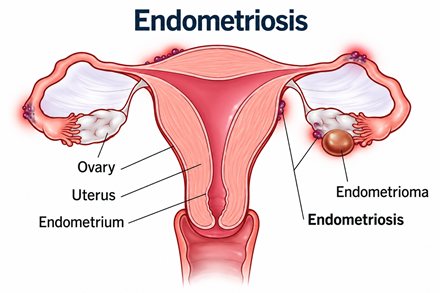
Endometriosis is a condition in which tissue similar to the lining of the uterus grows outside the uterus. It may develop around the ovaries, fallopian tubes, pelvic lining, or other nearby areas.
This tissue can respond to the monthly hormonal cycle. It may swell and bleed around the time of the period, which can cause irritation, inflammation, and pain.
Endometriosis can continue for a long time if it is not properly managed. Early medical evaluation is helpful, especially when period pain is severe or keeps affecting daily life.
Symptoms of Endometriosis
The symptoms can be different from one person to another. Common symptoms include:
- Very painful periods
- Pelvic or lower abdominal pain
- Pain before or during periods
- Lower back pain
- Pain during or after intercourse
- Heavy or irregular periods
- Pain while passing stool, especially around periods
- Pain or burning while passing urine in some cases
- Bloating and abdominal discomfort
- Feeling unusually tired
- Difficulty becoming pregnant
A common sign is period pain that feels much stronger than normal and interferes with everyday activities.
What Causes Endometriosis?
The exact cause of endometriosis is not fully understood. Several factors may play a role, including:
- Menstrual blood flowing backward into the pelvic area
- Genetic factors
- Hormonal influences
- Changes in immune response
- Previous pelvic surgery
- Certain developmental factors
Having a family history of endometriosis may also increase the chance of developing the condition.
Who Can Develop Endometriosis?
Endometriosis can occur during the reproductive years. The risk may be higher when:
- Close family members have had endometriosis
- Periods started at a young age
- Periods are very painful or heavy
- Menstrual cycles are short
- Periods continue for many days
- There has been difficulty with fertility
However, having one or more of these factors does not mean that a person will definitely develop endometriosis.
Stages of Endometriosis
Doctors may classify endometriosis into different stages based on the location and extent of the growths.
The commonly used stages are:
Stage 1 – Minimal: Small areas of endometrial-like tissue are present.
Stage 2 – Mild: There are more areas of growth, which may be slightly deeper.
Stage 3 – Moderate: Deeper growths and ovarian involvement may occur, sometimes with adhesions.
Stage 4 – Severe: There may be extensive growths, larger ovarian cysts, and significant adhesions.
The stage does not always match the amount of pain a woman experiences. Someone with a smaller amount of disease can sometimes have severe pain.
How is Endometriosis Diagnosed?
Diagnosis usually starts with a discussion about symptoms, periods, pain, and medical history. A doctor may perform a physical examination and recommend tests when needed.
Depending on the symptoms, investigations may include:
- Pelvic ultrasound
- MRI in selected cases
- Blood tests when appropriate
- Laparoscopy in certain situations
A proper diagnosis is important because pelvic pain can have several possible causes.
Treatment for Endometriosis
Treatment depends on the symptoms, severity of the condition, age, fertility plans, and overall health.
Medical Treatment
Doctors may use medicines to help control pain and hormonal activity. In some cases, hormonal treatment may be recommended to reduce the growth and activity of endometriosis.
For severe disease, large ovarian cysts, adhesions, or fertility-related problems, surgery may also be considered.
Lifestyle and Dietary Measures
Simple changes may help some women manage their symptoms:
- Keep track of periods and pain
- Stay physically active according to comfort
- Get enough sleep
- Eat a balanced diet
- Drink enough water
- Avoid foods that clearly trigger bloating or discomfort
- Use a warm compress for period-related cramps
- Take adequate rest during painful days
These measures can support symptom management but should not replace appropriate medical evaluation.
Homeopathic Treatment for Endometriosis
At Dr. Sanjay’s Homoeopathy, homeopathic treatment for endometriosis is planned after looking at the woman’s symptoms, menstrual pattern, pain, general health, and other individual factors.
The aim is to provide a personalized approach to symptom management and overall well-being. When symptoms are severe, rapidly worsening, or associated with fertility concerns, appropriate gynecological evaluation is also important.
Homeopathic Remedies for Endometriosis
Endometriosis Homeopathic medicines are selected according to the individual symptoms rather than simply the name of the condition. Some remedies traditionally considered in homeopathic practice include:
Sepia: May be considered when pelvic discomfort is accompanied by tiredness, hormonal complaints, irritability, and a feeling of heaviness.
Lachesis: May be considered in some cases where symptoms are more troublesome around the menstrual period and there is marked pelvic discomfort.
Belladonna: Traditionally used in homeopathy for sudden, intense pain that may feel throbbing or severe.
Magnesia Phosphorica: Often considered for cramping pain that feels better with warmth or pressure.
Colocynthis: Traditionally considered when abdominal or pelvic cramps are severe and improve by bending forward or applying pressure.
Ustilago Maydis: May be considered when menstrual bleeding is heavy and prolonged along with pelvic discomfort.
The choice of medicine depends on the complete pattern of symptoms and should be made by a qualified homeopathic doctor.
Possible Complications of Endometriosis
If endometriosis becomes extensive, it may lead to problems such as:
- Persistent pelvic pain
- Ovarian cysts
- Scar tissue and adhesions
- Pain during intercourse
- Bowel or urinary symptoms
- Difficulty becoming pregnant
- Emotional stress caused by long-term pain
This is why repeated or severe period pain should not simply be considered “normal.”
How Can You Manage Endometriosis?
Living with endometriosis can be easier when you understand your own symptoms and notice what makes them better or worse.
Keep a simple record of:
- When your period starts
- How severe the pain is
- How long the pain lasts
- Amount of bleeding
- Bloating or bowel symptoms
- Pain during intercourse
- Medicines or other measures that provide relief
This information can also help your doctor understand your condition more clearly.
Frequently Asked Questions
Is severe period pain a sign of endometriosis?
It can be. Severe period pain is one of the common symptoms, particularly when it repeatedly interferes with normal activities. However, other conditions can also cause painful periods, so proper evaluation is important.
Can endometriosis cause heavy periods?
Yes. Some women with endometriosis experience heavy or prolonged menstrual bleeding, although the symptoms vary from person to person.
Can endometriosis affect fertility?
Endometriosis can sometimes make it more difficult to become pregnant, particularly when there is ovarian involvement, adhesions, or more extensive disease.
Does endometriosis go away on its own?
Endometriosis is a long-term condition and should not be ignored if symptoms continue. The right management depends on the symptoms and extent of the condition.
Can homeopathy help with endometriosis?
Homeopathic treatment at Dr. Sanjay’s Homoeopathy focuses on the individual’s symptoms and overall health. It may be used for symptom management, while appropriate gynecological assessment remains important, particularly for severe disease or fertility concerns.
When should I see a doctor for period pain?
You should consider medical evaluation when period pain is severe, keeps getting worse, causes you to miss work or normal activities, occurs with very heavy bleeding, or is associated with difficulty becoming pregnant.
Why Choose Dr. Sanjay’s Homoeopathy for Endometriosis Treatment in Lucknow, India?
Dr. Sanjay’s Homoeopathy is a trusted clinic for Endometriosis Treatment in Lucknow, India. With more than 22 years of experience, Dr. Sanjay Singh, MD (Homoeopathy) provides specialized homeopathic care for women dealing with painful periods, pelvic pain, heavy bleeding, and other symptoms associated with endometriosis. Each case is assessed carefully so that treatment can be planned according to the patient’s symptoms and health needs. As an experienced homeopathic doctor in Lucknow, Dr. Sanjay Singh focuses on comfortable, patient-centered care and long-term symptom management. Patients from Lucknow and other parts of India choose Dr. Sanjay’s Homoeopathy for its experienced care, personalized treatment, and supportive approach.