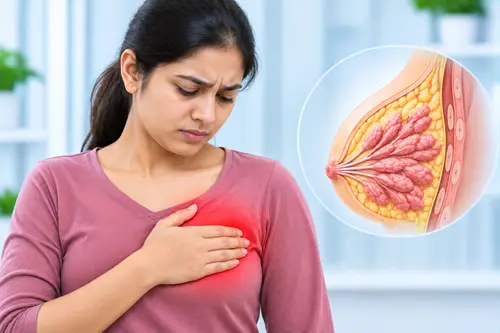
Quick answer: Breast pain, medically called mastalgia, is very common and is usually not a sign of breast cancer. It is most often linked to hormonal changes during the menstrual cycle, but it can also be caused by breast structure, a poorly fitting bra, medicines, injury, or pain coming from the chest wall. Pain that persists, is in one spot, or comes with a lump, nipple discharge, skin changes, or redness should be checked by a doctor.
Introduction
Breast pain, or mastalgia, is a discomfort, tenderness, heaviness, or aching in one or both breasts. It is one of the most common breast complaints in women and can also occur, less often, in men and adolescents.
Breast pain is not contagious. For most women it is mild and goes away by itself or with simple measures. For others it can be persistent, interfere with sleep, exercise, work, or intimacy, and cause worry about serious disease.
Understanding the type of breast pain, when it occurs, and what may trigger it helps in deciding what to do. Although breast pain alone is rarely caused by cancer, any new lump or other change in the breast should always be examined by a doctor.
What is Breast Pain (Mastalgia)?
Mastalgia is pain felt in the breast tissue. It may feel like a dull ache, heaviness, soreness, burning, stabbing, or tenderness to touch. It can affect one breast or both and may spread to the armpit or arm.
It can be linked to the menstrual cycle (cyclical), unrelated to the cycle (non-cyclical), or actually come from nearby structures such as the chest wall, ribs, or muscles (extramammary pain).
Breast pain can resemble other conditions, such as inflammation of the rib cartilage (costochondritis), muscle strain, shingles, or heart-related pain. A healthcare professional can help tell these apart, especially when pain is accompanied by breathlessness, chest pressure, fever, or a visible change in the breast.
What are the Symptoms of Breast Pain?
Symptoms vary depending on the type and cause of the pain.
Common symptoms include:
- Tenderness: The breasts feel sore, sensitive, or painful to touch.
- Heaviness or fullness: A sensation of weight or swelling, often before a period.
- Aching or dull pain: A steady ache in one or both breasts.
- Burning or stabbing pain: Sharp or burning sensations in a specific area.
- Pain spreading to the armpit or arm: Particularly in cyclical pain.
- Lumpiness: General nodular or “ropey” texture of the breast tissue, which is common and often normal.
- Swelling: Mild enlargement of the breasts before a period.
- Pain that varies with the cycle: Worse in the days before menstruation and improving after the period begins.
- Pain unrelated to the cycle: Constant or intermittent pain that does not follow a pattern.
- Localized pain: Pain in one specific spot, which may relate to a cyst, injury, or chest wall.
Pain with a new lump, bloody nipple discharge, skin dimpling, nipple changes, redness with fever, or an unusual swelling needs prompt assessment.
What are the Causes of Breast Pain?
Breast pain has many possible causes, and often more than one factor is involved.
- Hormonal Changes (Cyclical Mastalgia): Hormone levels rise and fall during the menstrual cycle, which can cause the breast tissue to swell and become tender, usually in the week or two before a period.
- Fibrocystic Breast Changes: Benign (non-cancerous) changes in breast tissue, such as cysts and lumpiness, can cause tenderness and pain, often related to the menstrual cycle.
- Pregnancy and Breastfeeding: Early pregnancy commonly causes breast tenderness. Breastfeeding may cause pain from engorgement, blocked ducts, or mastitis.
- Perimenopause and Menopause: Fluctuating hormones around menopause can cause breast pain, and menopausal hormone therapy may do the same.
- Breast Size and Poorly Fitting Bras: Large, heavy breasts may cause pain in the breasts, neck, shoulders, and back. A bra that does not give enough support can worsen pain, especially during exercise.
- Medicines: Certain hormonal medicines, including contraceptive pills and hormone replacement therapy, and some other medicines such as certain antidepressants, blood pressure or heart medicines, may cause breast pain.
- Breast Infection or Inflammation: Mastitis, a breast abscess, or inflamed cysts can cause pain, redness, warmth, and sometimes fever.
- Injury or Surgery: Trauma to the breast, previous breast surgery, or a biopsy site can cause pain.
- Chest Wall and Muscle Pain (Extramammary Pain): Inflammation of the rib cartilage, muscle strain, a pinched nerve, or shingles can cause pain that feels like it is coming from the breast.
- Lifestyle and Dietary Factors: High caffeine intake, high-fat diets, smoking, stress, and lack of sleep may be linked with breast discomfort in some women, though the evidence varies.
- Breast Cancer (Uncommon Cause): Pain alone is an uncommon symptom of breast cancer, but it can occur. This is why persistent or localized pain, or pain with any other breast change, should be checked.
Identifying the pattern and cause of pain helps in choosing appropriate advice and treatment.
Types of Breast Pain
- Cyclical Mastalgia: Related to the menstrual cycle. Pain is typically felt in both breasts, often in the upper outer part, and may spread to the armpit. It usually worsens before a period and eases afterwards. This is the most common type.
- Non-Cyclical Mastalgia: Not related to the menstrual cycle. The pain may be constant or intermittent, may affect one breast, and is more common in women over 40 and after menopause. It may be linked to cysts, injury, medicines, or breast structure.
- Extramammary (Chest Wall) Pain: Pain that seems to arise from the breast but actually comes from the chest wall, ribs, muscles, or nerves. Pain that changes with movement, pressing on the ribs, or deep breathing may be a clue.
Correctly identifying the type of breast pain guides the investigation and the treatment plan.
Risk Factors for Breast Pain
- Being of reproductive age, especially between the 20s and 40s.
- Hormonal fluctuations, including pregnancy and perimenopause.
- Fibrocystic breast changes.
- Large or heavy breasts.
- Wearing a poorly fitting or unsupportive bra.
- Use of hormonal contraceptives or hormone therapy.
- Certain medicines.
- High caffeine intake and high stress levels.
- Breastfeeding difficulties.
- Previous breast injury, surgery, or infection.
Not everyone with these risk factors develops breast pain. Hormonal sensitivity and individual differences influence symptoms.
Diagnosis of Breast Pain
A doctor will assess the pain and decide which tests, if any, are needed.
- Medical History: The doctor asks about the type and location of pain, relation to periods, medicines, pregnancy or breastfeeding, family history of breast disease, and any other breast changes.
- Clinical Breast Examination: Both breasts, the armpits, and the chest wall are examined for lumps, tenderness, skin changes, and signs of infection.
- Pain Diary: Recording the pain daily for two to three months on a chart helps show whether it follows the menstrual cycle.
- Breast Imaging: Depending on age and findings, a mammogram, breast ultrasound, or both may be advised. Ultrasound is often used for younger women and for investigating a localized area.
- Further Tests: A needle test or biopsy may be advised if a lump or suspicious area is found. Pregnancy tests or other evaluations may be needed in some cases.
- Looking for Other Causes: If the pain seems to come from the chest wall, a doctor may check the ribs, muscles, and, when appropriate, heart and lungs.
Treatment for Breast Pain
Many women need only reassurance and simple measures. Treatment depends on the cause, severity, and impact on daily life.
- Reassurance After Examination: When examination and imaging show no concerning findings, understanding that the pain is not a sign of cancer often reduces anxiety and may itself ease symptoms.
- Supportive Bra: A well-fitted, supportive bra during the day, a sports bra during exercise, and a soft bra at night can reduce pain.
- Pain Relief Medicines: Over-the-counter pain relievers, and anti-inflammatory gels applied to the skin, may help when used as advised by a doctor or pharmacist.
- Warm or Cold Compresses: A warm compress or a cool pack wrapped in cloth can ease discomfort.
- Reviewing Medicines: If a medicine may be causing the pain, a doctor can consider adjusting it. Do not stop prescribed medicines without medical advice.
- Dietary and Lifestyle Measures: Reducing caffeine, eating a balanced low-fat diet, avoiding smoking, managing stress, and sleeping well help some women. Supplements such as evening primrose oil are popular, but evidence for them is limited and mixed. Discuss any supplement with a doctor.
- Prescription Treatment for Severe Pain: For severe, persistent pain that affects quality of life, a specialist may consider hormone-modulating medicines. These have side effects and are used only under specialist supervision.
- Treating Infection: Mastitis or a breast abscess needs prompt medical treatment, and may require antibiotics or drainage.
- Treating Chest Wall Pain: Rest, posture correction, physiotherapy, and appropriate pain relief may help when the pain comes from the chest wall or muscles.
- Follow-Up: Persistent, worsening, or changing pain should be re-assessed. Regular breast screening should continue according to age and medical advice.
Homeopathic Consultation for Breast Pain
Breast pain can be uncomfortable, worrying, and disruptive, particularly when it recurs every month. Many women look for gentle, personalised support to feel more comfortable alongside appropriate medical assessment.
At Dr. Sanjay’s Homoeopathy, consultations with Dr. Sanjay Singh, MD (Homoeopathy), include an unhurried discussion of the pain pattern, relation to periods, hormonal and menstrual history, stress, sleep, diet, previous reports, and current medicines. The aim is to understand the person as a whole and offer individualized, supportive care. Women are advised to have any new lump, discharge, skin change, or persistent localized pain evaluated by a doctor, and are never asked to stop prescribed medicines or skip recommended screening or tests.
Remedies Traditionally Used in Breast Pain Homeopathic Treatment
In traditional homeopathic practice, some remedies have been associated with particular patterns of breast tenderness, heaviness, and pre-menstrual complaints. These include:
- Bryonia alba: Traditionally associated with pain that is worse from movement and better from firm pressure.
- Conium maculatum: Traditionally described for breast tenderness and heaviness before periods.
- Phytolacca decandra: Traditionally associated with tender, hard, or painful breasts, including during breastfeeding.
- Pulsatilla: Traditionally associated with changeable symptoms and emotional sensitivity around periods.
- Calcarea carbonica: Traditionally described for breast fullness and tenderness with sensitivity to cold and fatigue.
These descriptions reflect traditional homeopathic use. They do not replace a medical evaluation of breast pain, breast screening, or treatment of infection or other conditions. Remedies are chosen individually after consultation.
Lifestyle Tips for Managing Breast Pain
- Wear a Well-Fitted Bra: Get professionally fitted if possible, and choose a supportive bra for daily wear and exercise.
- Track Your Symptoms: Note pain on a calendar for a few cycles to see patterns and to share with your doctor.
- Cut Down on Caffeine: Reducing tea, coffee, cola, and chocolate may help some women.
- Eat a Balanced Diet: Choose plenty of fruits, vegetables, and whole grains, and limit excess fat and salt, particularly before periods.
- Exercise Regularly: Regular physical activity supports hormonal balance and mood. Use good support during exercise.
- Manage Stress and Sleep: Relaxation, yoga, breathing exercises, and adequate rest can reduce the perception of pain.
- Do Regular Breast Self-Awareness: Know how your breasts normally look and feel, and report any new lump or change promptly.
- Attend Screening: Follow advice about clinical breast examination and mammography according to your age and risk.
When to See a Doctor for Breast Pain
Seek medical advice if breast pain is persistent, severe, getting worse, or interfering with daily life, or if you are worried about it.
Arrange prompt assessment if you experience:
- A new lump or thickened area in the breast or armpit.
- Pain in one specific spot that does not go away.
- Nipple discharge, especially bloody or from one nipple only.
- Changes in breast size, shape, or skin, such as dimpling, puckering, or an orange-peel look.
- A nipple that turns inward or has a rash or scaling.
- Redness, warmth, swelling, or fever, which may signal infection.
- Pain that continues after menopause without a clear cause.
- A family history of breast cancer and new breast symptoms.
Seek urgent medical care for chest pain with breathlessness, sweating, pain spreading to the arm, jaw, or back, or fainting. These can be signs of a heart problem rather than breast pain.
Frequently Asked Questions About Breast Pain
What is mastalgia?
Mastalgia is the medical term for breast pain. It can be cyclical (linked to the menstrual cycle), non-cyclical, or pain that comes from the chest wall.
Is breast pain a sign of breast cancer?
Breast pain alone is rarely a sign of breast cancer. Most breast pain is related to hormones or benign changes. However, any new lump or other breast change should always be checked by a doctor.
What causes breast pain before a period?
Changing hormone levels during the menstrual cycle can cause breast tissue to swell and become tender in the days before a period. This is called cyclical mastalgia.
Can a bra cause breast pain?
Yes. A bra that does not fit well or does not give enough support can cause or worsen breast, shoulder, and back pain, particularly during exercise.
Can stress cause breast pain?
Stress does not directly cause breast disease, but it can increase the perception of pain and worsen hormonal symptoms in some women.
Can breast pain occur in men?
Yes, though less commonly. Causes include hormonal changes, certain medicines, and breast tissue enlargement (gynecomastia). Any lump or pain in a man’s breast should be examined by a doctor.
Is breast pain normal in early pregnancy?
Yes. Breast tenderness is common in early pregnancy because of hormonal changes.
Which foods and drinks may help reduce breast pain?
Reducing caffeine and excess fat, and eating a balanced diet, helps some women. Evidence for specific supplements is limited, so check with a doctor before using them.
When should I get a mammogram or ultrasound for breast pain?
Imaging is usually advised if there is a lump, localized persistent pain, other breast changes, or depending on your age and risk factors. Your doctor will decide which test is suitable.
Can homeopathy be taken along with regular treatment for breast pain?
Many women choose a homeopathic consultation for overall comfort and wellbeing while continuing medical assessment and screening. It is important to inform every doctor about all medicines being taken, and never to ignore a breast lump or other change or stop prescribed treatment without medical advice.\
Why choose Dr. Sanjay’s Homoeopathy for breast pain treatment in Lucknow, India?
Dr. Sanjay’s Homoeopathy is a trusted Homeopathy Centre for Breast Pain (Mastalgia) Treatment in Lucknow, India. With more than 22 years of experience, Dr. Sanjay Singh, MD (Homoeopathy) follows an individualized consultation approach that considers the patient’s symptoms, medical history, lifestyle, and previous treatment. People experiencing tenderness, sharp burning sensations, cyclical heaviness, dull aching, or persistent localized discomfort can discuss their concerns and learn about available care options in a patient-focused environment. Identifying hormonal fluctuations, fibrocystic changes, or other underlying contributors remains an important part of effective care, and patients should continue necessary clinical evaluation and breast examinations as advised by their healthcare professional. Patients from across the world trust Dr. Sanjay’s Homoeopathy for Breast Pain (Mastalgia) Treatment in Lucknow, India.