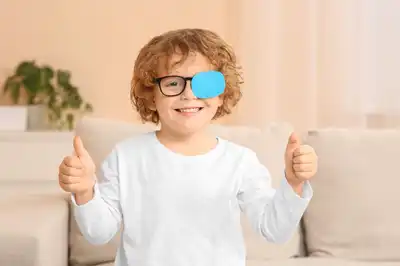
Amblyopia, commonly known as Lazy Eye, is a vision development disorder in which one eye does not develop normal vision during early childhood. Even though the eye may appear normal, the brain favors the stronger eye and gradually ignores signals from the weaker eye. If left untreated, amblyopia can lead to permanent vision impairment. Fortunately, early diagnosis and timely treatment can significantly improve vision in most children.
What is Amblyopia (Lazy Eye) in Children?
Amblyopia is a condition where the brain and one eye do not work together properly, causing reduced vision in the affected eye. It usually develops from birth up to 7–8 years of age, which is a critical period for visual development.
Unlike vision problems caused by eye disease, amblyopia occurs because the brain suppresses images coming from the weaker eye.
What are the Symptoms of Amblyopia in Children?
Many children with amblyopia may not complain about poor vision because they rely on the stronger eye. Common signs include:
- Poor vision in one eye
- Squinting or closing one eye while focusing
- Tilting the head to see clearly
- Eyes that do not appear to work together
- Frequent bumping into objects on one side
- Difficulty judging distance or depth perception
- Poor performance in vision screening tests
- Wandering eye (strabismus) in some children
- Difficulty reading or concentrating on visual tasks
Parents should arrange an eye examination if they notice any abnormal eye movements or if vision problems are suspected.
What are the Causes of Amblyopia in Children?
Several conditions can interfere with normal visual development, including:
Strabismus (Squint)
Misalignment of the eyes is the most common cause of amblyopia.
Refractive Errors
A significant difference in vision between the two eyes due to nearsightedness, farsightedness, or astigmatism.
Congenital Cataract
A cloudy lens present at birth that blocks normal visual development.
Drooping Eyelid (Ptosis)
A severely drooping eyelid can obstruct vision and lead to amblyopia.
Other Eye Disorders
Rare eye diseases affecting vision during childhood.
Which Children are at Higher Risk?
Children at higher risk include:
- Children with a family history of amblyopia or strabismus
- Premature babies
- Children with developmental delays
- Children born with congenital cataracts or eyelid abnormalities
- Children with significant refractive errors
Types of Amblyopia
Strabismic Amblyopia
Occurs due to misalignment of the eyes.
Refractive Amblyopia
Develops when one eye has significantly different focusing power than the other.
Deprivation Amblyopia
Occurs when something blocks vision, such as a congenital cataract or severe drooping eyelid.
How is Amblyopia Diagnosed?
Doctors diagnose amblyopia through a comprehensive pediatric eye examination.
Diagnostic tests may include:
- Visual acuity testing
- Eye alignment assessment
- Refraction test (vision testing for glasses)
- Dilated eye examination
- Evaluation of eye health and binocular vision
Early vision screening is recommended even if the child has no obvious symptoms.
Treatment for Amblyopia in Children
Corrective Glasses
Many children require prescription glasses to correct refractive errors and improve visual development.
Eye Patching
Covering the stronger eye encourages the weaker eye to work harder, helping improve vision.
Atropine Eye Drops
In selected cases, atropine drops may temporarily blur vision in the stronger eye to stimulate the weaker eye.
Treatment of Underlying Eye Conditions
Children with cataracts, ptosis, or strabismus may require surgery or other specialized treatment.
Homeopathic Treatment
Homeopathy focuses on supporting overall health, immunity, neurological wellbeing, and constitutional balance naturally in children with chronic health concerns. At Dr. Sanjay’s Homoeopathy, treatment is individualized according to the child’s overall health, developmental milestones, immunity, and constitutional profile. The clinic provides supportive homeopathic care alongside evidence-based pediatric ophthalmology treatment. Homeopathy should not replace eye patching, prescription glasses, surgery, or other treatments recommended by a pediatric eye specialist.
Homeopathic Remedies for Amblyopia in Children
Homeopathic medicines are prescribed individually after detailed assessment.
Physostigma
Sometimes considered in individualized homeopathic practice for certain visual complaints.
Ruta Graveolens
May be recommended for eye strain and visual fatigue in selected cases.
Calcarea Phosphorica
Often considered for children with delayed growth and constitutional weakness.
Baryta Carbonica
May be prescribed for developmental delays as part of individualized constitutional care.
Gelsemium
Sometimes considered for eye fatigue and muscular weakness under professional supervision.
Homeopathic treatment should always be supervised by a qualified physician and should complement—not replace—evidence-based ophthalmic treatment.
Complications of Untreated Amblyopia
Without early treatment, amblyopia may lead to:
- Permanent vision loss in the affected eye
- Poor depth perception
- Difficulty with reading and learning
- Reduced sports performance requiring binocular vision
- Increased risk of significant visual disability if the healthy eye is injured later in life
Treatment is most effective when started during early childhood.
How Can Parents Help a Child with Amblyopia?
Parents can support treatment by:
- Following eye patching schedules consistently
- Ensuring the child wears prescribed glasses regularly
- Attending scheduled ophthalmology appointments
- Encouraging activities that stimulate the weaker eye during patching
- Arranging regular vision screening for siblings when appropriate
- Seeking early medical advice if any eye abnormalities are noticed
Frequently Asked Questions (FAQs)
What is amblyopia in children?
Amblyopia, or lazy eye, is a condition in which one eye develops poorer vision because the brain favors the stronger eye during early childhood.
At what age is amblyopia best treated?
Treatment is most effective when started early, ideally before 7 to 8 years of age, while the visual system is still developing.
Can amblyopia be corrected?
Yes. Many children achieve significant improvement with early treatment using glasses, eye patching, atropine drops, or surgery when necessary.
When should parents consult an eye specialist?
Parents should seek an eye examination if the child has a squint, poor vision, abnormal eye movements, difficulty focusing, or fails a routine vision screening test.
Why choose Dr. Sanjay’s Homoeopathy for Amblyopia Treatment in Children in Lucknow, India?
At Dr. Sanjay’s Homoeopathy, children with developmental and chronic pediatric conditions receive advanced and holistic homeopathic care under the expert guidance of Dr. Sanjay Singh, MD (Homoeopathy), who has more than 22 years of experience in treating children naturally. The clinic is trusted by families from Lucknow, across India, and internationally for its personalized treatment plans, comprehensive child evaluations, and compassionate care. Every child is assessed according to developmental milestones, vision-related concerns, immunity, nutritional status, and constitutional profile to provide individualized supportive care aimed at promoting overall wellbeing naturally. Dr. Sanjay’s Homoeopathy works alongside pediatric ophthalmologists and strongly encourages timely vision screening, corrective glasses, patching therapy, and surgical treatment whenever medically indicated.