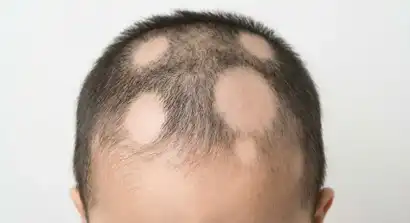
Alopecia Areata in children is an autoimmune condition that causes sudden, patchy hair loss on the scalp or other parts of the body. In this condition, the immune system mistakenly attacks healthy hair follicles, leading to smooth, round, bald patches. Although alopecia areata is not contagious or life-threatening, it can affect a child’s confidence and emotional wellbeing. Early diagnosis and appropriate treatment can help promote hair regrowth, reduce further hair loss, and support the child’s overall health.
What is Alopecia Areata in Children?
Alopecia areata is an autoimmune disorder in which the body’s immune system attacks the hair follicles, interrupting the normal hair growth cycle. This results in sudden hair loss, usually in small, round patches.
The condition can occur at any age but is commonly seen in children and young adults. Hair loss may affect the scalp, eyebrows, eyelashes, beard area (in older children), or other parts of the body.
What are the Symptoms of Alopecia Areata in Children?
The symptoms may vary from child to child. Common signs include:
- Sudden appearance of one or more round bald patches on the scalp
- Smooth, hairless areas without scarring
- Hair falling out in small clumps
- “Exclamation mark” hairs (short hairs that are narrower at the base)
- Loss of eyebrows or eyelashes in some children
- Nail changes such as tiny pits, ridges, or roughness
- Recurrent episodes of hair loss and regrowth
- Emotional distress or reduced self-confidence due to hair loss
The affected skin usually appears healthy without redness, scaling, or pain.
What are the Causes of Alopecia Areata in Children?
The exact cause is not fully understood, but several factors may contribute.
Autoimmune Disorders
The immune system mistakenly attacks healthy hair follicles, causing hair loss.
Genetic Factors
Children with a family history of alopecia areata or autoimmune diseases have a higher risk.
Emotional or Physical Stress
Stressful events may trigger or worsen the condition in susceptible children.
Associated Autoimmune Conditions
Alopecia areata may occur alongside thyroid disorders, vitiligo, type 1 diabetes, or other autoimmune diseases.
Which Children are at Higher Risk?
Children at increased risk include:
- Children with a family history of alopecia areata
- Children with autoimmune disorders
- Children with thyroid disease
- Children with vitiligo
- Children with Down syndrome
- Children with a family history of autoimmune diseases
Types of Alopecia Areata
Patchy Alopecia Areata
The most common form, causing one or more round bald patches on the scalp.
Alopecia Totalis
Complete loss of hair on the scalp.
Alopecia Universalis
Loss of hair from the entire body, including eyebrows and eyelashes.
Diffuse Alopecia Areata
Generalized thinning of scalp hair without distinct bald patches.
How is Alopecia Areata Diagnosed in Children?
Doctors diagnose alopecia areata through medical history and examination.
Diagnostic investigations may include:
- Physical examination of the scalp
- Dermoscopy (trichoscopy)
- Hair pull test
- Blood tests to evaluate associated autoimmune disorders
- Thyroid function tests
- Skin biopsy in rare cases
These investigations help confirm the diagnosis and rule out other causes of hair loss.
Treatment for Alopecia Areata in Children
Medical Treatment
Treatment may include topical corticosteroids, topical immunotherapy, minoxidil, or other medications prescribed by a dermatologist based on the child’s age and severity of hair loss.
Monitoring and Follow-Up
Some children experience spontaneous hair regrowth, while others may require ongoing treatment and regular follow-up.
Emotional Support
Hair loss can affect a child’s confidence. Family support, counseling, and reassurance are important aspects of care.
Homeopathic Treatment
Homeopathy focuses on supporting immune balance, promoting healthy hair growth, reducing the tendency for recurrent hair loss, and improving overall wellbeing naturally. At Dr. Sanjay’s Homoeopathy, treatment is individualized according to the child’s pattern of hair loss, autoimmune history, emotional wellbeing, nutritional status, immunity, and constitutional profile. The clinic follows a holistic approach designed to complement dermatological care. Homeopathy should not replace evidence-based medical treatment when specialist care is required.
Alopecia Areata Homeopathic Remedies for Children
Homeopathic medicines are prescribed individually after a detailed assessment.
Fluoric Acid
Often considered in individualized homeopathic practice for patchy hair loss.
Phosphorus
May be recommended for diffuse hair loss associated with constitutional weakness.
Natrum Muriaticum
Commonly considered when emotional stress is believed to contribute to hair loss.
Silicea
May help children with recurrent hair and nail problems as part of constitutional treatment.
Lycopodium
Sometimes prescribed for chronic hair loss based on the child’s overall symptom profile.
Homeopathic treatment should always be supervised by a qualified physician and should complement appropriate dermatological evaluation and treatment.
Complications of Untreated Alopecia Areata
Although alopecia areata does not damage internal organs, untreated or progressive disease may lead to:
- Enlargement of bald patches
- Complete scalp hair loss
- Loss of eyebrows and eyelashes
- Nail abnormalities
- Emotional stress and anxiety
- Reduced self-esteem
- Social and psychological challenges
Early treatment and emotional support help improve long-term outcomes.
How Can Parents Help a Child with Alopecia Areata?
Parents can support their child by:
- Seeking early medical evaluation for sudden hair loss
- Following the prescribed treatment plan consistently
- Providing a balanced, nutritious diet
- Helping the child manage emotional stress
- Avoiding harsh hair treatments or tight hairstyles
- Attending regular follow-up appointments with the dermatologist
Frequently Asked Questions (FAQs)
What is alopecia areata in children?
Alopecia areata is an autoimmune condition that causes sudden patchy hair loss when the immune system attacks the hair follicles.
Is alopecia areata contagious?
No. Alopecia areata is not contagious and cannot spread from one child to another.
Can hair grow back after alopecia areata?
Yes. Many children experience partial or complete hair regrowth, although some may have recurrent episodes of hair loss.
Can homeopathy help children with alopecia areata?
Homeopathy may help support immune health, overall wellbeing, and healthy hair growth naturally as part of a comprehensive treatment plan alongside appropriate dermatological care.
When should parents consult a doctor?
Parents should seek medical evaluation if they notice sudden patchy hair loss, loss of eyebrows or eyelashes, repeated episodes of hair loss, or nail changes in their child.
Why choose Dr. Sanjay’s Homoeopathy for Alopecia Areata Treatment in Children in Lucknow, India?
At Dr. Sanjay’s Homoeopathy, children with alopecia areata and other chronic autoimmune conditions receive advanced and holistic homeopathic care under the expert guidance of Dr. Sanjay Singh, MD (Homoeopathy), who has over 22 years of experience in treating pediatric skin and hair disorders naturally. The clinic is trusted by families from Lucknow, across India, and internationally for its personalized treatment plans, detailed evaluations, and compassionate child-centered care. Every child is assessed according to the pattern of hair loss, immune health, family history, nutritional status, emotional wellbeing, and constitutional profile to provide individualized treatment aimed at supporting healthy hair growth and overall wellbeing naturally. Dr. Sanjay’s Homoeopathy also works alongside dermatologists and emphasizes the importance of early diagnosis, nutritional support, and appropriate medical care for children with alopecia areata.