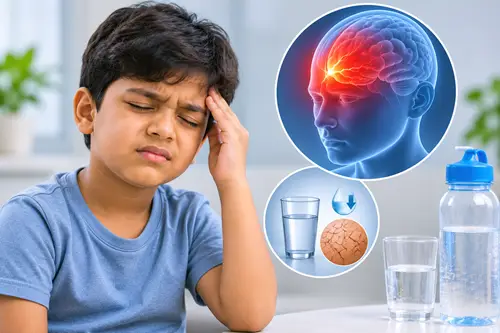
Quick answer: A dehydration headache is a headache that develops when the body does not have enough water, often along with thirst, dry mouth, dark urine, and tiredness. It is usually a dull, throbbing ache that is worse with movement, and it commonly improves within a few hours of drinking fluids and resting. Severe dehydration with confusion, fainting, a very fast heartbeat, no urination, or a sudden severe headache needs urgent medical care.
Introduction
A dehydration headache happens when the body loses more fluid than it takes in. This may follow a hot day, heavy sweating, illness with vomiting or diarrhoea, skipped meals and drinks, or alcohol. The headache is often the first sign that the body needs fluid.
Dehydration headache is not contagious and is usually not serious. For most people, it settles once fluids and rest are restored. However, dehydration can be more dangerous in children, older adults, and people with certain medical conditions, and some headaches that seem to be from dehydration have other causes that need attention.
Knowing the typical symptoms, how to rehydrate safely, and when a headache needs medical care helps you treat it early and avoid complications.
What is a Dehydration Headache?
A dehydration headache is a headache linked to a shortage of body fluid. The exact way dehydration causes headaches is not fully understood, but it is thought to involve changes in blood volume, fluid balance, and the sensitivity of pain pathways in the head.
It is not a separate type of headache in formal medical classification, but headaches attributed to dehydration are well recognised. It can feel similar to a tension headache or a migraine, and dehydration can also trigger migraines in people prone to them.
A dehydration headache may resemble other conditions, such as tension headaches, migraine, hangover headache, heat-related illness, sinus headache, or a headache from low blood sugar or too much or too little caffeine. A healthcare professional can help distinguish between these, especially when the headache is severe, sudden, or comes with other worrying symptoms.
What are the Symptoms of a Dehydration Headache?
Symptoms vary depending on how dehydrated a person is and their general health.
Common symptoms include:
- Dull, throbbing, or aching headache: Often felt across the forehead, temples, or the back of the head.
- Pain that worsens with movement: Walking, bending forward, shaking the head, or standing up quickly can make it worse.
- Thirst and dry mouth: A dry or sticky mouth, dry lips, and increased thirst.
- Dark yellow urine and reduced urination: Urine becomes darker and less frequent.
- Fatigue and weakness: Feeling tired, low on energy, or sluggish.
- Dizziness or light-headedness: Particularly when standing up.
- Difficulty concentrating: Brain fog and trouble focusing.
- Irritability and mood changes: Feeling cranky or low.
- Dry skin: Skin that feels dry or loses its usual elasticity.
- Muscle cramps: Common with sweating and loss of salts.
- Nausea: More likely with heat, illness, or alcohol.
- Fast heartbeat: In more severe dehydration.
Confusion, fainting, a very fast heartbeat, sunken eyes, extreme thirst, or little to no urination for many hours may indicate severe dehydration and needs urgent medical care.
What are the Causes of Dehydration Headache?
Dehydration happens when fluid loss is greater than fluid intake. Many everyday situations can lead to it.
- Not Drinking Enough Fluids: Busy schedules, forgetting to drink, or not feeling thirsty (common in older adults) can lead to low intake.
- Hot Weather and Heat Exposure: High temperatures, humidity, and direct sun increase sweating and fluid loss, which is common in the summer months in India.
- Exercise and Physical Labour: Heavy sweating during exercise, sport, or outdoor work without enough fluid replacement.
- Illness with Vomiting, Diarrhoea, or Fever: Stomach infections, fever, and other illnesses can cause rapid fluid and salt loss.
- Alcohol: Alcohol increases urine output and contributes to dehydration and hangover headaches.
- Excess Caffeine: Large amounts of tea, coffee, or energy drinks can increase urination in some people and may also trigger headaches.
- Fasting or Skipping Meals: Going long periods without food or drink, including during fasts, can reduce fluid and salt intake.
- Medicines: Diuretics (water tablets) and some other medicines can increase fluid loss.
- High Altitude and Travel: Air travel, dry air, and high altitude can increase fluid loss through breathing and skin.
- Medical Conditions: Uncontrolled diabetes, kidney problems, and conditions that cause frequent urination or fluid loss can increase the risk of dehydration.
Identifying the reason for dehydration helps in preventing repeated headaches.
Types of Related Headaches
Dehydration can cause a headache by itself or contribute to other headache types.
- Dehydration Headache: A dull, throbbing headache that improves after rehydration, usually within a few hours.
- Dehydration-Triggered Migraine: In people who are prone to migraines, dehydration is a common trigger. It may cause throbbing pain, nausea, and sensitivity to light and sound.
- Tension-Type Headache with Dehydration: A band-like pressure headache made worse by dehydration, stress, and poor sleep.
- Hangover Headache: Occurs after drinking alcohol and is partly related to dehydration, along with other effects of alcohol.
- Heat-Related Headache: Headache associated with heat exposure, which can be an early sign of heat exhaustion or heatstroke.
- Headache from Severe Dehydration: Associated with significant fluid loss and may come with dizziness, confusion, and weakness. It needs medical care.
Correctly identifying the headache type helps guide treatment.
Risk Factors for Dehydration Headache
- Hot, humid weather, or working or exercising outdoors.
- Low daily fluid intake.
- Intense or prolonged physical activity.
- Illness with vomiting, diarrhoea, or fever.
- Alcohol and excessive caffeine intake.
- Older age, because the sensation decreases.
- Infants and young children, who dehydrate quickly.
- Diabetes, kidney disease, or other chronic conditions.
- Use of diuretics or certain other medicines.
- A history of migraines or frequent headaches.
- Fasting, crash diets, or skipped meals.
- Pregnancy and breastfeeding, which increase fluid needs.
Not everyone with these risk factors develops a dehydration headache. Fluid intake, environment, and general health influence the risk.
Diagnosis of Dehydration Headache
A dehydration headache is usually recognised from the situation and symptoms, and the response to fluids.
- Medical History: The doctor asks about recent fluid intake, heat exposure, exercise, illness, alcohol, medicines, and the nature of the headache.
- Physical Examination: Signs of dehydration, such as dry mouth, low blood pressure, fast pulse, and reduced skin elasticity, are checked.
- Assessment of Hydration: The colour and amount of urine give a useful clue. Pale yellow urine usually suggests good hydration, while dark yellow urine suggests dehydration.
- Blood and Urine Tests: These may be done in moderate to severe cases or when other conditions are suspected, to check salts (electrolytes), kidney function, and blood sugar.
- Excluding Other Causes: If the headache is sudden and severe, associated with fever, neck stiffness, head injury, weakness, vision changes, or confusion, other causes must be ruled out, and imaging or other tests may be needed.
Treatment for Dehydration Headache
Treatment aims to restore fluids and salts and relieve the headache safely.
- Drink Fluids Steadily: Sip water regularly rather than gulping very large amounts at once. Most dehydration headaches improve within about 30 minutes to a few hours after rehydrating.
- Oral Rehydration Solution (ORS): When there has been significant sweating, vomiting, or diarrhoea, ORS replaces both fluids and salts and is more effective than plain water alone. Coconut water, lemon water with a pinch of salt and sugar, and buttermilk are also commonly used.
- Rest in a Cool Place: Rest in a cool, shaded, quiet place and avoid further heat and exertion.
- Cold Compress: A cool cloth on the forehead or neck may be soothing.
- Eat Light, Water-Rich Foods: Fruits and vegetables with high water content, such as watermelon, cucumber, and oranges, help with hydration.
- Pain Relief Medicines: If needed, a simple pain reliever may be used as advised by a doctor or pharmacist. Pain relievers of the anti-inflammatory type can strain the kidneys when someone is significantly dehydrated, so rehydrate first and check with a doctor if unsure.
- Avoid Alcohol and Excess Caffeine: These can worsen dehydration and headaches.
- Treating the Cause: Vomiting, diarrhoea, fever, or other illness needs appropriate treatment.
- Medical Treatment for Severe Dehydration: Severe dehydration may need intravenous fluids in a hospital.
- Avoid Overcorrecting: Drinking extremely large volumes of plain water in a short time can upset the body’s salt balance. Rehydrate steadily and include salts when fluid loss has been significant.
Homeopathic Consultation for Dehydration Headache
A dehydration headache usually settles when the body is rehydrated, and drinking fluids and resting remain the first and most important steps. Many people who get frequent headaches also look for gentle, personalised support for recurring headaches, stress, sleep, digestion, and overall wellbeing.
At Dr. Sanjay’s Homoeopathy, consultations with Dr. Sanjay Singh, MD (Homoeopathy), include an unhurried discussion of the headache pattern, triggers, daily fluid intake, diet, sleep, stress, heat exposure, previous investigations, and current medicines. The aim is to understand the person as a whole and offer individualized, supportive care alongside sensible rehydration and medical advice. Patients with severe, sudden, or unusual headaches or signs of significant dehydration are advised to seek prompt medical evaluation, and are never asked to stop prescribed medicines or skip recommended tests.
Remedies Traditionally Used in Homeopathic Practice
In traditional homeopathic practice, some remedies have been associated with particular patterns of headache and thirst. These include:
- Bryonia alba: Traditionally associated with headache that is worse from movement, with dryness and marked thirst.
- Natrum muriaticum: Traditionally associated with headaches linked to sun, heat, or emotional strain.
- Belladonna: Traditionally described for sudden, throbbing headaches with heat and sensitivity to light.
- Glonoine: Traditionally associated with throbbing headache from heat or sun exposure.
- Gelsemium sempervirens: Traditionally associated with dull, heavy headache with weakness and drowsiness.
These descriptions reflect traditional homeopathic use. They do not replace rehydration, rest, or medical care for moderate or severe dehydration, heat illness, or serious headaches. Remedies are chosen individually after consultation.
Lifestyle Tips for Preventing Dehydration Headache
- Drink Water Throughout the Day: Sip regularly instead of waiting until you feel very thirsty. Aim for pale yellow urine as a simple guide.
- Increase Fluids in Hot Weather: Drink more when it is hot, humid, or when you are exercising or working outdoors.
- Include Salts When Sweating Heavily: After heavy sweating, vomiting, or diarrhoea, use ORS, coconut water, or lemon water with a pinch of salt and sugar.
- Carry a Water Bottle: Keep water within reach at work, while travelling, and during exercise.
- Eat Water-Rich Foods: Include fruits and vegetables such as cucumber, watermelon, oranges, and tomatoes.
- Limit Alcohol and Excess Caffeine: If you drink alcohol, have water alongside it. Limit strong tea, coffee, and energy drinks.
- Do Not Skip Meals: Regular meals support steady energy, fluid, and salt intake.
- Protect Yourself from Heat: Wear light clothing, use a hat or umbrella, rest in shade, and avoid strenuous activity at the hottest time of day.
- Watch Children and Older Adults: Offer fluids regularly to children and elderly family members, as they may not drink enough on their own.
- Keep Track of Headache Triggers: Noting when headaches occur, along with fluid intake, sleep, and meals, helps identify patterns.
When to See a Doctor for Dehydration Headache
Seek medical advice if headaches are frequent, keep returning despite good hydration, or if you are unsure whether dehydration is the cause.
Arrange prompt assessment if you experience:
- A headache that does not improve after rehydration and rest.
- Frequent or recurring headaches.
- Vomiting or diarrhoea lasting more than a day or two.
- Very dark urine or passing little urine.
- Excessive thirst and frequent urination, which may suggest diabetes.
- Dizziness or fainting when standing.
- A headache after a head injury.
- Dehydration in an infant, young child, or elderly person.
Seek emergency care immediately for a sudden, severe (“worst ever”) headache, headache with fever and stiff neck, confusion or drowsiness, repeated fainting, a very fast heartbeat, weakness on one side, difficulty speaking, vision changes, seizures, high body temperature with hot dry skin, or no urination for many hours. These can be signs of severe dehydration, heatstroke, meningitis, stroke, or another serious condition.
Frequently Asked Questions About Dehydration Headache
What is a dehydration headache?
A dehydration headache is a headache that occurs when the body is short of fluid. It is usually a dull, throbbing ache that improves after drinking fluids and resting.
How long does a dehydration headache last?
It often improves within 30 minutes to a few hours after rehydrating, though it may take longer if dehydration is significant.
What does a dehydration headache feel like?
It usually feels like a dull or throbbing ache in the forehead, temples, or back of the head, and may be worse with movement, bending, or standing up.
How can I tell if my headache is from dehydration?
Clues include thirst, dry mouth, dark urine, dizziness, recent heat exposure, sweating, illness, or alcohol, and improvement after you drink water.
How much water should I drink to relieve a dehydration headache?
Sip water steadily over the next few hours rather than drinking a very large amount at once. If you have lost a lot of fluid, use ORS or add salts. Your needs vary with weather, activity, and health.
Can dehydration cause migraines?
Yes. Dehydration is a common migraine trigger in people who are prone to migraines.
Does coffee or tea cause dehydration headaches?
In moderate amounts, tea and coffee usually count toward fluid intake. Very large amounts, or sudden stopping of regular caffeine, can cause headaches in some people.
Is a dehydration headache serious?
It is usually mild and goes away with fluids. But severe dehydration can be dangerous, and a sudden severe headache or one with other warning symptoms needs urgent medical attention.
What is the best drink for a dehydration headache?
Water is usually enough for mild cases. After heavy sweating, vomiting, or diarrhoea, ORS or other salt-containing drinks work better than plain water alone.
Can homeopathy be taken along with rehydration for a dehydration headache?
Many people choose a homeopathic consultation for overall wellbeing and recurring headaches while continuing sensible hydration and medical care. It is important to inform every doctor about all medicines being taken, and never to delay medical care for severe dehydration or warning symptoms.
Why choose Dr. Sanjay’s Homoeopathy for Dehydration Headache Treatment in Lucknow, India?
Dr. Sanjay’s Homoeopathy is a trusted Homeopathy Centre for Dehydration Headache Treatment in Lucknow, India. With more than 22 years of experience, Dr. Sanjay Singh, MD (Homoeopathy), follows an individualized consultation approach that considers the patient’s symptoms, medical history, lifestyle, and previous treatment. People experiencing throbbing head pain, dizziness, dry mouth, fatigue, or worsened discomfort with movement can discuss their concerns and learn about available care options in a patient-focused environment. Identifying fluid balance triggers, electrolyte needs, and recurring headache patterns remains an important part of effective care, and patients should continue necessary hydration practices and medical treatment as advised by their healthcare professional. Patients from across the world trust Dr. Sanjay’s Homoeopathy for Dehydration Headache Treatment in Lucknow, India.