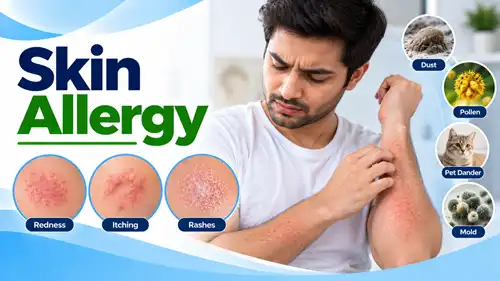
Skin allergy is a common skin problem that may cause itching, redness, rashes, swelling, dryness, and irritation. It can develop when the skin reacts to certain substances, such as cosmetics, soaps, detergents, metals, medicines, or environmental triggers. Symptoms may appear shortly after exposure or develop over several hours or days.
The severity of skin allergy varies from person to person. Some people experience mild itching, while others may develop recurring rashes, swelling, or inflamed skin. Understanding the possible cause and choosing an appropriate treatment approach can help manage symptoms and reduce the chances of repeated flare-ups.
What is Skin Allergy?
Skin allergy is a reaction that occurs when the skin responds to a substance that triggers an allergic response. It may lead to itching, redness, swelling, bumps, blisters, or other changes in the skin.
The term skin allergy is commonly used for conditions such as allergic contact dermatitis and hives (urticaria). Eczema and irritant contact dermatitis may cause similar symptoms but have different underlying mechanisms. Therefore, not every itchy rash is necessarily an allergy.
Skin allergy can affect the face, hands, arms, neck, legs, and other parts of the body. Identifying the type of skin reaction is important because different conditions may require different treatments.
Symptoms of Skin Allergy
The symptoms of skin allergy depend on the cause, type of reaction, and individual sensitivity. Common symptoms include:
- Itching: Persistent itching that may become worse at night or after exposure to a trigger.
- Redness or skin discoloration: The affected area may appear red, purple, brown, or darker than the surrounding skin.
- Skin rashes: Small bumps, raised patches, or irritated areas may develop.
- Swelling: The skin may become swollen or puffy.
- Dryness and scaling: The affected area may become rough, flaky, or cracked.
- Blisters: Some reactions cause small, fluid-filled blisters.
- Burning or stinging: The skin may feel irritated, sensitive, or uncomfortable.
- Hives: Raised, itchy welts may appear and change shape or location.
- Recurring skin irritation: Symptoms may return after repeated exposure to the same trigger.
Persistent scratching can damage the skin and increase the risk of infection. If a rash becomes painful, spreads rapidly, or develops discharge, it should be evaluated by a healthcare professional.
Causes of Skin Allergy
Skin allergy may develop after exposure to different substances. Common triggers include:
- Cosmetics and Skincare Products: Perfumes, makeup, creams, lotions, facial cleansers, hair dyes, and other personal care products may trigger allergic reactions in sensitive individuals.
- Soaps and Detergents: Certain ingredients in soaps, detergents, cleaning products, and disinfectants may irritate the skin or cause allergic contact dermatitis.
- Metals and Jewellery: Nickel and cobalt found in jewellery, watches, belt buckles, buttons, and other metal objects can trigger allergic skin reactions.
- Medicines: Some medicines, including creams applied directly to the skin, may cause allergic reactions. A suspected medicine allergy should be discussed with a qualified healthcare professional before making changes to treatment.
- Plants and Environmental Substances: Contact with certain plants and other environmental substances may cause skin irritation or allergic reactions.
- Latex and Rubber Products: Latex gloves and certain rubber products may cause allergic reactions in susceptible individuals.
- Food Allergies: Some food allergies can cause hives or swelling. However, recurring skin rashes should not automatically be attributed to food without appropriate assessment.
- Other Skin Conditions: Eczema, fungal infections, scabies, and other skin disorders may produce symptoms similar to skin allergy. Identifying the underlying condition helps determine the appropriate care.
Types of Skin Allergy
Different skin conditions may be described as skin allergies because they share symptoms such as itching, swelling, and rashes.
1. Allergic Contact Dermatitis
Allergic contact dermatitis develops when the immune system reacts to a substance that comes into contact with the skin. Common triggers include fragrances, metals, hair dyes, and certain cosmetic ingredients.
Symptoms may include itching, swelling, discoloration, dryness, and blisters. The affected area often corresponds to the part of the skin that contacted the allergen.
2. Hives (Urticaria)
Hives are raised, itchy welts that may appear suddenly on different parts of the body. Individual welts can change shape or disappear while new ones develop.
Hives can have several triggers, including certain foods, medicines, infections, and physical factors. In many cases, the exact cause is not identified.
3. Atopic Dermatitis (Eczema)
Atopic dermatitis is a long-term inflammatory skin condition that commonly causes dryness, itching, and recurring flare-ups. It may be associated with sensitive skin and a personal or family history of allergic conditions.
Eczema is not simply an allergy to a single substance. Its management may require regular moisturization, trigger management, and appropriate medical treatment.
4. Irritant Contact Dermatitis
Irritant contact dermatitis occurs when a substance directly damages or irritates the skin. Frequent exposure to water, detergents, soaps, or cleaning chemicals may contribute to this condition.
Unlike allergic contact dermatitis, it does not require a specific allergic immune response.
5. Swelling Associated With Allergic Reactions
Some allergic reactions cause swelling beneath the skin, particularly around the lips, eyelids, or face. Sudden swelling involving the tongue or throat, especially with breathing difficulty, requires emergency medical care.
Risk Factors for Skin Allergy
Certain factors may increase the likelihood of developing allergic or inflammatory skin problems, including:
- A personal or family history of eczema, asthma, or other allergic conditions.
- Frequent exposure to soaps, detergents, chemicals, or cleaning products.
- Repeated use of fragranced cosmetics or skincare products.
- Contact with jewellery or metal objects containing allergens.
- Previous reactions to particular medicines or personal care products.
- Work that involves frequent handwashing, wet work, or chemical exposure.
- An existing skin condition that affects the skin barrier.
Having these risk factors does not necessarily mean that a person will develop a skin allergy.
Diagnosis of Skin Allergy
Correct diagnosis is important because several skin conditions can produce similar symptoms. A healthcare professional may use the following methods to identify the cause.
- Medical History: The doctor may ask when the rash started, which body areas are affected, whether the symptoms recur, and whether any new products, medicines, foods, or environmental exposures could be involved.
- Physical Examination: The affected skin is examined for itching, swelling, dryness, blisters, scaling, and other features that may help identify the condition.
- Patch Testing: Patch testing may be recommended when allergic contact dermatitis is suspected. Small amounts of selected allergens are applied to the skin under patches, and the skin is assessed over the following days to identify delayed allergic reactions.
- Other Allergy Tests: Depending on the symptoms and suspected trigger, the doctor may recommend skin-prick testing or specific blood tests. These tests are not necessary for every skin rash.
- Evaluation for Other Skin Conditions: If the symptoms suggest a fungal infection, scabies, or another skin disorder, further examination or testing may be needed.
A dermatologist can help identify the cause when symptoms are persistent, recurring, or difficult to diagnose.
Skin Allergy Treatment
Skin allergy treatment depends on the type of reaction, its severity, and the underlying cause. The main goals are to relieve symptoms, protect the skin, and prevent further exposure to the trigger.
1. Identifying and Avoiding Triggers
Avoiding the substance responsible for the reaction is an important part of managing allergic contact dermatitis. This may involve changing skincare products, avoiding particular metals, or using suitable protective equipment.
2. Moisturizers and Emollients
Fragrance-free moisturizers and emollients help reduce dryness and support the skin barrier. The product should be suitable for the affected skin because certain ingredients can cause additional irritation.
3. Medicines for Itching and Inflammation
Depending on the diagnosis, a healthcare professional may recommend antihistamines for certain allergic symptoms or prescribe topical corticosteroids to reduce inflammation.
The choice of medicine depends on the type of reaction, the affected body area, and the patient’s medical history. Strong steroid creams should not be used without appropriate guidance, particularly on the face or around the eyes.
4. Treatment for Hives
Hives may be managed with antihistamines and other medicines when necessary. Persistent or recurrent hives require medical assessment to determine an appropriate treatment plan.
5. Treatment of the Underlying Condition
If the symptoms are caused by a fungal infection, scabies, bacterial infection, or another skin disorder rather than an allergy, condition-specific treatment may be required.
6. Specialist Care
People with severe, persistent, or difficult-to-control skin problems may need a dermatologist’s assessment for further treatment options.
Avoid scratching the affected area, as this may worsen irritation and increase the risk of infection.
Homeopathic Treatment for Skin Allergy
Skin allergy can affect a person’s comfort, sleep, daily routine, and confidence. Symptoms such as itching, redness, dryness, and recurring rashes may vary from person to person, making an individualized assessment important.
At Dr. Sanjay’s Homoeopathy, Dr. Sanjay Singh provides personalized consultations for people experiencing recurring skin complaints. The consultation considers the nature of the symptoms, their duration, possible triggers, medical history, lifestyle, and previous treatment. This information helps guide a discussion about suitable care options according to the individual’s needs.
Homeopathic practice emphasizes an individualized approach rather than selecting a remedy based only on the name of a condition. People seeking homeopathic consultation can discuss their skin concerns and receive guidance about managing recurring symptoms as part of a broader care plan.
For the best outcome, it is important to identify the underlying cause of the skin problem and follow appropriate medical advice. Homeopathic consultation can be discussed as a complementary care option, while necessary medical treatment should continue as advised by the treating healthcare professional.
Homeopathic Remedies for Skin Allergy
In traditional homeopathic practice, different remedies are associated with different symptom patterns. The following remedies are commonly discussed in homeopathic literature for skin complaints:
- Urtica Urens: Traditionally associated with itching, burning sensations, and hive-like skin complaints.
- Apis Mellifica: Traditionally associated with skin complaints involving puffiness, swelling, and stinging sensations.
- Sulphur: Traditionally used in homeopathic practice for certain itchy skin complaints.
- Rhus Toxicodendron: Traditionally associated with some itchy, blister-like skin eruptions.
- Graphites: Traditionally associated with dry, cracked, or weeping skin complaints.
- Arsenicum Album: Traditionally associated with burning sensations and certain skin complaints.
Lifestyle Tips to Manage Skin Allergy
Along with appropriate treatment, certain daily habits may help reduce skin irritation and prevent flare-ups.
- Avoid known triggers: Stop using products that repeatedly cause a reaction and seek advice about identifying the trigger.
- Choose gentle skincare: Prefer fragrance-free cleansers and moisturizers suitable for sensitive skin.
- Moisturize regularly: Apply an appropriate moisturizer, especially after bathing.
- Avoid scratching: Keep nails short and consider a cool compress for temporary relief from mild itching.
- Wear comfortable clothing: Soft, breathable fabrics may reduce friction and irritation.
- Use lukewarm water: Very hot showers can worsen dryness and itching.
- Introduce new products carefully: Check ingredients and follow appropriate product-testing advice.
- Maintain a symptom diary: Record new products, medicines, and other exposures that occur before a flare-up.
- Protect your skin: Use suitable protective equipment when handling cleaning products or other irritants.
If a product repeatedly causes a reaction, stop using it and discuss the symptoms with a healthcare professional.
When to See a Doctor for Skin Allergy
Consult a healthcare professional if:
- The rash persists or repeatedly returns.
- Itching or swelling is severe.
- The rash spreads or does not improve with appropriate care.
- The affected skin develops increasing pain, pus, or discharge.
- You develop fever or feel generally unwell along with a worsening rash.
- You suspect a reaction to a medicine.
- The diagnosis is unclear or the symptoms affect a child.
Seek emergency medical care immediately if a suspected allergic reaction causes difficulty breathing, swelling of the tongue or throat, fainting, or severe dizziness. These may be signs of anaphylaxis, a potentially life-threatening allergic reaction.
Frequently Asked Questions About Skin Allergy
What are the common symptoms of skin allergy?
Common symptoms include itching, redness or discoloration, bumps, swelling, dry patches, blisters, and hives. The symptoms depend on the type of reaction and its trigger.
What causes skin allergy?
Common triggers include cosmetics, fragrances, metals, detergents, latex, certain medicines, and some plants. Other conditions, including eczema and skin infections, can cause similar symptoms.
Is skin allergy contagious?
Most allergic skin reactions, such as allergic contact dermatitis and hives, are not contagious. However, some infections and infestations can resemble an allergy and may spread between people.
Can skin allergy be cured permanently?
The outcome depends on the underlying condition. Contact dermatitis may improve significantly when the responsible trigger is identified and avoided. Chronic conditions, such as eczema or recurrent hives, may require ongoing management.
How is skin allergy diagnosed?
Diagnosis may involve a medical history, skin examination, and selected tests. Patch testing is commonly used when allergic contact dermatitis is suspected.
Which treatment is best for skin allergy?
The most appropriate treatment depends on the cause and severity. Avoiding triggers, using suitable moisturizers, and taking doctor-recommended medicines may help manage symptoms. Persistent or severe symptoms should be evaluated by a dermatologist.
Can homeopathy help with skin allergy?
People may seek homeopathic consultation for recurring skin complaints. However, reliable scientific evidence has not established homeopathy as an effective treatment for skin allergy. It should not replace proven treatment or delay medical assessment.
Can skin allergy occur on the face?
Yes. Skin reactions may affect the face because of cosmetics, skincare products, hair products, or other exposures. Persistent facial rashes should be assessed, especially if they are severe or accompanied by swelling.
What should I avoid during a skin allergy flare-up?
Avoid known triggers, harsh cleansers, fragranced products that irritate your skin, and scratching. Do not use strong steroid creams or unverified remedies without appropriate guidance.
When should skin allergy be treated as an emergency?
Difficulty breathing, swelling of the tongue or throat, fainting, or severe dizziness during an allergic reaction requires immediate emergency medical attention.
Why choose Dr. Sanjay’s Homoeopathy for Skin Allergy Treatment in Lucknow, India?
Dr. Sanjay’s Homoeopathy is a trusted Homeopathy Centre for Skin Allergy Treatment in Lucknow, India. With more than 22 years of experience, Dr. Sanjay Singh, MD (Homoeopathy) follows an individualized consultation approach that considers the patient’s symptoms, medical history, lifestyle, and previous treatment. People experiencing itching, skin irritation, or recurring rashes can discuss their concerns and learn about available care options in a patient-focused environment. Identifying the cause of the skin problem remains an important part of effective care, and patients should continue necessary medical treatment as advised by their healthcare professional. Patients from across the world trust Dr. Sanjay’s Homoeopathy for Skin Allergy Treatment in Lucknow, India.