Pediatric gangrene is a serious condition in which body tissue dies because of severely reduced blood supply, a serious infection, or significant tissue injury. Although gangrene is uncommon in children, it can occur after severe infections, injuries, burns, vascular problems, or conditions that interfere with blood circulation.
Gangrene requires urgent medical assessment and treatment. Treatment may involve antibiotics, removal of dead or infected tissue, restoration of blood flow, and other hospital-based procedures depending on the cause and severity. Early treatment can improve the chances of preserving healthy tissue.
What is Pediatric Gangrene?
Gangrene means that body tissue has died. This can happen when the tissue does not receive enough blood and oxygen or when a severe infection destroys the tissue.
In children, gangrene may affect the:
- Fingers or toes
- Hands or feet
- Legs or arms
- Skin and soft tissues
- Muscles
- Other internal tissues or organs in severe cases
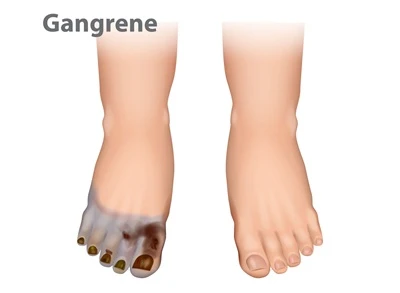
The affected area may become discolored, swollen, painful, cold, numb, or develop blisters or an unpleasant-smelling discharge.
Because gangrene can progress quickly, a child with suspected gangrene should be taken for urgent medical evaluation.
What are the symptoms of Gangrene in Children?
Symptoms depend on the type and underlying cause.
Common signs include:
- Skin turning pale, blue, purple, dark red, brown, or black
- Swelling
- Severe or increasing pain
- Numbness or loss of sensation
- Skin becoming cold
- Blisters
- Open sores
- Foul-smelling discharge
- Fever
- Weakness or feeling unwell
- Rapid worsening of the affected area
Sometimes severe pain can be followed by numbness as tissue and nerves become damaged.
Gangrene in the Fingers or Toes
Parents may notice that a child’s finger or toe becomes:
- Darker than the surrounding skin
- Cold to touch
- Painful or numb
- Swollen
- Slow to heal
- Covered by blisters or sores
A sudden change in color or temperature should not be ignored.
What are the causes of Gangrene in Children?
There are several possible causes.
Severe Infection
Certain bacterial infections can rapidly damage skin, muscle, and other tissues. Severe soft-tissue infections can progress quickly and require emergency treatment.
Reduced Blood Supply
If blood cannot reach a particular part of the body, the tissue may not receive enough oxygen and nutrients and can eventually die.
Serious Injury
Crush injuries, deep wounds, severe burns, or other major trauma can damage blood vessels and tissues and increase the risk of tissue death.
Blood Vessel Problems
Rare vascular conditions in children can interfere with circulation and potentially contribute to tissue damage.
Other Medical Conditions
Certain conditions affecting blood clotting, immunity, circulation, or tissue healing can increase the risk of serious tissue injury.
Types of Gangrene
Gangrene can be classified according to how the tissue becomes damaged.
Dry Gangrene
Dry gangrene occurs when blood supply to tissue is severely reduced. The affected tissue may become dry, shriveled, and dark.
Although commonly associated with vascular disease in adults, reduced circulation can have different causes in children.
Wet Gangrene
Wet gangrene occurs when dead tissue becomes infected. The area may become:
- Swollen
- Painful
- Blistered
- Wet or draining
- Discolored
Wet gangrene can spread rapidly and requires immediate medical treatment.
Gas Gangrene
Gas gangrene is a serious infection involving deep tissues, particularly muscle. Certain bacteria can produce gas and toxins inside the affected tissue.
The condition can progress rapidly and is a medical emergency.
Internal Gangrene
Gangrene can also occur inside the body when blood supply to an internal organ is interrupted or when severe infection damages internal tissues.
Risk Factors for Pediatric Gangrene
Gangrene is uncommon in children, but risk may increase with:
- Severe infections
- Major injuries
- Deep wounds
- Severe burns
- Problems with blood circulation
- Certain vascular conditions
- Blood-clotting disorders
- Conditions affecting the immune system
- Compromised wound healing
- Previous surgery or significant tissue trauma
The exact risk depends on the child’s underlying health and the cause of the tissue damage.
Diagnosis of Pediatric Gangrene
Doctors usually begin with a detailed examination of the affected area.
They may assess:
- Skin color
- Temperature
- Swelling
- Sensation
- Pain
- Pulses and blood circulation
- Presence of wounds or discharge
- How quickly the condition is progressing
Blood Tests
Blood tests can help identify infection, inflammation, and other abnormalities.
Wound or Tissue Testing
Fluid or tissue samples may be examined to identify bacteria or other organisms when infection is suspected.
Doppler Ultrasound
Ultrasound can help assess blood flow through blood vessels.
X-ray, CT or MRI
Imaging may be used to determine how deeply the condition has spread and whether muscles, bones, blood vessels, or deeper tissues are involved.
In severe cases, surgery may be necessary to determine how much tissue is affected.
Treatment of Pediatric Gangrene
Gangrene requires urgent hospital-based treatment. The exact treatment depends on the cause, location, and severity.
Antibiotics
If bacterial infection is involved, antibiotics may be given, often intravenously in severe cases.
Removing Dead Tissue
Dead or severely infected tissue may need to be removed through a procedure called debridement. This helps prevent infection from spreading to healthy tissue.
Restoring Blood Flow
If poor circulation is responsible, doctors may need to treat the underlying blood-vessel problem and restore blood flow to the affected area.
Surgery
Some children may require surgery depending on the extent of tissue damage.
In very severe cases, removal of the affected body part may be necessary to prevent life-threatening infection from spreading.
Hyperbaric Oxygen Therapy
In selected cases, hyperbaric oxygen therapy may be considered as part of treatment. It is not appropriate for every child and depends on the cause and clinical situation.
Homeopathic Treatment for Pediatric Gangrene
Parents may search for homeopathic treatment for pediatric gangrene, particularly when looking for supportive care for wound healing or circulation.
However, gangrene is fundamentally a medical emergency. Homeopathy should not be used as a replacement for antibiotics, surgical treatment, restoration of blood flow, wound care, or hospital management.
If a child has black or rapidly changing skin, severe pain, numbness, swelling, foul-smelling discharge, fever, or a cold affected limb, urgent medical evaluation is necessary.
Homeopathic consultation, if desired, should only be considered as complementary care after appropriate medical assessment and alongside the treatment recommended by the child’s medical team.
Homeopathic Remedies for Gangrene in Children
Some homeopathic practitioners may traditionally consider remedies such as:
- Arsenicum Album – traditionally associated with burning pain, weakness, and restlessness.
- Secale Cornutum – traditionally considered in certain circulation-related complaints.
- Lachesis – traditionally associated with some vascular and inflammatory complaints.
- Hamamelis – traditionally considered for certain venous and tissue-related symptoms.
- Carbo Vegetabilis – traditionally associated with weakness and poor circulation.
These remedies should not be considered a treatment for established gangrene. A qualified healthcare professional should determine the appropriate medical treatment for the child.
Wound Care and Prevention
Preventing serious wound infection is particularly important in children with conditions that affect circulation or healing.
Parents can help by:
- Cleaning minor wounds appropriately.
- Keeping wounds protected and clean.
- Watching for increasing redness or swelling.
- Seeking medical attention if a wound becomes increasingly painful.
- Not ignoring changes in skin color.
- Following treatment instructions carefully.
- Completing prescribed antibiotics when directed.
- Keeping regular follow-up appointments when a child has an underlying vascular condition.
When Should Parents Seek Emergency Care?
Suspected gangrene requires urgent medical assessment.
Take the child for emergency medical care if you notice:
- Black, purple, blue, or rapidly changing skin
- A cold or numb finger, toe, hand, or foot
- Severe or rapidly increasing pain
- Rapid swelling
- Blisters with dark discoloration
- Foul-smelling pus or discharge
- Fever with a rapidly worsening wound
- A wound that suddenly becomes much more painful
- Severe weakness or unusual drowsiness
- Breathing difficulty or confusion
Gangrene can spread to surrounding tissues and, when infection enters the bloodstream, can lead to life-threatening sepsis.
Frequently Asked Questions
Can children develop gangrene?
Yes, although pediatric gangrene is uncommon. It can occur following severe infection, major injury, burns, problems with blood flow, or certain underlying medical conditions.
What does gangrene look like in a child?
The affected skin may become pale, blue, purple, dark red, brown, or black. Swelling, blisters, wounds, discharge, pain, or numbness may also occur.
Is pediatric gangrene dangerous?
Yes. Gangrene can progress quickly, particularly when it is associated with a severe infection. Early treatment is important.
Can gangrene in children be treated?
Yes. Treatment may include antibiotics, removal of dead tissue, treatment to restore blood flow, and sometimes surgery or hyperbaric oxygen therapy.
Does gangrene always require amputation?
No. The treatment depends on how much tissue is affected and whether healthy blood flow and tissue can be preserved. Amputation may be necessary only in severe cases when the affected tissue cannot be saved or infection cannot otherwise be controlled.
Can homeopathy cure pediatric gangrene?
Homeopathy should not be used as a substitute for emergency medical treatment. A child with suspected gangrene needs prompt assessment and treatment by an appropriate medical team.
When should parents take a child with a wound to a doctor?
A child should be assessed promptly if a wound becomes increasingly painful, swollen, discolored, cold, numb, produces foul-smelling discharge, or is accompanied by fever or worsening illness.
Why choose Dr. Sanjay’s Homoeopathy for Pediatric Gangrene Treatment in Lucknow, India.?
Dr. Sanjay’s Homoeopathy is a trusted clinic for Pediatric Gangrene Treatment in Lucknow, India. With more than 22 years of experience, Dr. Sanjay Singh, MD (Homoeopathy) provides personalized consultation for children experiencing wound-related concerns, swelling, pain, skin changes, circulation-related complaints, and other health concerns. Each consultation focuses on understanding the child’s symptoms, medical history, duration and progression of the problem, lifestyle, and overall health. As an experienced homeopathic doctor in Lucknow, Dr. Sanjay Singh provides confidential and patient-focused care in a comfortable environment. Since suspected gangrene is a serious medical condition requiring urgent assessment, appropriate pediatric and surgical evaluation is also important so that infection, tissue damage, and blood-flow problems can be treated without delay. Patients from across India and around the world choose Dr. Sanjay’s Homoeopathy for its holistic healing, long-lasting relief, and compassionate care for Pediatric Gangrene Treatment in Lucknow, India.