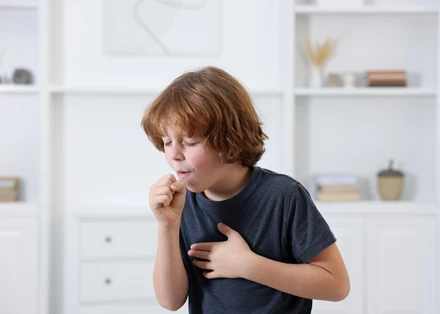
Whooping cough, also called Pertussis, is a highly contagious infection of the respiratory system caused by the bacterium Bordetella pertussis. It can begin like an ordinary cold but may gradually develop into repeated, forceful coughing attacks. A high-pitched “whoop” may occur when a person breathes in after a coughing spell, although this sound is not present in everyone.
Whooping cough can affect people of any age, but babies and young children are at greater risk of serious complications. Early medical assessment is important when pertussis is suspected.
What is Whooping Cough?
Whooping cough is a bacterial respiratory infection caused by Bordetella pertussis. The bacteria affect the airways and can cause swelling and irritation, leading to prolonged and severe coughing spells.
The infection usually starts with mild symptoms such as a runny nose, low-grade fever and occasional cough. After about one to two weeks, the cough may become much stronger, with repeated coughing fits, vomiting or difficulty breathing.
The cough can continue for several weeks, even after the infection itself has cleared.
What are the Symptoms of Whooping Cough?
Symptoms can vary depending on age and vaccination status.
Early symptoms
The first symptoms may look like a common cold:
- Runny or blocked nose
- Mild fever
- Mild cough
- Sneezing
- Tiredness
- Reduced appetite
These symptoms may continue for one to two weeks before severe coughing develops.
Later symptoms
As the infection progresses, a person may develop:
- Repeated and violent coughing attacks
- Several coughs in a single breathing spell
- High-pitched “whoop” while breathing in
- Vomiting after coughing
- Difficulty catching the breath
- Tiredness after a coughing episode
- Difficulty sleeping
- Coughing that becomes worse at night
The characteristic “whoop” is not always present, particularly in vaccinated people and some older patients.
Symptoms in babies
Whooping cough can look different in babies. Some babies may not have the typical cough. Instead, they may have:
- Pauses in breathing
- Difficulty breathing
- Blue or purple discoloration
- Poor feeding
- Extreme tiredness
Breathing difficulty or pauses in breathing in a baby require urgent medical attention.
What are the Causes of Whooping Cough?
The main cause of whooping cough is infection with Bordetella pertussis.
The bacteria spread from an infected person to another person through respiratory particles released while coughing or sneezing. Close contact and spending time in the same breathing space can increase the risk of transmission.
A person can sometimes spread the infection before realizing that they have pertussis, particularly when the early symptoms look like an ordinary cold.
How Does Whooping Cough Spread?
Pertussis spreads mainly through respiratory droplets and particles.
It can spread when an infected person:
- Coughs
- Sneezes
- Talks closely with another person
- Spends prolonged time around others
People can remain contagious for a period during the illness, and early antibiotic treatment can reduce the time they spread the bacteria.
Stages of Whooping Cough
Whooping cough generally develops through three stages.
1. Early or Catarrhal Stage
This stage can look like a common cold. There may be:
- Runny nose
- Mild fever
- Mild cough
- Occasional sneezing
In babies, breathing pauses can sometimes occur.
2. Paroxysmal Stage
This is the stage in which the characteristic coughing attacks develop.
The person may experience repeated, rapid coughing followed by difficulty taking a breath. Vomiting and exhaustion can occur after the attack.
3. Recovery or Convalescent Stage
The coughing gradually becomes less frequent and less severe. However, recovery can take several weeks, and coughing may temporarily become worse again during another respiratory infection.
Who Is at Higher Risk?
Whooping cough can occur at any age, but severe disease is particularly concerning in:
- Babies younger than one year
- Children who have not completed their vaccinations
- People with certain underlying medical conditions
- People with weakened immune systems
Babies are especially vulnerable to complications such as breathing pauses and pneumonia.
Diagnosis of Whooping Cough
Whooping cough can be difficult to identify during the early stage because its symptoms resemble a common cold.
A doctor may consider:
- Symptoms and duration of cough
- History of exposure to pertussis
- Physical examination
- Laboratory testing of a respiratory or mucus sample
- Blood testing in selected situations
A healthcare professional may recommend testing when the symptoms and exposure history suggest pertussis.
Treatment of Whooping Cough
Treatment depends on the person’s age, symptoms, severity and stage of infection.
Antibiotic Treatment
Because whooping cough is caused by bacteria, healthcare professionals generally use antibiotics to treat pertussis.
Treatment is particularly useful when started early. Early treatment can make the illness less serious and can help reduce transmission to other people.
People with severe symptoms, especially babies, may require hospital care.
Supportive Care
Depending on medical advice, supportive measures may include:
- Drinking enough fluids
- Taking adequate rest
- Avoiding cigarette smoke and other airway irritants
- Eating small meals if coughing causes vomiting
- Using a clean cool-mist humidifier when appropriate
Cough medicines should not routinely be given to young children unless recommended by a healthcare professional.
Homeopathic Treatment for Whooping Cough
Some people look for homeopathic treatment for whooping cough to help manage symptoms such as persistent cough, throat irritation, weakness and discomfort.
Homeopathic care may be considered as a complementary approach based on the person’s symptoms. However, whooping cough is a bacterial infection and can become serious, particularly in babies. Homeopathy should not be used instead of appropriate medical diagnosis, antibiotics or hospital treatment when these are required.
If pertussis is suspected, especially in a baby or young child, timely evaluation by a qualified healthcare professional is important.
Homeopathic Remedies for Whooping Cough
Depending on the individual symptoms, homeopathic practitioners may traditionally consider remedies such as:
- Drosera – traditionally associated with spasmodic, repeated coughing
- Ipecacuanha – traditionally considered when coughing is associated with nausea or mucus
- Antimonium Tartaricum – traditionally used in some cases with heavy mucus and difficult expectoration
- Spongia – traditionally associated with dry, irritating cough
- Bryonia – traditionally considered for dry, painful coughing
The appropriate remedy and potency should be selected by a qualified homeopathic practitioner after assessing the person’s symptoms.
Prevention of Whooping Cough
Vaccination is the main way to prevent pertussis. Pertussis vaccines include DTaP and Tdap, depending on age and vaccination schedule.
Other useful precautions include:
- Follow the recommended vaccination schedule.
- Cover the mouth and nose when coughing or sneezing.
- Wash hands regularly.
- Avoid close contact with people who are sick.
- Keep infants away from people with suspected pertussis.
- Seek medical advice after significant exposure when appropriate.
WHO also identifies vaccination as the most effective way to prevent severe pertussis, particularly in infants.
When Should You See a Doctor?
Medical evaluation is important if you or your child develops:
- Severe or repeated coughing attacks
- Coughing followed by vomiting
- A cough that continues or becomes progressively worse
- Difficulty breathing
- Blue or purple lips or skin
- Pauses in breathing
- Poor feeding in a baby
- Extreme weakness or unusual sleepiness
Breathing difficulty, pauses in breathing or blue discoloration in a baby should be treated as an emergency.
Frequently Asked Questions
Is whooping cough contagious?
Yes. Pertussis is highly contagious and spreads mainly through respiratory particles from an infected person.
Is whooping cough the same as a normal cough?
No. Whooping cough is a specific bacterial infection. It may start like a common cold but can later cause prolonged and severe coughing attacks.
Does every person with whooping cough make a whooping sound?
No. The characteristic whoop is not present in every case, particularly in some vaccinated people and older patients.
How long can whooping cough last?
The severe coughing stage can continue for several weeks, and some people may continue coughing for much longer while the airways recover.
Can babies get whooping cough?
Yes. Babies can develop pertussis and are among those at greatest risk of serious complications.
Can whooping cough be prevented?
Vaccination is the main preventive measure. Good respiratory hygiene and appropriate precautions after exposure can also help reduce spread.
Can homeopathy treat whooping cough?
Homeopathy may be used by some people as a complementary approach for symptom management, but it should not replace appropriate medical diagnosis or antibiotic treatment for confirmed or suspected pertussis.
Why Choose Dr. Sanjay’s Homoeopathy for Whooping Cough Treatment in Lucknow, India?
Dr. Sanjay’s Homoeopathy is a trusted clinic for Whooping Cough Treatment in Lucknow, India. With more than 22 years of experience, Dr. Sanjay Singh, MD (Homoeopathy) provides personalized consultation for people experiencing persistent cough, repeated coughing spells, throat irritation, breathing discomfort, and related respiratory concerns. Each consultation focuses on understanding the person’s symptoms, duration and pattern of cough, daily routine, lifestyle, and overall health. As an experienced homeopathic doctor in Lucknow, Dr. Sanjay Singh provides confidential and patient-focused care in a comfortable environment. For suspected whooping cough, particularly in babies and young children, timely medical evaluation is also important so that appropriate medical treatment can be provided when needed. Patients from across India and around the world choose Dr. Sanjay’s Homoeopathy for its holistic healing, long-lasting relief, and compassionate care for Whooping Cough Treatment in Lucknow, India.