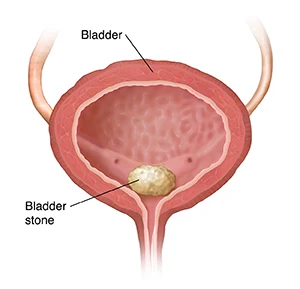
Bladder stones in children are hard mineral deposits that form inside the urinary bladder. They are less common in children than in adults and may develop when urine becomes concentrated or when the bladder does not empty properly. Children may experience painful urination, frequent urination, lower abdominal pain, difficulty passing urine, or blood in the urine. In some cases, bladder stones are associated with urinary tract abnormalities, infections, dehydration, or metabolic conditions. Early diagnosis is important because untreated stones can interfere with normal urination and damage the urinary tract.
What are Bladder Stones in Children?
Bladder stones, medically known as vesical calculi, are solid masses formed from minerals and other substances present in urine. They can develop inside the bladder or, in some cases, travel down from the kidneys.
In children, bladder stones may be associated with urinary tract abnormalities, recurrent urinary infections, incomplete bladder emptying, or certain metabolic and nutritional conditions.
The size of a bladder stone can range from very small particles to larger stones that obstruct the flow of urine.
What are the Symptoms of Bladder Stones in Children?
Symptoms may vary depending on the size and location of the stone. Common signs include:
- Pain or burning while urinating
- Frequent urination
- Urgent need to urinate
- Lower abdominal pain
- Pain in the penis or genital area in boys
- Blood in the urine
- Difficulty starting urination
- Weak or interrupted urine stream
- Straining while urinating
- Difficulty emptying the bladder
- Bedwetting after previously being dry
- Cloudy or foul-smelling urine
- Recurrent urinary tract infections
- Sudden inability to pass urine
Inability to urinate, severe pain, fever, vomiting, or significant blood in the urine requires prompt medical evaluation.
What are the Causes of Bladder Stones in Children?
Several factors can contribute to bladder stone formation.
Incomplete Bladder Emptying
Urine remaining in the bladder for prolonged periods can increase the risk of mineral crystallization and stone formation.
Urinary Tract Abnormalities
Conditions affecting the normal flow of urine can increase the risk of bladder stones.
Recurrent Urinary Tract Infections
Certain bacteria can alter urine chemistry and contribute to the formation of infection-related stones.
Dehydration
Insufficient fluid intake can make urine more concentrated and increase the chance of crystal formation.
Metabolic Disorders
Some inherited or acquired metabolic conditions can cause excessive amounts of stone-forming substances to be excreted in urine.
Foreign Bodies
Rarely, objects or materials introduced into the urinary tract can act as a surface around which stones form.
Kidney Stones
A stone formed in the kidney may travel through the urinary tract and eventually reach the bladder.
Which Children are at Higher Risk?
Children at increased risk may include:
- Children with recurrent urinary tract infections
- Children with urinary tract abnormalities
- Children with neurogenic bladder
- Children who do not empty their bladder completely
- Children with previous kidney or bladder stones
- Children with metabolic or inherited stone disorders
- Children with inadequate fluid intake
Types of Bladder Stones
Primary Bladder Stones
These develop directly within the bladder and are more commonly associated with urinary stasis, infection, or metabolic factors.
Secondary Bladder Stones
These may form because of an underlying urinary tract problem or because a stone has traveled from the kidney.
Infection-Related Stones
Certain urinary infections can alter urine chemistry and contribute to stone formation.
How are Bladder Stones Diagnosed?
Doctors diagnose bladder stones using the child’s symptoms, medical history, physical examination, and urinary tract investigations.
Diagnostic tests may include:
- Urine examination
- Urine culture
- Blood tests
- Kidney and bladder ultrasound
- X-ray in selected cases
- CT scan in selected situations
- Cystoscopy
- Stone analysis after removal
Doctors may also investigate the child for metabolic or anatomical causes when stones recur.
Treatment for Bladder Stones in Children
Treatment depends on the size, location, composition, underlying cause, and symptoms associated with the stone.
Increased Fluid Intake
Adequate hydration may help maintain healthy urine concentration and support urinary tract health. It may not, however, remove a large bladder stone.
Treatment of Urinary Infection
If an infection is present, appropriate antibiotics may be prescribed based on medical evaluation and urine culture.
Medicines
Certain medicines may be used to manage pain or address specific metabolic stone-forming conditions.
Stone Removal
Bladder stones that are large, symptomatic, or causing obstruction may need to be removed.
Depending on the situation, treatment may include:
- Cystolitholapaxy – breaking the stone into smaller pieces and removing them through a urinary endoscopic procedure.
- Laser or other endoscopic stone fragmentation – used in selected cases.
- Surgical removal – required in some children when stones are large or associated with structural abnormalities.
Treatment of the Underlying Cause
If the stone is associated with urinary obstruction, recurrent infection, metabolic disease, or another abnormality, treating the underlying problem is essential to reduce recurrence.
Homeopathic Treatment
Homeopathy may be considered for general urinary and digestive well-being, but established bladder stones require proper medical and urological evaluation. Homeopathic medicines cannot reliably dissolve or remove a bladder stone, particularly when it is large or obstructing urine flow.
At Dr. Sanjay’s Homoeopathy, supportive care may consider the child’s urinary symptoms, fluid intake, dietary habits, recurrent infections, general health, and constitutional profile. This should be coordinated with appropriate pediatric urology care.
Homeopathic Remedies for Bladder Stones in Children
There is no homeopathic medicine scientifically proven to dissolve established bladder stones or replace urological treatment.
In homeopathic practice, medicines may be selected individually for associated urinary symptoms.
Berberis Vulgaris
Traditionally considered for urinary discomfort and pain associated with the urinary tract.
Sarsaparilla
May be considered in homeopathic practice when urination is painful or difficult.
Cantharis
Traditionally used for intense burning during urination.
Lycopodium Clavatum
May be considered for urinary and digestive complaints according to the individual symptom pattern.
Ocimum Canum
Sometimes used in homeopathic practice for urinary complaints associated with stone-forming tendencies.
These remedies should not delay ultrasound evaluation, treatment of infection, or stone removal when medically indicated.
Complications of Untreated Bladder Stones
Untreated bladder stones may cause:
- Recurrent urinary tract infections
- Blood in the urine
- Persistent urinary pain
- Urinary obstruction
- Difficulty emptying the bladder
- Bladder inflammation
- Damage to the urinary tract
- Kidney problems in severe or prolonged cases
Prompt evaluation helps prevent these complications.
How Can Parents Help Prevent Bladder Stones?
Parents can support urinary health by:
- Encouraging adequate water intake
- Teaching children not to hold urine for long periods
- Encouraging complete bladder emptying
- Treating urinary infections promptly
- Following dietary recommendations from the child’s doctor
- Attending follow-up appointments for recurrent stones
- Following metabolic evaluation when recommended
- Maintaining good personal hygiene
Children with recurrent stones may require a specialized dietary and metabolic prevention plan.
Frequently Asked Questions (FAQs)
Can children develop bladder stones?
Yes. Although uncommon, bladder stones can occur in children, particularly those with urinary tract abnormalities, recurrent infections, metabolic disorders, or incomplete bladder emptying.
What are the common symptoms of bladder stones in children?
Painful urination, frequent urination, lower abdominal pain, blood in the urine, difficulty passing urine, interrupted urine flow, and recurrent urinary infections are common symptoms.
Can bladder stones pass naturally in children?
Very small stones may sometimes pass naturally, but this depends on their size, location, and the child’s urinary anatomy. A doctor should determine the appropriate approach.
Can homeopathy dissolve bladder stones?
There is no reliable scientific evidence that homeopathic medicines can dissolve established bladder stones. Stones causing symptoms or obstruction may require urological treatment.
How are bladder stones diagnosed?
Urine tests and kidney-bladder ultrasound are commonly used. Additional imaging or cystoscopy may be recommended depending on the child’s condition.
When should parents seek urgent medical care?
Seek urgent medical attention if the child cannot urinate, has severe abdominal or urinary pain, fever, repeated vomiting, or significant blood in the urine.
Why Choose Dr. Sanjay’s Homoeopathy for Bladder Stone Treatment in Children in Lucknow, India?
At Dr. Sanjay’s Homoeopathy, children with recurrent urinary and chronic health concerns receive individualized Treatment under the guidance of Dr. Sanjay Singh, MD (Homoeopathy), who has over 22 years of experience in pediatric and chronic health conditions. Each child is assessed according to urinary symptoms, hydration, dietary habits, recurrent infections, medical history, and overall constitution. For bladder stones, the clinic emphasizes timely ultrasound evaluation and appropriate consultation with pediatric urologists whenever a stone is suspected, symptomatic, recurrent, or obstructive. Homeopathic care, where considered, is supportive and does not replace stone removal, antibiotics, or other evidence-based urological treatment.