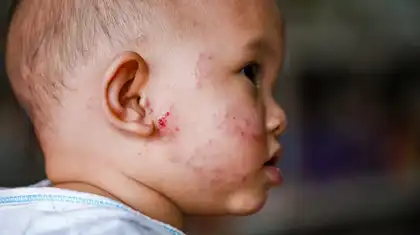
Eczema, also known as Atopic Dermatitis, is a common chronic skin condition that causes dry, itchy, inflamed, and irritated skin in children. It often begins during infancy or early childhood and may flare up periodically. Although eczema is not contagious, persistent itching and skin irritation can affect a child’s sleep, daily activities, and overall quality of life. Early diagnosis, proper skincare, and appropriate treatment can help control symptoms and reduce flare-ups.
What is Eczema (Atopic Dermatitis) in Children?
Eczema is a chronic inflammatory skin disorder in which the skin’s protective barrier becomes weak, making it more sensitive to irritants, allergens, and environmental factors. This leads to dry skin, intense itching, redness, and recurring skin inflammation.
Many children outgrow eczema as they get older, while others may continue to experience symptoms into adolescence or adulthood.
What are the Symptoms of Eczema in Children?
The symptoms may vary depending on the child’s age and the severity of the condition. Common signs include:
- Dry, rough skin
- Intense itching
- Red or inflamed skin patches
- Thickened skin due to repeated scratching
- Small fluid-filled blisters during flare-ups
- Cracked or scaly skin
- Oozing or crusting of the skin
- Skin discoloration after healing
- Sleep disturbances caused by itching
- Frequent skin infections due to scratching
In infants, eczema commonly affects the cheeks, scalp, arms, and legs, while older children often develop eczema in the folds of the elbows, knees, wrists, and neck.
What are the Causes of Eczema in Children?
Several factors contribute to eczema, including:
Genetic Factors
Children with a family history of eczema, asthma, or allergic rhinitis have a higher risk.
Overactive Immune Response
The immune system reacts excessively to environmental triggers, causing skin inflammation.
Skin Barrier Defects
A weakened skin barrier allows moisture to escape and irritants to enter the skin.
Allergens
Dust mites, pollen, pet dander, and certain foods may trigger flare-ups in some children.
Environmental Factors
Dry weather, excessive heat, sweating, harsh soaps, and detergents can worsen eczema.
Which Children are at Higher Risk?
Children at increased risk include:
- Children with a family history of eczema
- Children with asthma or allergic rhinitis
- Infants with sensitive skin
- Children living in dry climates
- Children exposed to environmental allergens
Types of Eczema
Atopic Dermatitis
The most common type, usually associated with allergies and a family history of atopic diseases.
Contact Dermatitis
Develops when the skin reacts to irritants or allergens.
Dyshidrotic Eczema
Characterized by small itchy blisters on the hands and feet.
Nummular Eczema
Appears as coin-shaped patches of irritated skin.
Seborrheic Dermatitis
Commonly affects the scalp and face in infants (cradle cap).
How is Eczema Diagnosed in Children?
Doctors diagnose eczema through medical history and physical examination.
Additional evaluations may include:
- Physical skin examination
- Allergy testing when indicated
- Blood tests in selected cases
- Skin swab if infection is suspected
Most children do not require extensive investigations.
Treatment for Eczema in Children
Skin Moisturization
Regular use of fragrance-free moisturizers helps restore the skin barrier and prevent dryness.
Medical Treatment
Doctors may prescribe topical corticosteroids, calcineurin inhibitors, antihistamines, or antibiotics if infection develops.
Avoiding Triggers
Identifying and avoiding allergens, harsh soaps, excessive heat, and irritants helps reduce flare-ups.
Homeopathic Treatment
Homeopathy focuses on supporting healthy skin, reducing the tendency for recurrent flare-ups, strengthening immunity, and promoting overall wellbeing naturally in children with chronic skin conditions. At Dr. Sanjay’s Homoeopathy, treatment is individualized according to the child’s skin symptoms, allergy history, immunity, family history, and constitutional profile. The clinic follows a holistic approach designed to complement appropriate dermatological care. Homeopathy should not replace urgent medical treatment for severe skin infections or eczema complications.
Eczema Homeopathic Remedies for Children
Homeopathic medicines are prescribed individually after a detailed assessment.
Graphites
Often considered for dry, cracked, and oozing eczema.
Sulphur
May be recommended for intensely itchy skin with burning sensations.
Petroleum
Commonly considered for very dry, cracked skin that worsens during winter.
Mezereum
May help children with thick crusts and severe itching.
Rhus Toxicodendron
Sometimes prescribed for eczema with blistering and intense itching.
Homeopathic treatment should always be supervised by a qualified physician and should complement appropriate dermatological care.
Complications of Untreated Eczema
Without proper management, eczema may lead to:
- Recurrent skin infections
- Thickened skin
- Permanent skin discoloration
- Sleep disturbances
- Emotional stress
- Reduced quality of life
- Increased risk of allergic conditions
Early treatment helps reduce flare-ups and improve skin health.
How Can Parents Help Prevent Eczema Flare-Ups?
Parents can help by:
- Applying moisturizers regularly
- Avoiding harsh soaps and scented skincare products
- Keeping the child’s nails trimmed
- Dressing the child in soft cotton clothing
- Identifying and avoiding known triggers
- Maintaining a cool and comfortable indoor environment
Frequently Asked Questions (FAQs)
What is eczema in children?
Eczema is a chronic inflammatory skin condition that causes dry, itchy, red, and irritated skin, often beginning in infancy or early childhood.
Is eczema contagious?
No. Eczema is not contagious and cannot spread from one child to another through physical contact.
What triggers eczema flare-ups?
Common triggers include dry skin, allergens, harsh soaps, sweating, infections, weather changes, and environmental irritants.
Can homeopathy help children with eczema?
Homeopathy may help support skin health, immunity, and reduce the tendency for recurrent flare-ups naturally as part of a comprehensive treatment plan alongside appropriate skincare and medical management.
Can children outgrow eczema?
Yes. Many children experience significant improvement or complete resolution of eczema symptoms as they grow older, although some continue to have eczema into adulthood.
Why choose Dr. Sanjay’s Homoeopathy for Eczema (Atopic Dermatitis) Treatment in Children in Lucknow, India?
At Dr. Sanjay’s Homoeopathy, children with eczema and other chronic allergic skin conditions receive advanced and holistic homeopathic care under the expert guidance of Dr. Sanjay Singh, MD (Homoeopathy), who has over 22 years of experience in treating pediatric skin disorders naturally. The clinic is trusted by families from Lucknow, across India, and internationally for its individualized treatment plans, detailed skin assessments, and compassionate child-centered care. Every child is evaluated according to the severity of eczema, allergy history, skin sensitivity, immunity, dietary factors, and constitutional profile to provide personalized treatment aimed at supporting long-term skin health naturally. Dr. Sanjay’s Homoeopathy also provides guidance on skincare routines, trigger avoidance, and works alongside dermatologists whenever specialized treatment is required.