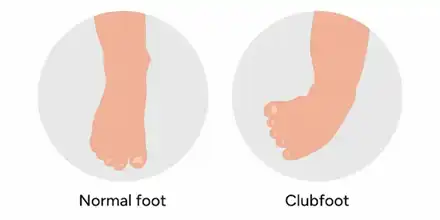
Clubfoot in children is a congenital condition in which one or both feet are twisted inward and downward at birth. Also known as Congenital Talipes Equinovarus (CTEV), this condition affects the bones, muscles, tendons, and ligaments of the foot and ankle, causing the foot to appear turned in an abnormal position. Clubfoot is one of the most common birth defects affecting the lower limbs and can usually be corrected successfully with early treatment. Prompt diagnosis and intervention help children achieve better mobility, walking ability, and long-term function.
What is Clubfoot in Children?
Clubfoot is a birth defect where the foot is rotated inward and downward instead of being positioned normally. It may affect one foot (unilateral clubfoot) or both feet (bilateral clubfoot).
The condition is present at birth and is not caused by the baby’s position in the womb. Without treatment, children may have difficulty standing and walking properly.
What are the Symptoms of Clubfoot in Children?
Common signs and symptoms include:
- Foot turned inward or downward at birth
- Abnormal shape or position of the foot
- Tight Achilles tendon
- Smaller calf muscles on the affected side
- Limited movement of the foot or ankle
- One foot appearing shorter than the other in unilateral cases
- Difficulty walking if left untreated
The condition is usually painless in newborns but can cause functional problems later if not corrected.
What are the Causes of Clubfoot in Children?
The exact cause of clubfoot is not always known, but possible contributing factors include:
- Genetic predisposition
- Family history of clubfoot
- Abnormal fetal development during pregnancy
- Neuromuscular disorders in rare cases
- Environmental factors affecting fetal growth
In most cases, clubfoot occurs as an isolated congenital condition.
Which Children are at Higher Risk?
Children who may have a higher risk include:
- Babies with a family history of clubfoot
- Male infants, who are affected more often than females
- Babies with certain neurological or genetic conditions
- Babies born with other congenital abnormalities in rare cases
Types of Clubfoot
Idiopathic Clubfoot
The most common type occurs without an associated medical condition.
Syndromic Clubfoot
Associated with genetic syndromes or congenital disorders.
Neurogenic Clubfoot
Occurs due to neurological conditions affecting muscle and nerve function.
Positional Clubfoot
A milder form caused by the baby’s position in the womb often resolves more easily than true structural clubfoot.
How is Clubfoot Diagnosed?
Doctors usually diagnose clubfoot through physical examination shortly after birth.
Additional investigations may include:
- Prenatal ultrasound during pregnancy
- Clinical examination after delivery
- X-rays in selected cases to assess bone alignment
- Evaluation for associated neurological or genetic conditions when indicated
Treatment for Clubfoot in Children
Ponseti Method
The Ponseti method is the standard treatment for most children with clubfoot. It involves a series of gentle manipulations and casts applied over several weeks, followed by bracing to maintain correction.
Bracing
After successful correction, special braces are used to reduce the risk of recurrence and support proper foot development.
Surgical Treatment
Some children with severe or resistant clubfoot may require surgery to release tight tendons or correct deformities.
Homeopathic Supportive Care
Homeopathy focuses on supporting overall musculoskeletal health, recovery, growth, and general wellbeing naturally in children undergoing treatment for clubfoot. At Dr. Sanjay’s Homoeopathy, supportive care is individualized according to the child’s developmental needs, physical health, nutritional status, and constitutional profile. The clinic follows a holistic approach designed to complement orthopedic treatment and promote overall wellness.
Clubfoot Homeopathic Remedies for Children
Homeopathic medicines are selected individually by a qualified physician based on the child’s overall condition.
Calcarea Phosphorica
Often considered for supporting healthy bone growth and development.
Calcarea Carbonica
May be recommended for children with delayed physical development and constitutional weakness.
Ruta Graveolens
Commonly used in homeopathic practice for ligament and tendon-related discomfort.
Symphytum Officinale
Sometimes considered to support bone and soft tissue healing under professional supervision.
Silicea
May be used in selected children with developmental and musculoskeletal concerns.
Homeopathic treatment should always be supervised by an experienced practitioner and should not replace orthopedic treatment such as casting, bracing, or surgery.
Complications of Untreated Clubfoot
Without proper treatment, clubfoot may lead to:
- Difficulty walking normally
- Abnormal gait
- Pain during movement later in life
- Calluses and skin problems due to abnormal weight bearing
- Reduced mobility
- Permanent foot deformity
Early treatment significantly improves long-term outcomes.
How Can Parents Support a Child with Clubfoot?
Parents can help by:
- Starting treatment as early as possible after birth
- Following casting and bracing instructions carefully
- Attending regular orthopedic follow-up appointments
- Encouraging prescribed exercises when recommended
- Monitoring foot growth and development
- Seeking prompt medical advice if recurrence is suspected
Frequently Asked Questions (FAQs)
What is clubfoot in children?
Clubfoot is a birth defect in which one or both feet are twisted inward and downward due to abnormal development before birth.
Can clubfoot be corrected?
Yes. Most children achieve excellent outcomes with early treatment using methods such as serial casting, bracing, and, in some cases, surgery.
Is clubfoot painful for babies?
Clubfoot itself is usually not painful in newborns, but untreated deformity can cause walking difficulties and discomfort later in life.
Can homeopathy help children with clubfoot?
Homeopathy may support overall health and wellbeing as complementary care but does not replace standard orthopedic treatments such as the Ponseti method or surgery.
When should treatment for clubfoot begin?
Treatment should ideally begin within the first few weeks of life to achieve the best possible correction and long-term function.
Why Choose Dr. Sanjay’s Homoeopathy for Clubfoot Treatment in Children in Lucknow, India?
At Dr. Sanjay’s Homoeopathy, children with musculoskeletal and developmental conditions receive advanced and holistic homeopathic supportive care under the expert guidance of Dr. Sanjay Singh, MD (Homoeopathy), who has more than 22 years of experience in treating pediatric health concerns naturally. The clinic is trusted by families from Lucknow, across India, and internationally for its personalized approach, detailed evaluations, and compassionate child care. Every child is assessed according to developmental milestones, nutritional status, musculoskeletal health, and constitutional profile to provide individualized supportive care aimed at promoting overall well-being naturally. Dr. Sanjay’s Homoeopathy works alongside evidence-based orthopedic management and encourages timely consultation with pediatric orthopedic specialists whenever required.