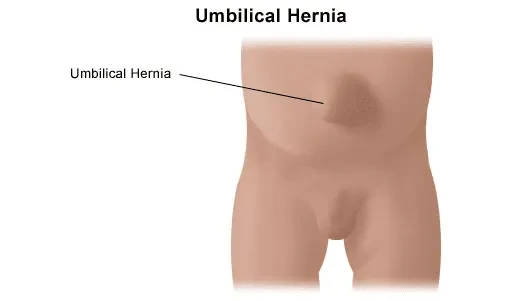
An umbilical hernia in children is a common condition in which a part of the intestine or abdominal tissue pushes through a weak opening near the belly button (umbilicus). It usually appears as a soft swelling or bulge around the navel area, especially when the baby cries, coughs, laughs, or strains. Umbilical hernias are commonly seen in newborns and premature babies and, in many cases, close naturally as the child grows. Although most pediatric umbilical hernias are harmless, proper medical evaluation is important to monitor the condition and prevent complications.
What is a Pediatric Umbilical Hernia?
A pediatric umbilical hernia occurs when the abdominal muscles around the belly button do not close completely after birth. Due to this weakness, a small portion of the intestine or tissue may protrude through the opening, creating a visible bulge near the navel.
This condition is usually painless and may become more noticeable during crying or physical strain.
Symptoms of Umbilical Hernia in Children
The symptoms of pediatric umbilical hernia may include:
- Soft swelling or bulge near the belly button
- Swelling that increases when the child cries or coughs
- Bulge that disappears while resting or sleeping
- Mild discomfort around the navel area
- Irritability in some babies
- Pain or tenderness in rare cases
- Vomiting or redness if complications develop
Parents should seek immediate medical attention if the swelling becomes hard, painful, red, or does not go back inside.
Causes of Umbilical Hernia in Children
Umbilical hernia in children is usually congenital and develops due to incomplete closure of the abdominal muscles around the belly button after birth.
Common risk factors include:
- Premature birth
- Low birth weight
- Weak abdominal muscles
- Family history of hernia
- Increased abdominal pressure from crying or constipation
The condition is very common in infants and is usually not caused by any mistake made by parents.
Which Children are at Higher Risk?
Some children are more likely to develop an umbilical hernia, including:
- Premature babies
- Infants with low birth weight
- Children with weak muscle development
- Babies with a family history of hernia
How is an umbilical hernia diagnosed?
Doctors usually diagnose an umbilical hernia through physical examination by observing the swelling near the belly button.
In some cases, additional tests may be advised, such as:
- Ultrasound scan
- Imaging tests in complicated cases
These tests help determine the size and severity of the hernia.
Treatment for Pediatric Umbilical Hernia
Observation and Monitoring
Many umbilical hernias in children close naturally by the age of 3 to 5 years as the abdominal muscles become stronger. Doctors may recommend regular monitoring during this period.
Homeopathic Treatment
Homeopathy focuses on supporting the child’s overall health naturally and may help improve abdominal muscle weakness, digestion, immunity, and associated discomfort in mild cases of umbilical hernia. At Dr. Sanjay’s Homoeopathy, treatment is individualized according to the child’s symptoms, physical development, and constitutional health. The clinic follows a holistic and child-friendly approach aimed at improving overall well-being naturally while carefully monitoring the condition.
Surgical Treatment
If the hernia becomes very large, painful, or does not close naturally by the recommended age, surgery may be required to repair the weak abdominal opening.
Emergency Treatment
Immediate medical care is necessary if the hernia becomes trapped, swollen, painful, or affects blood supply to the intestine.
Umbilical Hernia Homeopathic Remedies
Homeopathic medicines are selected individually based on the child’s symptoms and overall constitutional health.
Calcarea Carbonica
Often considered for children with weak abdominal muscles, delayed growth, and poor muscle tone.
Nux Vomica
May help children with abdominal strain, constipation, and digestive discomfort.
Lycopodium
Sometimes used for bloating, gas formation, and digestive weakness.
Silicea
May be recommended for weak connective tissues and recurring abdominal weakness.
Belladonna
Can be considered when swelling becomes red, warm, or painful.
Homeopathic treatment should always be taken under the supervision of an experienced doctor.
Complications of Untreated Umbilical Hernia
Although rare, complications may include:
- Incarcerated hernia
- Strangulated hernia
- Painful swelling
- Intestinal obstruction
- Reduced blood supply to the intestine
Early medical evaluation helps reduce these risks.
Frequently Asked Questions (FAQs)
What is an umbilical hernia in children?
An umbilical hernia occurs when part of the intestine or abdominal tissue pushes through a weak area near the belly button, causing a soft swelling.
Is an umbilical hernia common in babies?
Yes, an umbilical hernia is very common in newborns and premature babies.
Can pediatric umbilical hernia close naturally?
Many umbilical hernias close naturally by the age of 3 to 5 years as the abdominal muscles strengthen.
When does umbilical hernia require surgery?
Surgery may be needed if the hernia becomes large, painful, trapped, or does not close naturally over time.
Can homeopathy help in pediatric umbilical hernia?
Homeopathy may help support overall health, abdominal weakness, digestion, and mild discomfort naturally in children with umbilical hernia.
Why Choose Dr. Sanjay’s Homoeopathy for Pediatric Umbilical Hernia Treatment in Lucknow, India?
At Dr. Sanjay’s Homoeopathy, children with pediatric umbilical hernia receive advanced and holistic homeopathic care under the guidance of Dr. Sanjay Singh, MD (Homoeopathy), who has more than 22 years of experience in treating pediatric and chronic diseases. The clinic is trusted by parents from Lucknow, across India, and internationally for its child-friendly environment, personalized treatment plans, and ethical treatment approach. Every child is carefully evaluated according to their symptoms, immunity, digestion, growth pattern, and overall constitutional health to provide individualized and gentle treatment. Dr. Sanjay’s Homoeopathy combines classical homeopathic principles with modern medical understanding to support long-term wellness naturally while also providing honest guidance regarding surgical evaluation whenever medically necessary. Dr. Sanjay’s Homoeopathy has become one of the trusted names for Pediatric Umbilical Hernia Treatment in Lucknow, India.