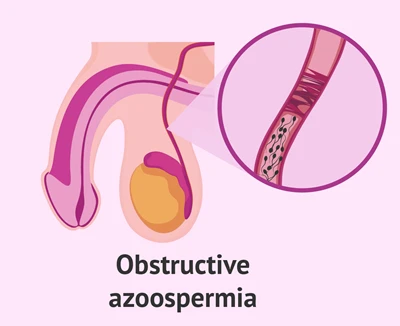
What is Obstructive Azoospermia?
Obstructive Azoospermia is a condition in which sperm are produced normally in the testicles but are unable to come out in the semen due to a blockage in the male reproductive tract. Because of this blockage, semen appears normal in quantity, but no sperm are found when tested in a laboratory.
In simple words, the sperm factory (testicles) is working, but the pathway that carries sperm is blocked.
Obstructive azoospermia is one of the treatable causes of male infertility, and many men with this condition can become fathers with proper diagnosis and management.
How common is Obstructive Azoospermia?
Obstructive azoospermia accounts for about 40% of all azoospermia cases. It is commonly diagnosed during infertility evaluation when repeated semen analysis shows zero sperm count despite normal semen volume and normal sexual function.
How does sperm normally travel in the male body?
To understand obstructive azoospermia, it helps to know how sperm normally move:
- Sperm are produced in the testicles
- They mature in the epididymis
- They travel through the vas deferens
- They mix with seminal fluid and come out during ejaculation
If a blockage occurs anywhere along this pathway, sperm cannot reach the semen.
What causes Obstructive Azoospermia?
Obstructive azoospermia can develop due to blockage at different levels of the reproductive tract.
- Congenital (Since Birth) Causes
Some men are born with missing or underdeveloped sperm ducts. Common causes include:
- Congenital absence of vas deferens
- Genetic conditions
- Developmental abnormalities
These men often have normal sexual development but no sperm in semen.
- Infection-Related Causes
Infections can cause inflammation and scarring, leading to blockage:
- Sexually transmitted infections
- Tuberculosis
- Epididymitis
- Prostatitis
Even infections from many years ago can cause permanent obstruction.
- Surgery or Injury
Previous procedures may damage sperm pathways:
- Hernia surgery
- Prostate or bladder surgery
- Scrotal surgery
- Injury to groin or testicles
Scar tissue may form and block sperm flow.
- Ejaculatory Duct Obstruction
Blockage near the prostate can prevent sperm from entering semen:
This often results in low semen volume along with zero sperm count.
Symptoms of Obstructive Azoospermia
Most men with obstructive azoospermia do not have noticeable symptoms. Common findings include:
- Inability to conceive
- Normal ejaculation volume (in many cases)
- Normal sexual desire
- Normal erection
- Normal facial and body hair
Some men may have:
- History of infection
- Past surgery
- Mild testicular discomfort
Very often, infertility is the only sign.
How is Obstructive Azoospermia different from Non-Obstructive Azoospermia?
| Feature | Obstructive Azoospermia | Non-Obstructive Azoospermia |
| Sperm production | Normal | Reduced or absent |
| Hormone levels | Usually normal | Often abnormal |
| Testicle size | Normal | Often small |
| Cause | Blockage | Testicular failure |
| Treatability | Often treatable | More complex |
This distinction is extremely important for treatment planning.
Is Obstructive Azoospermia permanent?
Not always.
Many cases are treatable or manageable, especially when:
- Blockage is surgically correctable
- Sperm production is healthy
- Diagnosis is made early
With proper care, many men achieve fatherhood.
How is Obstructive Azoospermia diagnosed?
Diagnosis involves a step-by-step evaluation.
- Semen Analysis
Repeated tests show:
- Zero sperm count
- Normal semen volume (in many cases)
- Hormonal Tests
Blood tests usually show:
- Normal testosterone
- Normal FSH and LH
This suggests sperm production is intact.
- Scrotal Ultrasound
Helps detect:
- Epididymal blockage
- Testicular structure
- Varicocele
- Transrectal Ultrasound (TRUS)
Used to check:
- Ejaculatory duct obstruction
- Prostate abnormalities
- Genetic Testing
Done if congenital absence of ducts is suspected.
- Testicular Biopsy (if needed)
Confirms normal sperm production inside testicles.
Conventional medical treatment for Obstructive Azoospermia
Treatment depends on the location and cause of blockage.
Surgical Options
- Vasovasostomy
- Epididymovasostomy
- Ejaculatory duct surgery
Assisted Reproductive Techniques
- Sperm retrieval
- IVF or ICSI
These methods can be effective but may involve:
- Surgery
- High cost
- Emotional stress
Role of lifestyle in Obstructive Azoospermia
Although blockage is the main issue, lifestyle still matters.
Negative factors include:
- Smoking
- Alcohol
- Stress
- Poor diet
- Obesity
Healthy habits support overall reproductive health.
Homeopathic Treatment for Obstructive Azoospermia in Lucknow
Homeopathy offers a gentle and effective treatment approach for men diagnosed with obstructive azoospermia.
Homeopathic treatment may help by:
- Supporting healthy testicular function
- Improving local circulation
- Reducing inflammation
- Supporting hormonal balance
- Improving vitality and stamina
Treatment is individualised, based on:
- Cause and duration of obstruction
- Past infections or surgeries
- Hormone levels
- Emotional stress
- Overall physical constitution
Common Homeopathic Medicines Used
(Prescribed only after detailed medical evaluation)
- Conium Maculatum – Reproductive gland weakness
- Thuja Occidentalis – Post-infection or scarring tendency
- Agnus Castus – Sexual weakness with infertility
- Calcarea Carbonica – Metabolic and hormonal imbalance
- Selenium – Reduced vitality and reproductive weakness
Benefits of Homeopathic Treatment
- Natural and non-toxic
- No harmful side effects
- Supports long-term reproductive health
- Improves overall well-being
- Helps during post-surgical recovery
Emotional Impact of Obstructive Azoospermia
Men with obstructive azoospermia may experience:
- Stress
- Anxiety
- Guilt
- Loss of confidence
Open communication with a partner and emotional support are very important.
Can men with Obstructive Azoospermia become fathers?
Yes. Many men with obstructive azoospermia successfully become fathers through:
- Surgical correction
- Assisted reproduction
- Sperm retrieval
- Supportive therapies
Early diagnosis greatly improves success rates.
Precautions for men with Obstructive Azoospermia
- Avoid smoking and alcohol
- Avoid heat exposure to the testicles
- Follow medical advice strictly
- Manage stress
- Maintain a healthy weight
Frequently Asked Questions
Is obstructive azoospermia curable?
Many cases are treatable, especially when sperm production is normal.
Does obstructive azoospermia affect sexual performance?
Usually no. Sexual function is often normal.
Can homeopathy open blocked ducts?
Yes, Homeopathy helps in open blocked ducts but does not replace surgery when needed.
Is sperm production normal in obstructive azoospermia?
Yes, in most cases sperm production is normal.
Why choose Dr. Sanjay’s Homoeopathy for Obstructive Azoospermia Treatment in Lucknow, India?
Dr. Sanjay’s Homoeopathy is a trusted clinic for safe and effective Obstructive Azoospermia treatment in Lucknow, India. With more than 22 years of experience, Dr. Sanjay Singh, MD (Homoeopathy), provides specialized homeopathy treatment that helps manage blockage-related zero sperm count, ejaculatory duct obstruction, testicular discomfort, hormonal imbalance, and infertility concerns naturally without side effects. As a leading homeopathic doctor in Lucknow, he follows international treatment standards and offers a personalized approach that focuses on improving reproductive tract function, reducing obstruction-related issues, supporting sperm production, and enhancing fertility potential, making him the best homeopathy doctor for Obstructive Azoospermia in Lucknow. Patients from across India and around the world choose Dr. Sanjay’s Homoeopathy for its holistic healing, long-lasting results, and compassionate care in managing complex male infertility conditions like Obstructive Azoospermia.