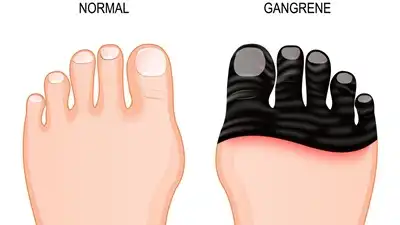
What is Gangrene?
Gangrene is a serious medical condition in which body tissues die due to a lack of blood supply, severe infection, or both. It commonly affects the fingers, toes, feet, legs, and sometimes internal organs. When blood flow is blocked, the affected area does not receive enough oxygen and nutrients, leading to tissue death. Gangrene may develop due to diabetes, severe injuries, infections, blocked arteries, or frostbite. It is a potentially life-threatening condition and requires immediate medical attention. Early detection and proper treatment can help control damage and prevent complications.
What are the common symptoms of Gangrene?
Gangrene symptoms vary depending on the type, but commonly include:
- Numbness or loss of sensation in the affected area
- Severe pain followed by reduced pain as tissue dies
- Skin discolouration (black, green, pale, or reddish)
- Foul-smelling discharge or pus
- Swelling and blisters
- Coldness in the affected limb
- Ulcers or non-healing wounds
- Fever, chills, or fatigue in case of infection
- Crackling sound under skin (in gas gangrene)
If untreated, gangrene can spread rapidly and become life-threatening.
What causes Gangrene?
Gangrene occurs when blood flow to a specific part of the body is cut off or when a severe infection destroys tissues. Common causes include:
- Diabetes: Poor blood circulation and nerve damage
- Peripheral artery disease (PAD): Blocked blood vessels
- Severe infection or cellulitis
- Trauma or crush injuries
- Frostbite: Extreme cold exposure
- Blood clots or embolism
- Burns or open wounds
- Surgery complications
- Weakened immunity
Types of Gangrene
- Dry Gangrene: Caused by poor blood flow; skin becomes dry, black, and shrivelled
- Wet Gangrene: Due to infection, tissues swell, ooze, and smell foul
- Gas Gangrene: Caused by bacteria producing gas in tissues; extremely dangerous
- Internal Gangrene: Affects organs like the intestines or gallbladder
- Fournier’s Gangrene: Affects the genital and groin area, usually in diabetic patients
Who is at risk of developing Gangrene?
You may be at higher risk if you:
- Have diabetes
- Suffer from peripheral artery disease (PAD)
- Smoke or consume alcohol excessively
- Have poor blood circulation
- Are you overweight or have high cholesterol
- Have weakened immunity
- Have non-healing wounds or ulcers
- Suffer from severe infections or injuries
- Have frostbite exposure
Is Gangrene a serious condition?
Yes. Gangrene is a medical emergency. If not treated immediately, it can spread rapidly, cause sepsis (blood infection), organ failure, and even be fatal. Early diagnosis and proper care are essential to save the affected tissue and prevent complications.
How is Gangrene diagnosed?
Diagnosis involves physical examination and tests to determine tissue damage and infection. These may include:
- Blood tests: To detect infection
- Imaging tests: X-ray, MRI, or CT scan to check tissue damage
- Doppler ultrasound: To assess blood flow
- Tissue culture: To identify bacterial infection
- Angiography: To detect blocked arteries
- Biopsy: Rarely done to analyse tissue
How is Gangrene treated?
Gangrene requires urgent medical treatment to stop tissue damage, treat infection, and restore blood flow.
Conventional Medical Treatment
- Antibiotics: To treat infection
- Surgical removal of dead tissue (debridement)
- Hyperbaric oxygen therapy: Increases oxygen levels for healing
- Vascular surgery: To restore blood flow
- Wound care: Regular cleaning and dressing
- Amputation: In severe, irreversible cases
Lifestyle changes like controlling diabetes and quitting smoking help prevent recurrence.
How is Gangrene treated through homeopathy?
Homoeopathy provides supportive care to improve blood circulation, control infection, reduce inflammation, and promote wound healing. It helps strengthen immunity and may complement conventional treatment. Homeopathy is especially beneficial in early stages, slow-progressing cases, or during recovery.
Individualized Approach
At Dr. Sanjay’s Homoeopathy, treatment is personalised based on the type of gangrene, severity of symptoms, underlying health issues, and overall vitality. Remedies aim to improve blood flow, reduce infection, and support tissue healing naturally.
Commonly Used Homoeopathic Medicines for Gangrene
- Arsenicum Album: For burning pain, weakness, and foul-smelling wounds
- Secale Cornutum: For dry gangrene with cold, shrivelled skin
- Carbo Vegetabilis: For poor circulation and bluish skin
- Silicea: For pus formation and slow-healing wounds
- Calendula: For wound healing and avoiding infection
- China: For weakness and blood loss after tissue damage
Benefits of Homoeopathic Treatment
- Helps improve blood circulation
- Supports natural healing of tissues
- Reduces pain and inflammation
- Strengthens immunity
- Helps prevent further tissue damage
- Safe for long-term use without side effects
(Note: Homeopathy supports recovery but does not replace emergency medical treatment for advanced or infected gangrene.)
Home Remedies and Lifestyle Tips for Gangrene
- Maintain strict blood sugar control
- Keep wounds clean and covered
- Avoid smoking and alcohol
- Improve circulation with gentle movement (if advised)
- Eat a healthy diet rich in antioxidants
- Stay hydrated
- Avoid tight footwear and clothing
- Protect extremities from cold
- Inspect feet daily (especially for diabetic patients)
Can Gangrene be prevented?
Yes. Most cases can be prevented by maintaining good circulation, controlling blood sugar, avoiding injuries, seeking early treatment for infections, and quitting smoking. Regular foot care is crucial for diabetic patients.
Why choose Dr. Sanjay’s Homoeopathy for Gangrene Treatment in Lucknow, India?
Dr. Sanjay’s Homoeopathy is a trusted clinic for safe and effective Gangrene treatment in Lucknow, India. With years of expertise, Dr. Sanjay Singh provides specialised homeopathy treatment that helps manage tissue damage, discolouration, numbness, foul-smelling discharge, severe pain, and circulation problems naturally without side effects. As a leading homeopathic doctor for gangrene treatment in Lucknow, he follows international treatment standards and offers personalised care that focuses on improving blood flow, preventing infection spread, promoting tissue healing, and reducing complications. Patients choose Dr. Sanjay’s Homoeopathy for its holistic healing, long-lasting relief, and compassionate approach in managing serious conditions like Gangrene.
Patients from across the world trust Dr. Sanjay’s Homoeopathy for Gangrene Treatment in Lucknow, India. Dr. Sanjay Singh, who led this clinic, has successfully treated thousands of patients with gangrene, which makes him the best doctor for gangrene treatment in Lucknow, India.